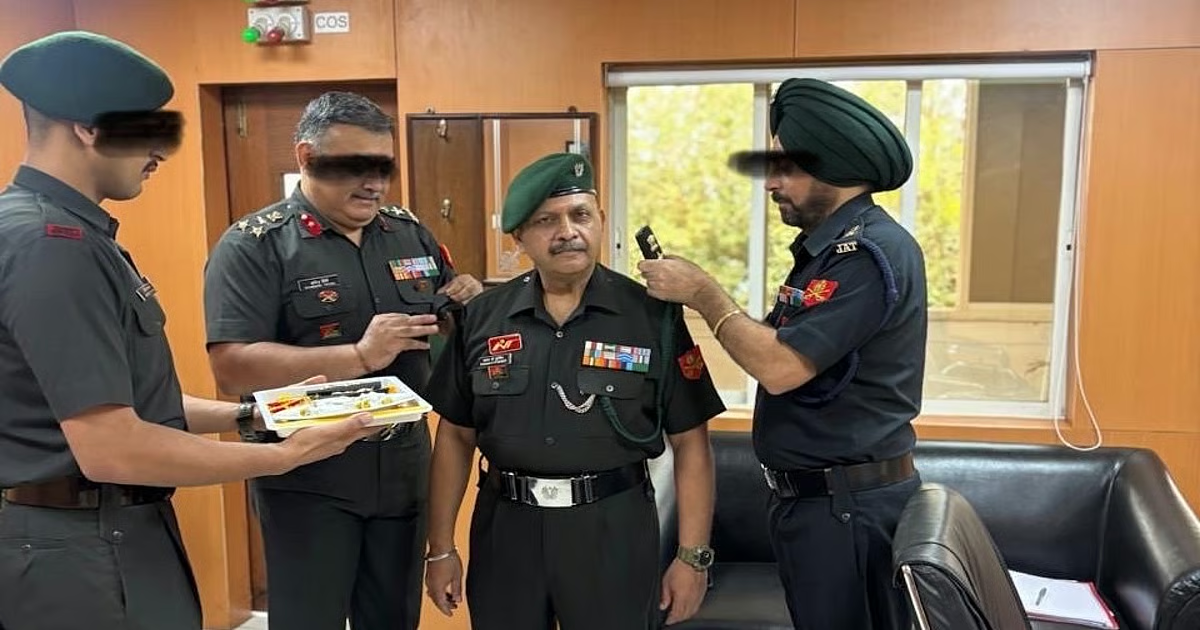
The Armed Forces Tribunal (AFT) has put on hold the retirement of Lieutenant Colonel Shrikant Purohit, which was due on March 31, 2026, in a significant interim relief order.





The tribunal directed that Lt Col Purohit will not be retired until his statutory complaint is decided, and issued a notice to the Ministry of Defence (MoD) seeking its response.
Claim of Career Impact Due to Malegaon Case
Lt Col Purohit, who was acquitted in July 2025 in the 2008 Malegaon blast case, had approached the tribunal claiming that the 17-year-long trial adversely affected his career progression and deprived him of fair consideration for promotions.
He argued that under normal circumstances, he would have progressed to the rank of Brigadier by now, making him eligible for further promotion to Major General.
Promotion Denied Amid DV Ban
Despite rejoining service after being granted bail in 2017, Lt Col Purohit remained under suspension until 2020 and continued to face a Discipline and Vigilance (DV) ban, which impacted his promotion prospects.
Though he was considered for promotion to the rank of Colonel in 2021, the result was withheld, and he was later informed that he was not found fit for promotion.
His petition challenged the sealed cover procedure, arguing that it denied him opportunities to contest the decision and affected his chances for subsequent promotions.
Tribunal Observations
The AFT bench, led by Justice Rajendra Menon, observed that a case exists where Lt Col Purohit may be entitled to consideration for promotion and related benefits at par with his juniors, especially in light of his acquittal.
The tribunal noted that the officer’s career progression may have been impacted due to the manner in which he was implicated in the case.
Next Hearing in May
The tribunal has scheduled the next hearing for May 22, 2026, and will examine the officer’s demand for promotion, restoration of benefits and career progression parity.
The case brings focus on issues related to career impact of prolonged legal proceedings on military personnel, and the need for fair evaluation post-acquittal.