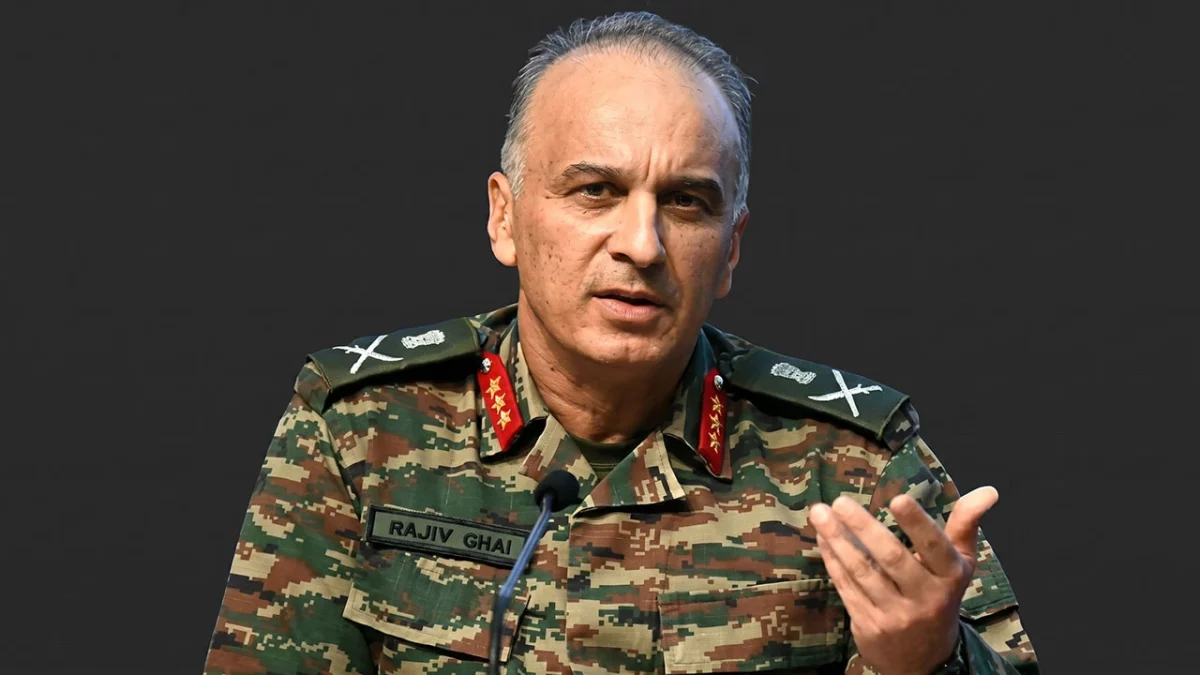
The apparent paradox in general officer ranks—where a lieutenant general (typically a three-star officer) outranks a major general (a two-star officer), despite a major outranking a lieutenant in the field-grade structure—stems from historical nomenclature rather than any logical inconsistency in modern military organization. This distinction reflects the evolution of European military command structures from the Middle Ages through the early modern period, particularly in British tradition, which influenced armies worldwide, including those of the United States, the Commonwealth nations, and India.





In contemporary Western and Commonwealth armies, general officer ranks follow a clear hierarchy: brigadier general (one-star, the most junior), major general (two-star), lieutenant general (three-star), and general (four-star). A lieutenant general commands a corps (typically 60,000–70,000 troops comprising multiple divisions), while a major general usually leads a division (6,000–25,000 troops). This structure ensures operational efficiency at scale, with higher ranks assuming broader strategic oversight. The naming convention, however, preserves linguistic artifacts from centuries past.
Etymological Foundations
The roots of these titles lie in French and Latin influences on military terminology:
- Lieutenant derives from the Old French lieu tenant, literally meaning “place holder” or deputy. A lieutenant was one authorized to act in the superior’s absence, holding command authority on their behalf.
- Major comes from the Latin maior, signifying “greater” or “larger.” It originally denoted seniority among non-commissioned or staff roles, as in “sergeant major” (the chief or most important sergeant).
- General originates from the Latin generalis (“pertaining to all” or “universal”), indicating overarching command. It began as a modifier in compound titles like “captain general.”
These etymologies explain why the compound ranks do not align intuitively with standalone officer grades.
Historical Development in European Armies
The modern general officer ranks emerged as armies professionalized and expanded beyond feudal levies in the 16th and 17th centuries. A king or sovereign would appoint a “captain general” (later shortened to simply “general”) to command the entire field army. This officer required a trusted deputy: the lieutenant general, who served as second-in-command and exercised authority across the force in the commander’s stead.
Supporting this leadership was the sergeant major general, an administrative and organizational role responsible for troop formations, drilling, logistics, and daily army management. The “sergeant major” element emphasized the senior staff function (the “greater” sergeant at army level), distinct from regimental sergeants major. This position ranked below the lieutenant general but above lower staff officers. In some contexts, such as English armies during the Thirty Years’ War or the reign of Charles I, the sergeant-major-general handled infantry command or logistics while the lieutenant general oversaw broader operations (e.g., cavalry).
As armies grew, these titles standardized. The sergeant major general’s role professionalized into a commissioned general officer rank. By the mid-17th century—exemplified under figures like Oliver Cromwell—the “sergeant” prefix was dropped for prestige, yielding “major general.” The lieutenant general retained its full title as the explicit deputy to the captain general. Consequently, the hierarchy solidified as: general (or captain general) > lieutenant general > major general.
This evolution mirrored parallel developments at lower levels: a colonel’s deputy became lieutenant colonel, and a regiment’s senior sergeant major evolved into the field-grade major. The army-level sergeant major general, however, followed a separate path, preserving its subordination to the lieutenant general.
The Shortening of Titles and the Persistence of Hierarchy
By the 18th century, titles simplified for practicality:
- Captain general → General
- Lieutenant general → unchanged
- Sergeant major general → Major general
The original command relationships endured unchanged. Military institutions are inherently conservative; ranks and insignia preserve tradition even when everyday language suggests otherwise. As one historical analysis notes, the lieutenant general was never positioned as subordinate to a “major” anything—it was the sergeant major general who operated below the lieutenant.
This same British-derived system was adopted by the Continental Army during the American Revolution and later formalized in the U.S. military, as well as in post-independence armies of former colonies such as India. In the Indian Army, for instance, lieutenant general (three-star) remains senior to major general (two-star), with identical historical logic applying.
Command Responsibilities in Contemporary Forces
Today, the distinction serves practical command needs rather than historical curiosity:
- Major general: Typically commands a division or equivalent formation, focusing on tactical execution and sustainment.
- Lieutenant general: Oversees a corps or major command, integrating multiple divisions for operational campaigns and theater-level planning.
- Higher ranks (general) handle army-wide or joint strategic direction.
Insignia reinforce visibility: major generals wear two stars, lieutenant generals three. Equivalent naval ranks (rear admiral vs. vice admiral) follow analogous deputy structures.
Global Variations
Most NATO-aligned and Commonwealth forces adhere to this model. Some Eastern European or former Soviet systems differ slightly (e.g., placing lieutenant general below colonel general), but the core Western hierarchy prevails. A few nations have experimented with titles like “lieutenant colonel general” to resolve perceived anomalies, yet the substantive rank order remains unchanged.
Conclusion: A Linguistic Legacy of Military Tradition
The question of why a major general ranks below a lieutenant general ultimately reveals the enduring imprint of linguistic and organizational history on modern institutions. What appears counterintuitive today is the logical outcome of 17th-century command necessities: a deputy (lieutenant) general assisting the overall commander, supported by a senior staff officer (sergeant major general) whose title later abbreviated. Far from an error, this structure underscores the military’s emphasis on precedent, clarity in command chains, and the preservation of functional relationships forged in the fires of European warfare.
This nomenclature serves as a reminder that military ranks are not arbitrary but products of centuries of adaptation—ensuring that, regardless of title quirks, authority aligns with responsibility. In an era of joint operations and rapid technological change, such traditions anchor professional identity while enabling effective leadership at every echelon.