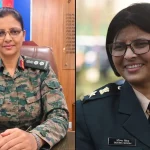

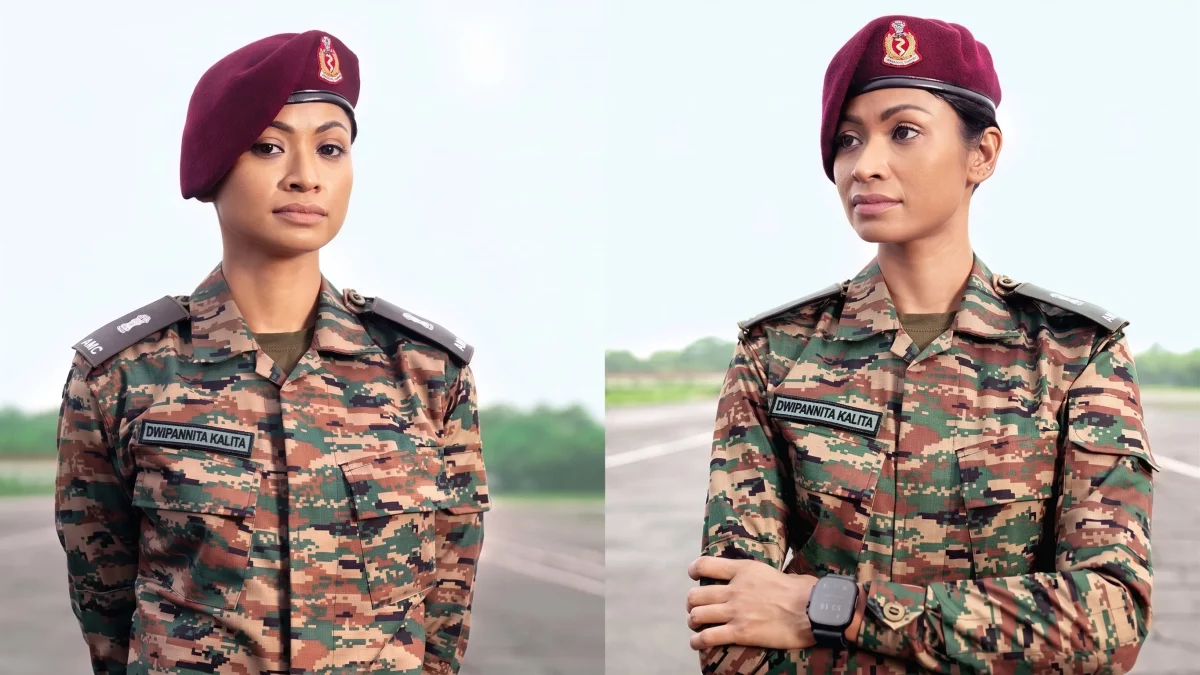
Major Dr. Dwipannita Kalita, a medical officer in the Indian Army, has emerged as an inspiring symbol of courage, discipline and determination. Hailing from Dhekiajuli in Assam’s Sonitpur district, she created history by becoming the first female paratrooper from Assam, earning the coveted Paratrooper Badge and the elite Maroon Beret after completing airborne training at the age of 34.
Her journey is remarkable not only because of the professional milestone she achieved, but also because of the path she chose to take. At a stage in life when many are expected to settle into familiar routines, Major Kalita chose challenge, service and adventure. From a small town in Assam to the elite airborne medical units of the Indian Army, her life reflects the power of self-belief and the courage to break barriers.
Major Dwipannita Kalita was born and raised in Dhekiajuli, a town in Assam’s Sonitpur district. She comes from a modest and humble family background, where values such as hard work, education and perseverance shaped her early years. From childhood, she displayed a strong academic temperament and a determined personality.
She completed her schooling at Devendra Green Grove English School in Dhekiajuli. Those who knew her from her school days remember her as a focused and bright student with a quiet but firm sense of purpose. After school, she pursued higher education at Darrang College, where she graduated with distinction.
One of the earliest signs of her trailblazing spirit came when she became the first girl from her home district of Sonitpur to move abroad for higher education. For a young woman from a small town in Assam, this was not just a personal academic step; it was a bold social statement. It showed that ambition, when backed by courage and family support, can take a person far beyond the limitations of geography and expectation.
Major Kalita pursued her MBBS degree in Manila, Philippines. Studying medicine abroad demanded not only academic focus but also emotional strength, independence and adaptability. Living away from home, adjusting to a new country and preparing for a demanding medical career shaped her into a resilient professional.
After completing her medical education, she returned to India and undertook her internship at the prestigious All India Institute of Medical Sciences, New Delhi, in 2015. AIIMS exposed her to a highly competitive and demanding medical environment, where she gained practical experience in patient care, emergency response and clinical decision-making.
Following her internship, she worked as a civilian doctor in hospitals in New Delhi, including Deen Dayal Hospital. During this phase, she gained hands-on experience in Emergency Medicine and Obstetrics and Gynecology. These departments are known for intense pressure, unpredictable cases and the need for quick decisions. Her experience in Delhi’s medical system helped sharpen her ability to remain calm under stress, manage trauma cases and respond effectively in critical situations.
This civilian medical experience later became an important foundation for her military career. The battlefield and disaster zones often demand the same qualities that emergency wards require: speed, clarity, courage and compassion. Major Kalita had already begun developing these qualities long before she wore the Indian Army uniform.
In 2019, Major Dwipannita Kalita married Dr. Charang Mate, an officer in the Army Medical Corps. While marriage is often seen as a stage where professional risks are reduced and stability becomes the priority, Major Kalita chose a different direction. Instead of stepping back from ambition, she stepped forward into one of the most demanding professions in the country.
In 2020, she competed against more than 100 applicants from across India and was selected for commissioning into the Army Medical Corps as a Captain and Medical Officer. Her selection itself was a major achievement, but the larger significance lay in the timing and context of her decision. She entered active military service as a married woman in her 30s, challenging conventional expectations about age, gender and personal life.
For many women, social pressure often becomes heavier after marriage. Major Kalita’s decision proved that personal milestones need not limit professional dreams. Her story became a reminder that service to the nation is not bound by age, gender or marital status.
Her most defining achievement came in 2023 when she volunteered for paratrooper and airborne training. Airborne training is one of the toughest physical and mental challenges in the armed forces. It demands high levels of fitness, fearlessness, discipline and the ability to perform under extreme pressure.
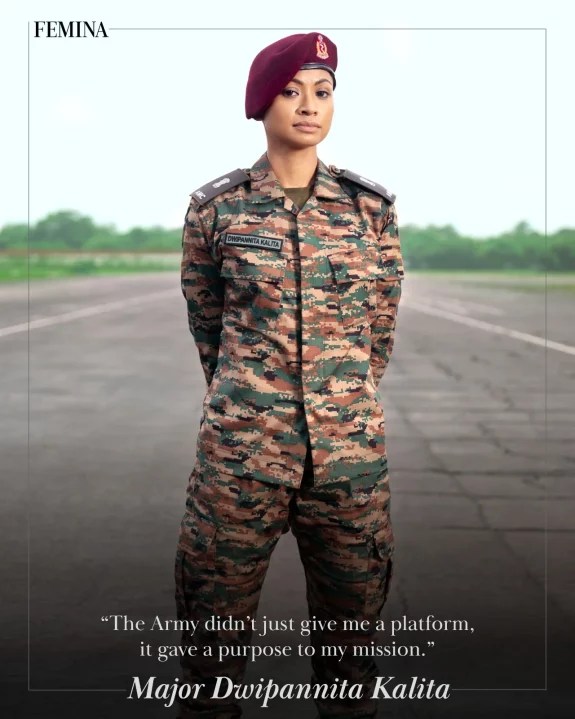
At the age of 34, Major Kalita successfully completed the intense training at the Army’s facility in Agra. She earned the Paratrooper Badge and the elite Maroon Beret, symbols of airborne courage and elite military distinction. With this achievement, she became Assam’s first female paratrooper.
The Maroon Beret is not merely a piece of uniform. It represents courage, sacrifice and the willingness to be deployed in some of the most difficult operational conditions. For a medical officer, earning this distinction carries even deeper meaning. It means being prepared to reach the wounded where help is most needed, even if that means being airdropped into combat zones, remote areas or disaster-hit regions.
Major Kalita currently serves in the highly specialized Parachute Medical Regiment, with strong operational associations with the Agra Army Base. This elite medical formation plays a critical role in supporting airborne and field operations. Its personnel are trained to provide medical care in highly challenging environments where normal hospital infrastructure may not exist.
In such conditions, medical officers are expected to establish makeshift field hospitals, treat acute trauma injuries, conduct emergency procedures and stabilize casualties for evacuation. Their work becomes crucial in combat zones, counter-insurgency operations and severe natural disasters.
Major Kalita’s responsibilities require a rare combination of medical skill and military toughness. She must be ready not only as a doctor, but also as a soldier. She must be able to move with troops, function in field conditions, manage crisis situations and save lives when time, resources and safety are limited.
Her promotion to the rank of Major in January 2025 marked another important step in her career. It reflected her growth within the Army Medical Corps and her continued service in a demanding operational environment.
Major Kalita’s achievement received national recognition in August 2025 when she was featured on the cover of Femina India Magazine’s Independence Day special edition. The edition, themed “In the Line of Duty,” honoured ten barrier-breaking women officers who are reshaping the image of the Indian Army.
She appeared alongside distinguished officers, including Colonel Sofia Qureshi, and became part of a larger national conversation about women in uniform. Her story stood out because it represented a powerful combination of medical excellence, military grit and social courage.
Her achievement was also praised by Assam’s Health and Family Welfare Minister, who publicly lauded her as a source of pride for the state and an inspiration for women across the Northeast. For Assam, her success was more than an individual milestone. It was a moment of collective pride, especially for young girls from small towns who dream of doing something extraordinary.
Major Kalita’s life also challenges old stereotypes about women in the armed forces. For decades, military roles were seen through narrow social assumptions. Women were often expected to choose safer, more conventional careers, and those who entered the armed forces were frequently judged through the lens of age, marriage and family responsibilities.
Major Kalita broke through these assumptions with quiet determination. She proved that a woman can be a doctor, a wife, a soldier and a paratrooper. She proved that courage does not belong to a particular age group. She proved that a person can begin a new chapter even after achieving success in another field.
Her story is especially meaningful for women from the Northeast. The region has produced many brave sons and daughters for the nation, but representation matters. When a woman from Dhekiajuli earns the Maroon Beret, it sends a powerful message to countless young girls in Assam and beyond: the uniform is within reach, and no dream is too distant.
Despite the intensity of her military life, Major Kalita maintains a grounded and balanced personality. Outside her demanding deployment schedules, she follows disciplined fitness routines and spends time in the gym. Fitness is not merely a hobby for her; it is an essential part of her identity as an airborne medical officer.
She also enjoys gardening and cooking while listening to soft jazz music. These personal interests reveal the softer side of an officer whose professional life is defined by pressure and responsibility. Her pet dogs are an important source of comfort for her, and she affectionately describes them as her personal “stressbusters.”
This balance between toughness and tenderness makes her story even more human. Major Kalita is not just a symbol of achievement; she is also a reminder that strength can coexist with warmth, discipline with creativity, and courage with compassion.
Her philosophy is captured in her powerful words: “You are not here to fit into the mould — you’re here to break out of it.”
This statement reflects the essence of her journey. She did not simply follow a ready-made path. She created one. She did not allow society’s expectations to define her limits. She chose to push beyond them. She did not see age or marriage as barriers. She saw them as part of her larger journey.
Major Dr. Dwipannita Kalita’s life is a story of resilience, purpose and service. From Dhekiajuli to Manila, from AIIMS to the Army Medical Corps, from civilian hospitals to airborne medical operations, she has repeatedly chosen difficult paths and walked them with conviction.
Her achievement as Assam’s first female paratrooper will continue to inspire defence aspirants, medical professionals and young women across India. She represents a new generation of Indian women in uniform: confident, skilled, fearless and determined to serve the nation in the most demanding conditions.
Major Kalita’s journey proves that extraordinary lives are not built in comfort zones. They are built through discipline, risk, sacrifice and the courage to believe that one’s best chapter can begin at any stage of life. Her Maroon Beret is not just a personal honour; it is a message to every dreamer from a small town, every woman facing doubt, and every aspirant waiting for the right moment.
The right moment is often the one you create yourself. And Major Dwipannita Kalita created hers with courage.