

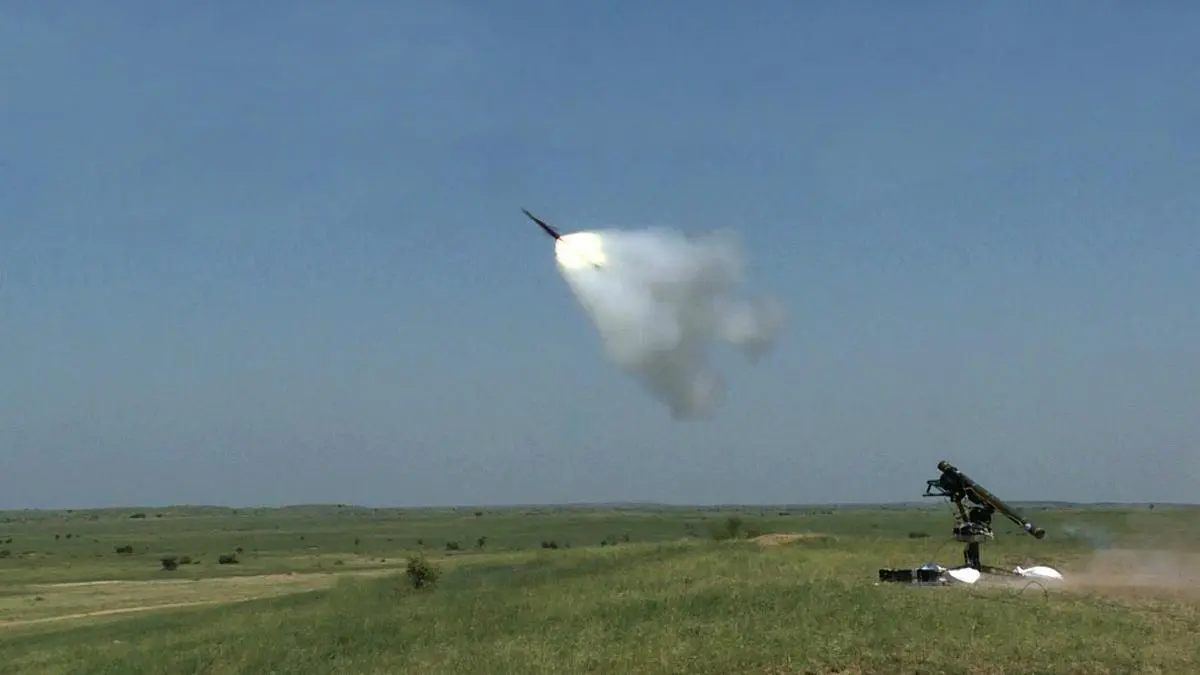
In a major boost to defence indigenisation and private sector participation, the Ministry of Defence has opened the production of indigenous tactical missiles to private industry, ending the long-standing dominance of Bharat Dynamics Limited (BDL) as the principal production partner for such systems.





Under the new approach, the Defence Research and Development Organisation has distributed 10–12 tactical missile development programmes among public and private sector companies based on their technological and manufacturing capabilities. The move is aimed at accelerating missile development, expanding production capacity and creating a level playing field for the Indian defence industry.
The initiative aligns with the objectives of the proposed Defence Acquisition Procedure (DAP) 2026 and India’s vision of achieving greater self-reliance in advanced weapon systems under the Atmanirbhar Bharat programme.
Private Firms Join Missile Development Programmes
At least four major private defence companies—Adani Defence & Aerospace, Bharat Forge, ICOMM Tele Limited and Solar Defence and Aerospace—have been selected as Development-cum-Production Partners (DcPPs) for various DRDO missile projects.
Under the DcPP model, industry partners work alongside DRDO from the development stage through design validation, trials and eventual production, reducing development timelines and enabling faster induction into service.
Besides private firms, defence public sector undertakings such as Bharat Dynamics Limited and Bharat Electronics Limited (BEL) will continue to participate in selected programmes.
Key Missile Programmes
The projects involve several advanced indigenous missile systems, including:
- Pralay tactical ballistic missile
- Naval Anti-Ship Missile Short Range (NASM-SR)
- Rudram-I
- Rudram-II
- Rudram-III
- VSHORADS
- Long-Range Glide Bomb (LRGB)
- UAV-Launched Precision Guided Missile (ULPGM-V3)
Notably, the Pralay missile, which successfully completed user evaluation trials in late 2025, demonstrated precision strike capability against targets at ranges between 150 and 500 kilometres.
Growing Importance of Tactical Missiles
Defence officials noted that recent global conflicts have highlighted the growing importance of tactical missile systems in modern warfare. Precision-guided missiles, loitering munitions and long-range strike capabilities are increasingly shaping battlefield outcomes, prompting the Indian Armed Forces to seek indigenous alternatives to imported systems.
The policy shift is also expected to support future discussions on raising a dedicated rocket or missile force capable of delivering coordinated long-range precision strikes and countering aerial threats.
Expanding Private Sector Role
The move follows broader defence reforms that have increased private participation in aerospace and military manufacturing. The government is also examining the possibility of opening ballistic missile manufacturing to private companies in the future.
By diversifying production partners and leveraging private sector innovation, the Ministry of Defence aims to strengthen India’s defence industrial base, enhance production capacity and accelerate the development of advanced indigenous missile systems for the Armed Forces.