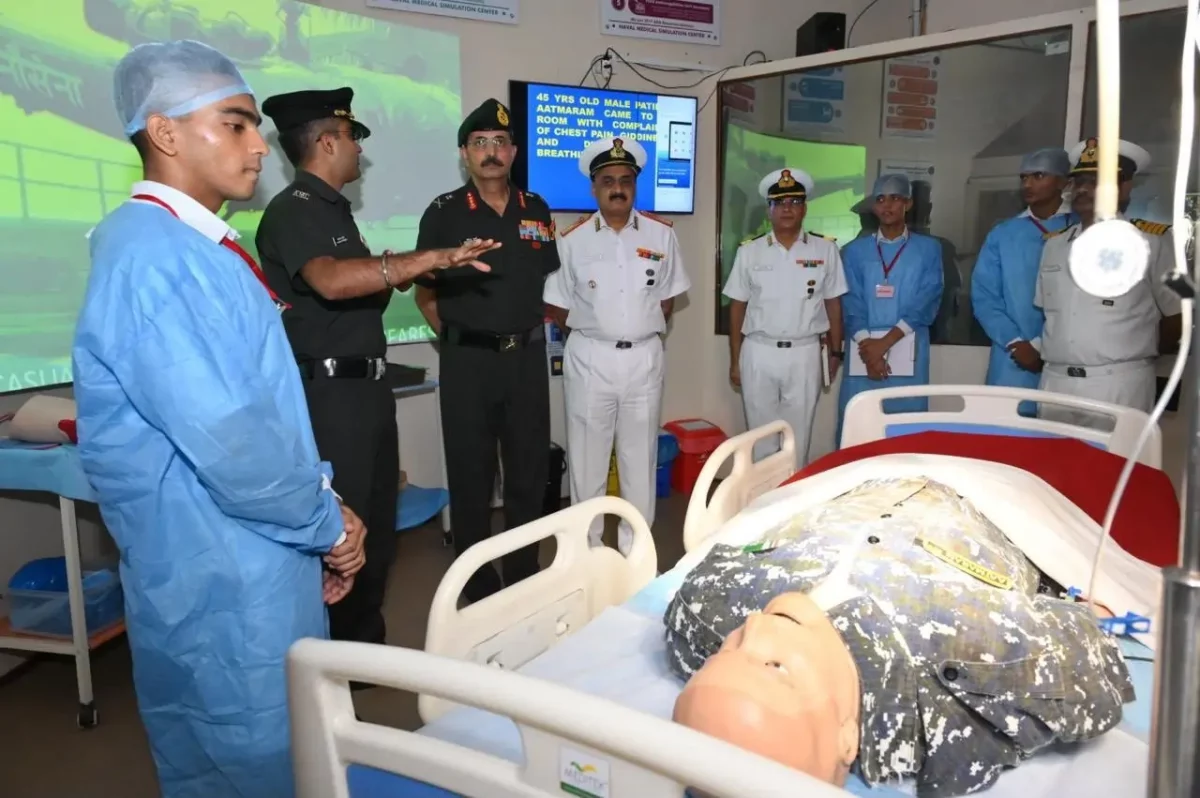
Lieutenant General Devendra Sharma, PVSM, AVSM, SM, General Officer Commanding-in-Chief (GOC-in-C) of the Army Training Command (ARTRAC), visited the Indian Naval Hospital Ship (INHS) Asvini, the School of Medical Assistants and the Institute of Naval Medicine on July 16, 2026, to review their contributions towards military healthcare, medical training and research. The visit underscored the growing importance of tri-service cooperation in combat medical support and the Indian Armed Forces’ continued commitment to delivering world-class healthcare to service personnel and their families.





During the visit, Lt Gen Devendra Sharma was briefed on the advanced medical capabilities, specialised training programmes and ongoing research initiatives being undertaken at the premier naval medical institutions. The Army Commander reviewed the facilities’ role in providing comprehensive tertiary healthcare services and preparing military medical personnel to effectively address the challenges associated with contemporary and future operational environments.
Lt Gen Sharma lauded INHS Asvini for maintaining exceptionally high standards of medical care through its modern medical infrastructure and patient-centric healthcare delivery systems. He commended the institution’s contribution towards delivering specialised tertiary healthcare services to its clientele while continuously adopting advanced medical technologies and innovative treatment methodologies.
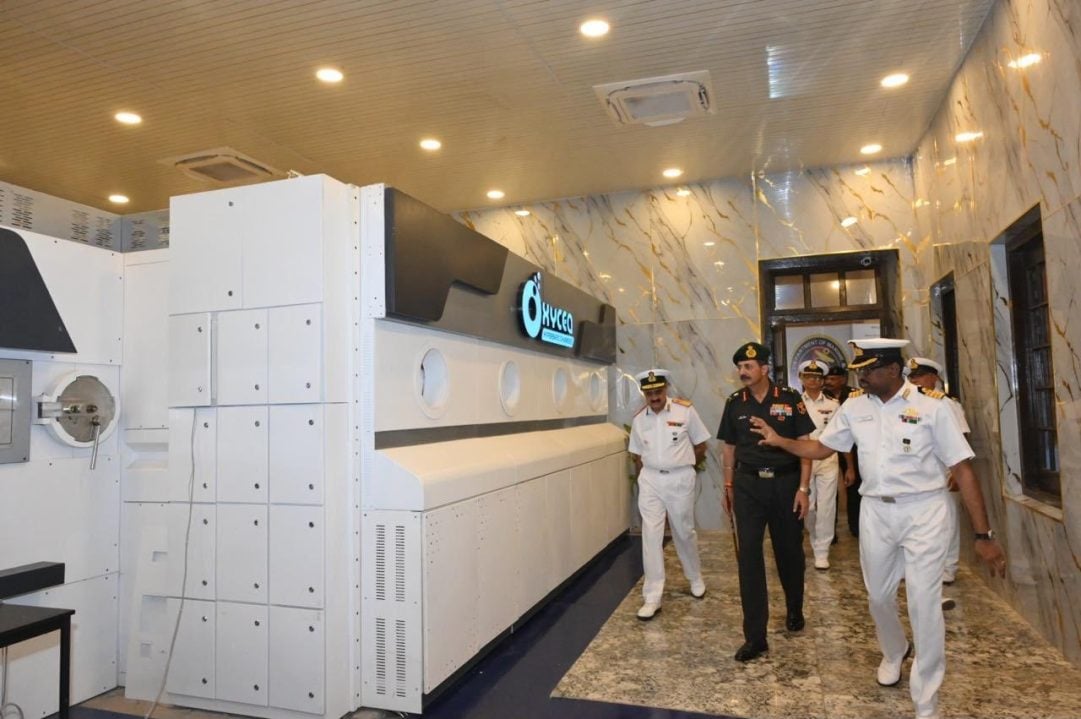
INHS Asvini remains one of the Armed Forces Medical Services’ foremost centres of excellence, providing specialised healthcare across multiple disciplines while also contributing significantly to medical education, research and operational medical preparedness. Its role extends beyond conventional healthcare delivery to encompass specialised military medical support tailored to the unique requirements of defence personnel and their families.
The Army Commander emphasised the growing importance of cross-training initiatives among the three services as a critical component of strengthening tri-service medical cooperation. In an era where jointness and integration are increasingly defining military operations, the sharing of expertise, operational experiences and best practices among the Indian Army, Indian Navy and Indian Air Force has become indispensable for enhancing overall military medical capabilities.
Lt Gen Sharma highlighted that cross-training visits and institutional exchanges not only promote professional excellence but also contribute significantly towards developing common operational understanding and improving interoperability across military medical services. Such collaborative initiatives strengthen the Armed Forces’ collective ability to provide timely and effective medical support during both peacetime and operational deployments.
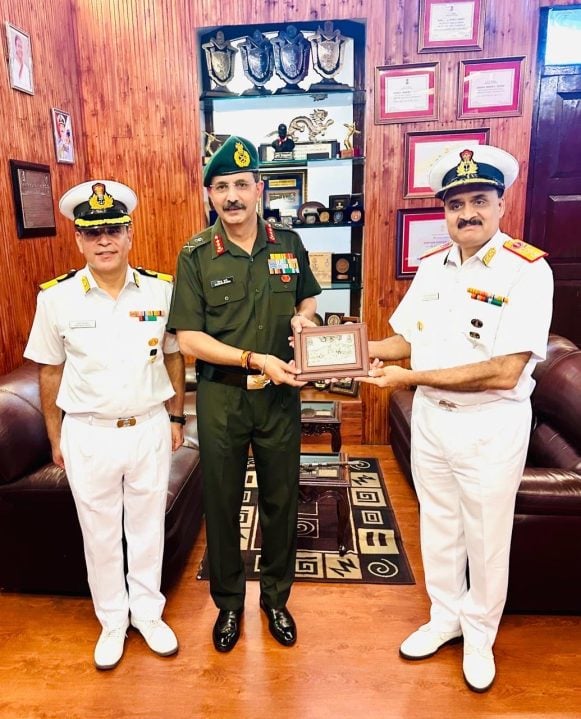
Combat Medical Support emerged as one of the key areas of focus during the visit. The Army Commander underscored the critical importance of continuously strengthening medical preparedness to address the complex healthcare requirements of contemporary battlefields. Modern military operations increasingly demand highly trained medical personnel capable of delivering advanced trauma care and life-saving interventions under challenging operational conditions.
The discussions also emphasised the importance of building mental resilience among military personnel as an integral component of comprehensive healthcare support. Recognising the psychological and emotional challenges associated with military service, the Armed Forces continue to prioritise initiatives aimed at strengthening mental well-being and enhancing resilience across all ranks. Such efforts remain essential for sustaining both operational effectiveness and overall force readiness.
Lt Gen Devendra Sharma appreciated the significant efforts being undertaken by INHS Asvini in the fields of medical innovation and research. Continuous advancements in military medicine play a crucial role in improving patient outcomes, enhancing combat casualty care and developing future-ready healthcare capabilities tailored to the unique operational requirements of the armed forces.
Innovation in military healthcare has increasingly assumed strategic importance, encompassing advancements in trauma management, telemedicine, preventive healthcare, medical technologies and specialised treatment protocols designed to support personnel operating across diverse environments. Institutions such as INHS Asvini continue to contribute substantially towards these efforts through sustained investments in research and professional excellence.
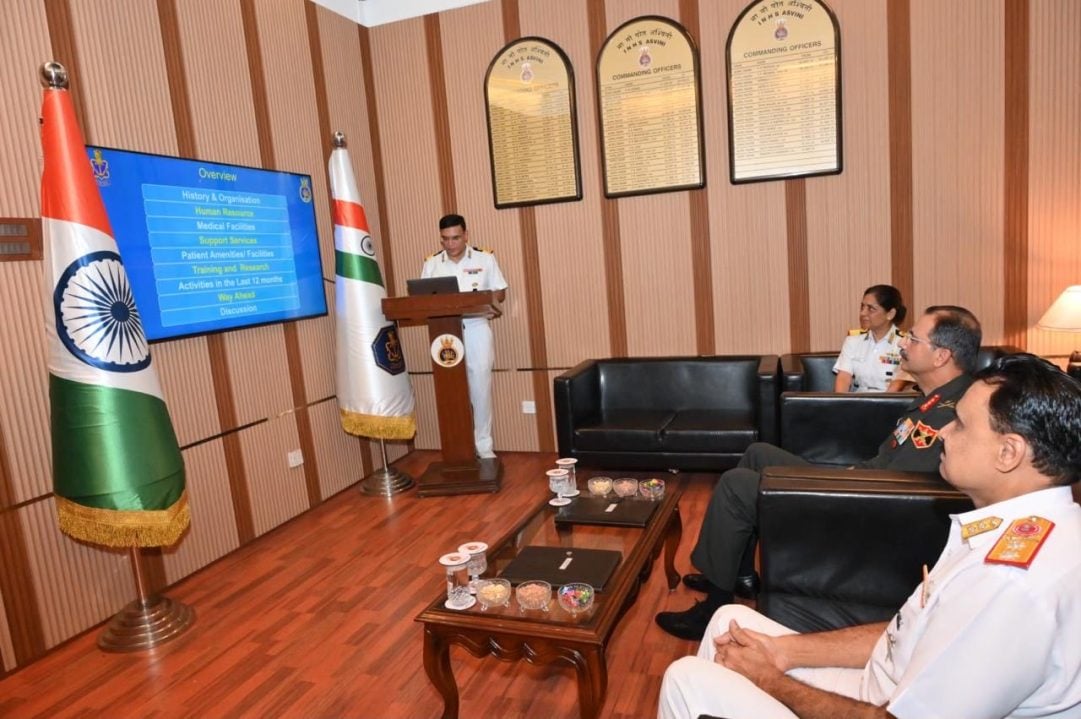
The visit also highlighted the indispensable role played by specialised medical training institutions such as the School of Medical Assistants and the Institute of Naval Medicine in preparing highly skilled healthcare professionals capable of serving across operational and tertiary healthcare environments. Their contribution remains fundamental to maintaining the Armed Forces Medical Services’ tradition of excellence in military medicine.
Lt Gen Sharma reaffirmed the importance of fostering a culture of continuous learning, innovation and collaboration across military healthcare institutions to effectively address future challenges. He observed that the seamless integration of advanced medical capabilities, specialised training and tri-service cooperation will remain critical in strengthening the overall healthcare ecosystem of the Indian Armed Forces.
The visit reflects the Indian Armed Forces’ enduring commitment to providing world-class medical support while continuously enhancing operational medical preparedness through innovation, jointness and professional excellence. By strengthening tri-service cooperation and advancing medical capabilities, institutions such as INHS Asvini continue to play a vital role in safeguarding the health and well-being of the nation’s military community.