
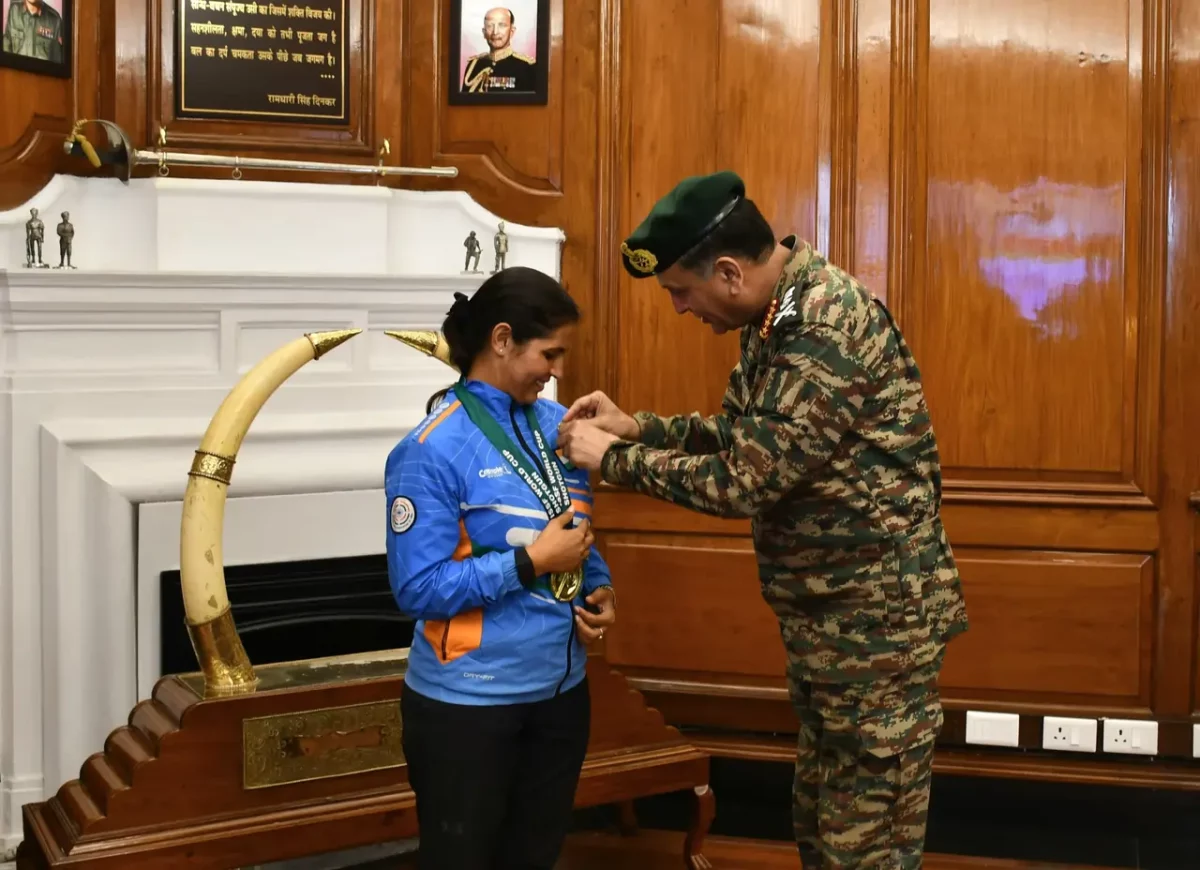
Chief of the Army Staff General Dhiraj Seth felicitated Naib Subedar Neeru Dhanda of the Army Marksmanship Unit for creating history by becoming the first Indian woman to win an individual gold medal in the women’s trap event at an International Shooting Sport Federation World Cup.



Naib Subedar Neeru Dhanda secured the landmark victory at the ISSF Shotgun World Cup held in Lonato, Italy, producing a composed and commanding performance against some of the world’s leading trap shooters.
During the felicitation, General Dhiraj Seth praised the Army shooter for her exceptional skill, determination and sporting excellence. The Army Chief described her victory as a landmark achievement for both the Indian Army and the Nation, highlighting the discipline and perseverance required to succeed at the highest level of international shooting.
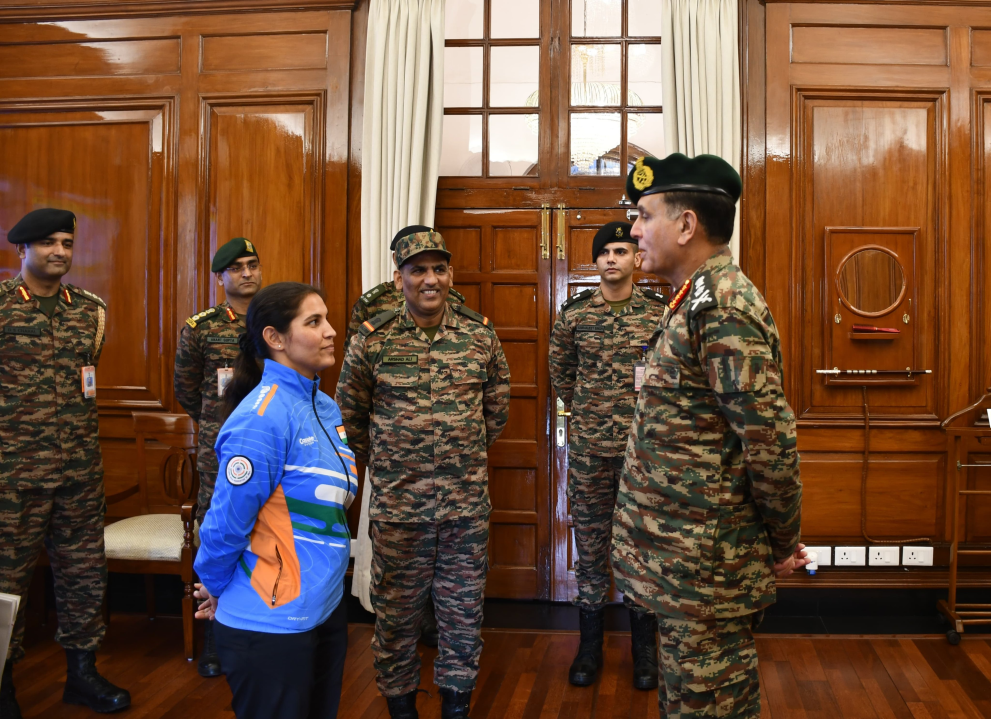
General Dhiraj Seth Praises Historic Achievement
General Dhiraj Seth commended Naib Subedar Neeru Dhanda for maintaining her focus under pressure and delivering a performance that placed India at the top of the international podium.
The Chief of the Army Staff also appreciated her inspiring journey, observing that her success reflected the Indian Army’s sustained commitment to identifying, training and supporting talented sportspersons.
Her achievement, the Army noted, would motivate young athletes—particularly women serving in uniform—to pursue excellence and represent India at major international competitions.
The felicitation also underlined the important role played by the Army Marksmanship Unit in developing shooters capable of competing against the best athletes in the world.
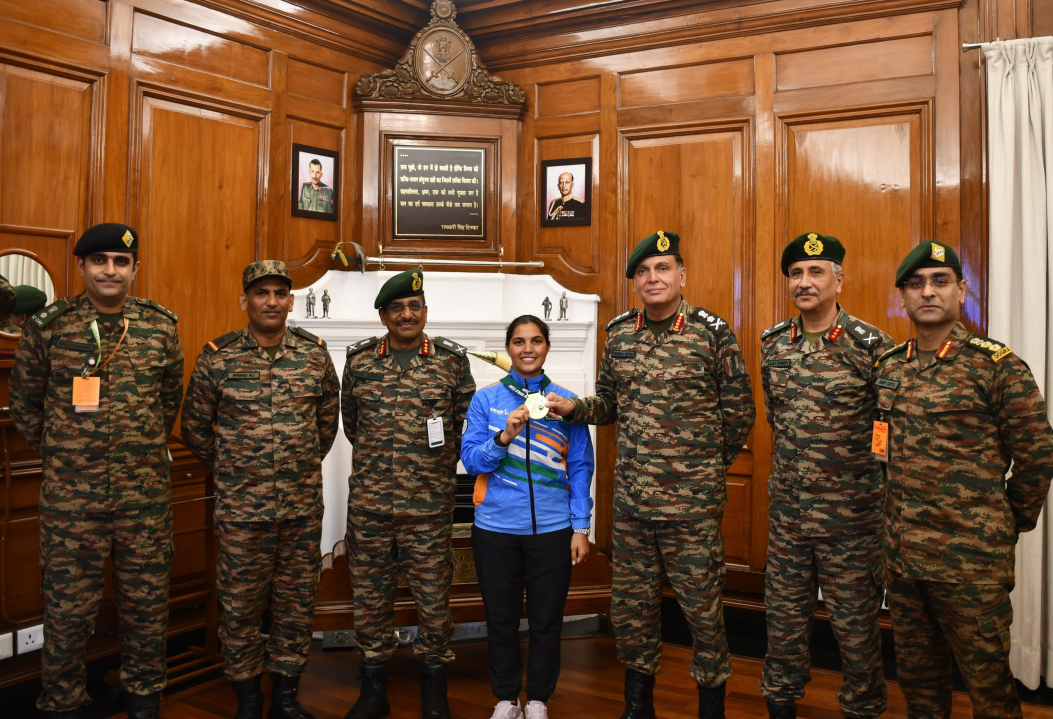
Neeru Dhanda’s Golden Performance in Lonato
Neeru Dhanda dominated the women’s trap competition from the qualification stage. She topped the qualification standings with an impressive score of 121 hits out of 125 targets, securing her place in the eight-shooter final.
She began the qualification round with three flawless series, hitting all 75 targets. Her consistency ensured that she remained ahead in a highly competitive field featuring leading shooters from several prominent shooting nations.
In the 30-target final, Neeru displayed remarkable control and accuracy, missing only three targets to finish with a winning score of 27 out of 30.
France’s former world champion Carole Cormenier secured the silver medal with 25 hits, while Italy’s Erica Sessa claimed the bronze medal.
Neeru established herself among the leaders during the early stages of the final and maintained her narrow advantage through the decisive phase of the contest. Her ability to remain calm under pressure ultimately enabled her to secure her maiden individual ISSF World Cup title.
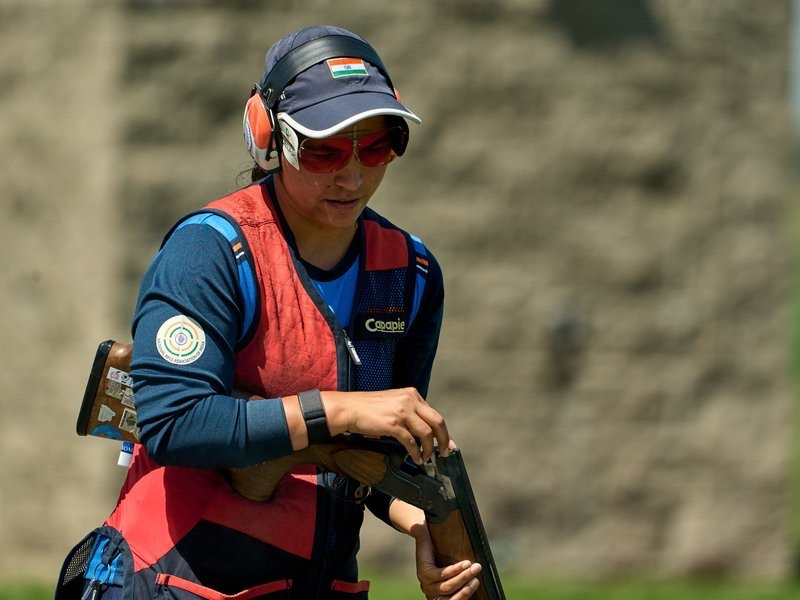
First Indian Woman to Win World Cup Trap Gold
The victory made the 26-year-old shooter the first Indian woman to win an individual gold medal in trap shooting at an ISSF World Cup.
It also ended India’s 16-year wait for an individual women’s trap medal at the World Cup level. Seema Tomar had previously won a silver medal in the discipline in 2010.
The gold in Lonato is among the most significant achievements of Neeru’s sporting career. She entered the competition as the reigning Asian champion, having won the women’s trap gold medal at the Asian Shooting Championships in Shymkent, Kazakhstan, in 2025.
She is also the reigning national champion and had previously secured a mixed-team bronze medal at an ISSF World Cup event in Almaty.
From the Corps of Military Police to the World Podium
Hailing from Jind district in Haryana, Neeru Dhanda joined the Corps of Military Police after the Indian Army opened recruitment in the rank and file to women.
Her potential as a shooter was subsequently nurtured at the Army Marksmanship Unit, located at the Infantry School in Mhow, Madhya Pradesh.
The Army Marksmanship Unit functions under the Indian Army’s Mission Olympics programme and trains military personnel, para-athletes and selected civilian shooters for national and international competitions.
Through specialised coaching, sports science support and high-intensity competitive training, the unit has produced several accomplished shooters who have represented India at prestigious sporting events.
Neeru’s progression from a soldier in the Corps of Military Police to an Asian champion and ISSF World Cup gold medallist reflects the expanding opportunities available to women personnel within the Indian Army.
A Landmark Moment for Indian Army Shooting
Naib Subedar Neeru Dhanda’s victory represents a major milestone for the Indian Army’s sporting ecosystem.
The result demonstrated the effectiveness of the Army’s long-term investment in specialised sports institutions, professional coaching and structured athlete development.
It also provided India with an important international success ahead of upcoming major competitions, including the Asian Games.
Trap shooting is considered one of the most demanding shotgun disciplines. Competitors must shoot clay targets launched rapidly from a concealed trap house at varying angles and speeds. Success requires quick reflexes, precise hand-eye coordination, mental resilience and the ability to make split-second decisions.
Neeru’s score of 27 hits from 30 targets in the final reflected her technical accuracy and ability to manage the intense psychological pressure of an international medal contest.
Inspiring Future Generations
General Dhiraj Seth’s felicitation recognised not only the medal but also the years of discipline, training and sacrifice behind the historic achievement.
The Army Chief stated that Neeru Dhanda’s journey embodied the values of dedication, perseverance and excellence associated with the Indian Army.
Her victory is expected to inspire a new generation of soldiers and civilian athletes to pursue competitive shooting and other Olympic disciplines.
By standing at the top of the podium in Lonato, Naib Subedar Neeru Dhanda established a new benchmark for Indian women in shotgun shooting and added another distinguished chapter to the sporting legacy of the Indian Army.
Her achievement reaffirmed that with institutional support, professional training and unwavering determination, Indian athletes are capable of competing successfully against the strongest sporting nations in the world.