
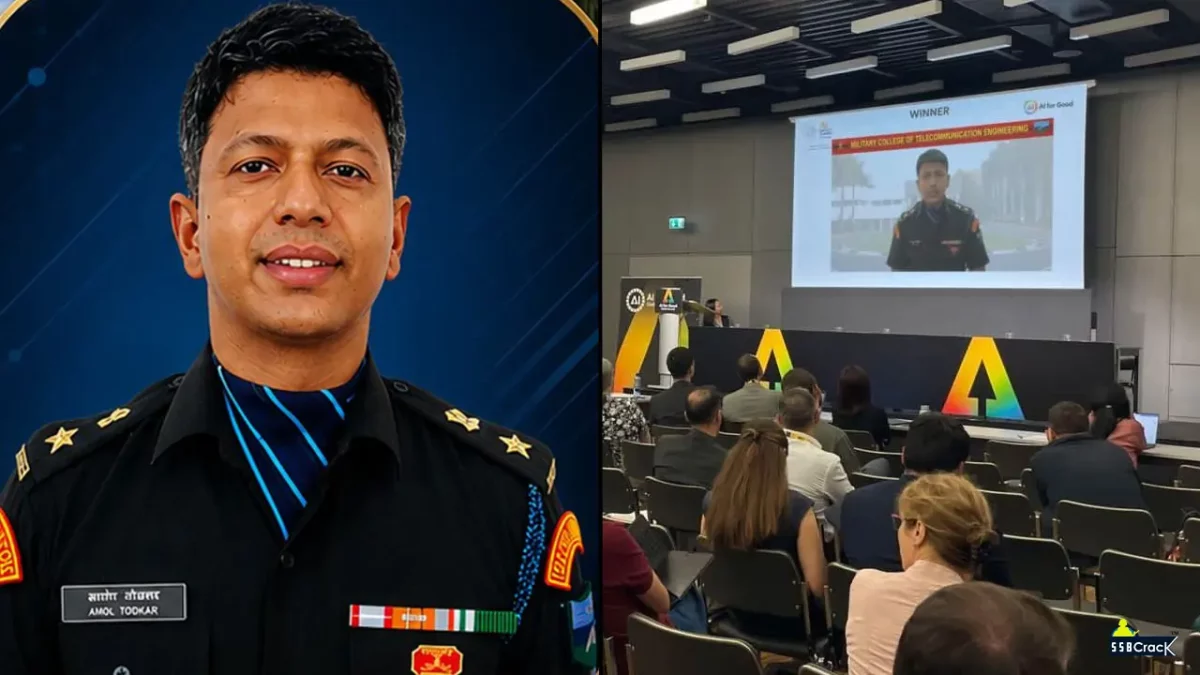
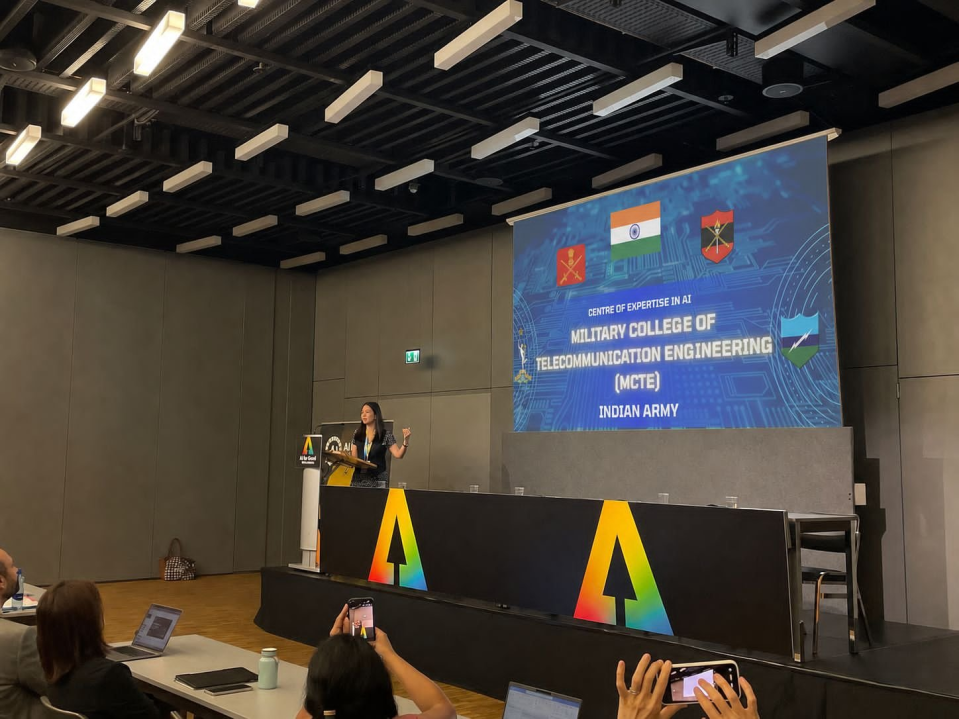
A team from the Military College of Telecommunication Engineering, led by Lieutenant Colonel Amol Todkar, has brought international recognition to the Indian Army by emerging as a global winner at the International Resilient AI Challenge.





The MCTE team secured the top position in the Audio-to-Text Model Compression track after developing the best-performing compressed version of a Mistral AI model. Its solution achieved an outstanding balance between energy efficiency and accuracy, outperforming entries submitted by participants from across the world.
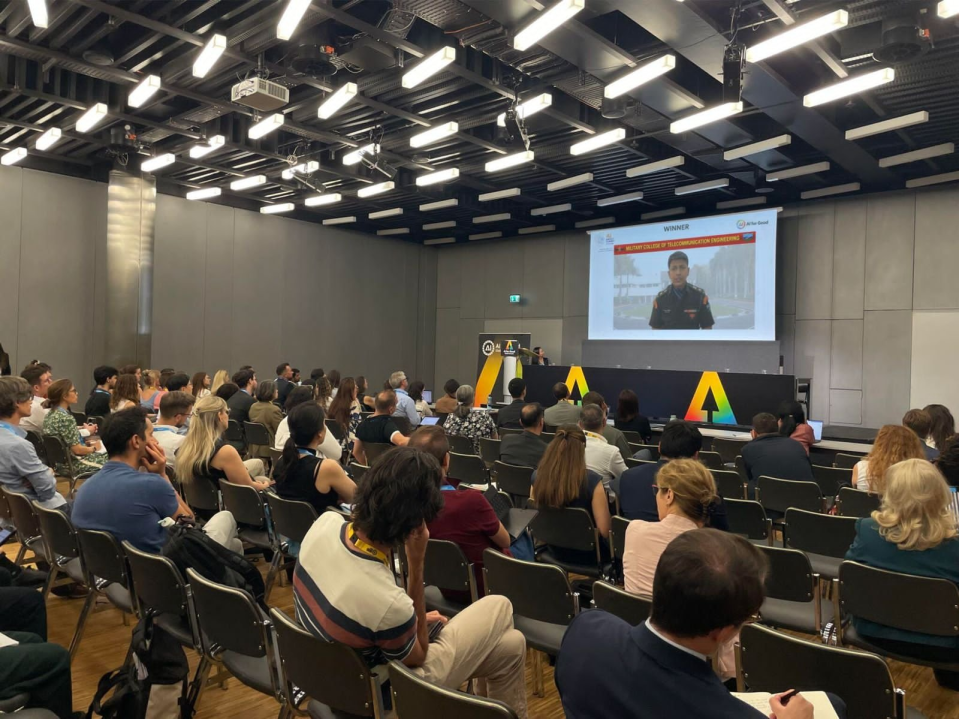
The winners were announced during a ceremony held in Geneva, Switzerland, on July 8, 2026, as part of the AI for Good Global Summit. The international summit was organised by the International Telecommunication Union in collaboration with more than 50 United Nations partners and co-convened by the Swiss Confederation. The 2026 edition was held at Geneva’s Palexpo convention centre from July 7 to 10.
MCTE Team Excels in Audio-to-Text Model Compression
Competing in the Audio-to-Text Model Compression category, the MCTE team was tasked with making an artificial intelligence model smaller and more energy-efficient while preserving its ability to accurately convert spoken audio into written text.
The Indian Army team produced the strongest compressed Mistral AI model in the competition, demonstrating that advanced AI systems can be optimised to consume fewer computational and energy resources without significantly compromising performance.
According to the Army Training Command, the team was led by Lieutenant Colonel Amol Todkar and emerged as the global winner in its competition track.
The achievement is particularly significant because large AI models ordinarily require substantial computing power, memory and electricity. Compressing such models can enable them to operate on devices and systems with limited processing capability, including mobile platforms, edge-computing systems and equipment deployed in remote or resource-constrained environments.
By reducing the size and computational demands of an AI model, developers can lower its energy consumption, improve processing speed and expand its accessibility.
International Resilient AI Challenge
The International Resilient AI Challenge brought together participants seeking innovative methods to make artificial intelligence systems more sustainable, efficient and accessible.
The initiative was jointly organised by the governments of India and France, the United Nations and the IndiaAI Mission, with participation and support from technology organisations including Google, Mistral AI and Sarvam AI.
The competition focused on the growing requirement to reduce the environmental and computational costs associated with increasingly powerful AI systems.
Participants were expected to optimise selected AI models while maintaining a high level of accuracy and practical performance. The challenge demonstrated that AI development need not be measured solely by the increasing size of models, but also by how intelligently and efficiently those models use available resources.
The MCTE team’s winning solution established the best balance between energy efficiency and model accuracy in the Audio-to-Text Model Compression track.
Winners Announced at AI for Good Global Summit
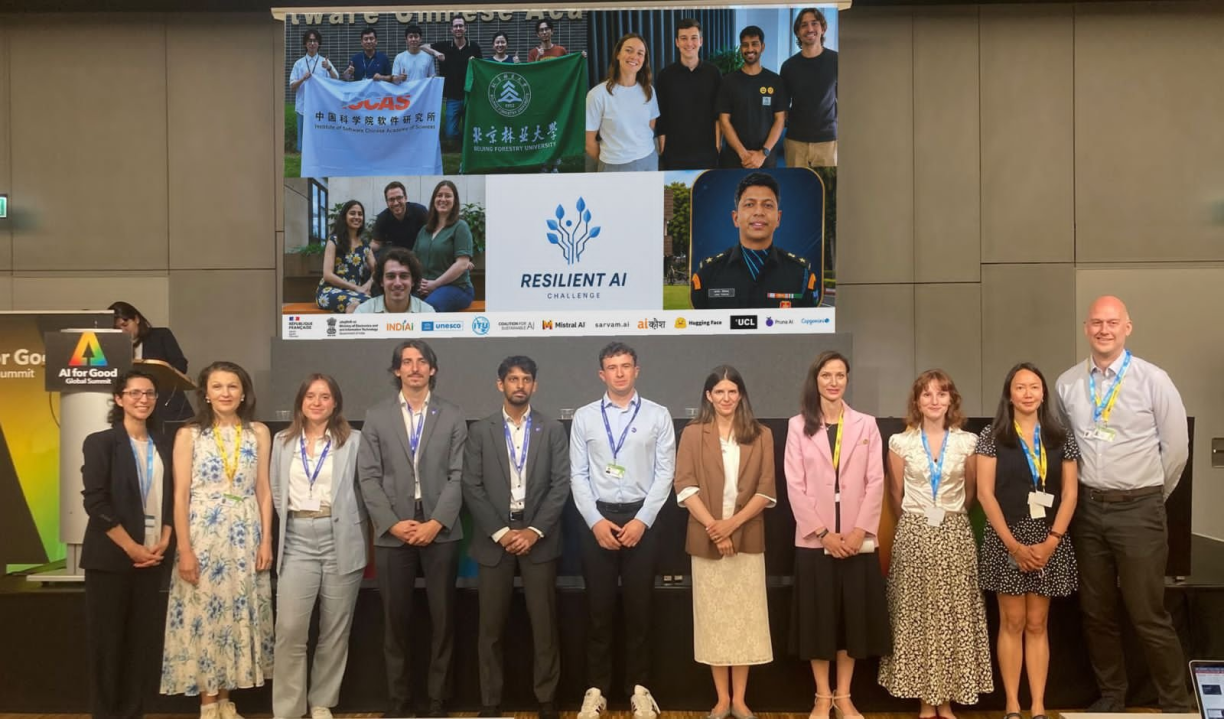
The winning teams were recognised at the AI for Good Global Summit in Geneva, one of the United Nations system’s leading platforms for discussions on the responsible use of artificial intelligence.
The summit is led by the International Telecommunication Union, the UN specialised agency for digital technologies. It brings together representatives of governments, industry, academia, civil society and the international technical community to explore how AI can contribute to sustainable development and address global challenges.
Three teams representing India, France and China were recognised among the winners of the Resilient AI Challenge:
- The Wavestone Wavelets from France
- The MCTE Team from India
- Team LiteMind from China
Their solutions highlighted different approaches through which artificial intelligence models could be made significantly more energy-efficient while retaining strong operational performance.
Major Achievement for the Indian Army
The global victory marks an important technological achievement for the Indian Army and reflects the increasing emphasis being placed on artificial intelligence, machine learning, communication systems and emerging defence technologies.
The Military College of Telecommunication Engineering is one of the Indian Army’s premier technical training institutions. Located in Mhow, Madhya Pradesh, the institution trains personnel in military communications, information technology, electronic warfare, cyber operations and other advanced technological fields.
MCTE also plays an important role in studying and developing emerging technologies that could support the Army’s future operational requirements.
The institution’s victory in an international AI competition demonstrates that military technical establishments are not only adopting new technologies but are also contributing to their development and optimisation.
The accomplishment is particularly relevant as modern armed forces increasingly depend upon AI-enabled systems for intelligence analysis, communications, surveillance, logistics, decision support and autonomous platforms.
Importance of Energy-Efficient Artificial Intelligence
The rapid growth of artificial intelligence has led to the development of increasingly large and complex models. While these models can perform sophisticated tasks, they often require powerful computing infrastructure and consume substantial amounts of energy.
Model compression seeks to address this challenge by reducing the size and complexity of an AI system while retaining as much of its original performance as possible.
Compressed models can require less memory, generate faster results and operate on smaller devices. They can also be deployed in environments where access to large data centres or uninterrupted high-capacity networks is unavailable.
For military organisations, such capabilities could potentially support the deployment of AI systems in forward areas, mobile command centres, tactical platforms and locations with limited computing or communication infrastructure.
Audio-to-text systems, in particular, can be used for functions such as transcription, voice-enabled interfaces, multilingual communication, information processing and the conversion of spoken operational inputs into searchable digital records.
The MCTE team’s solution demonstrated how such a model could be made more efficient without losing the accuracy necessary for practical use.
India’s Growing Role in Responsible AI Development
The victory also comes as India expands its participation in global discussions surrounding responsible and inclusive artificial intelligence.
Through programmes such as the IndiaAI Mission, the country is working to strengthen AI research, computing infrastructure, innovation, skills and the development of applications addressing national requirements.
International collaborations involving governments, technology companies and United Nations institutions are expected to play an important role in ensuring that AI systems are not only powerful but also sustainable, accessible and capable of operating across diverse environments.
The Resilient AI Challenge addressed this objective by encouraging participants to focus on efficient AI rather than simply developing larger models.
Showcasing Indian Military Innovation
The success of the Lieutenant Colonel Amol Todkar-led team adds another notable accomplishment to MCTE’s record of technological education and innovation.
By securing the leading position against international competitors, the team demonstrated technical expertise in model optimisation, artificial intelligence and energy-efficient computing.
The achievement also reflects the broader transformation taking place within the Indian Army as it strengthens its capabilities in digital technologies, cybersecurity, communications and artificial intelligence.
The team’s performance in Geneva reinforces the importance of supporting military personnel with advanced technical education and opportunities to participate in international innovation platforms.
The MCTE team’s global victory is therefore more than a competition result. It represents India’s growing ability to contribute to the development of artificial intelligence that is smarter, more sustainable and more accessible.
By producing the best-performing compressed model in its track, Lieutenant Colonel Amol Todkar and his team have earned international recognition while highlighting the technological capabilities of the Indian Army on a prominent global stage.