
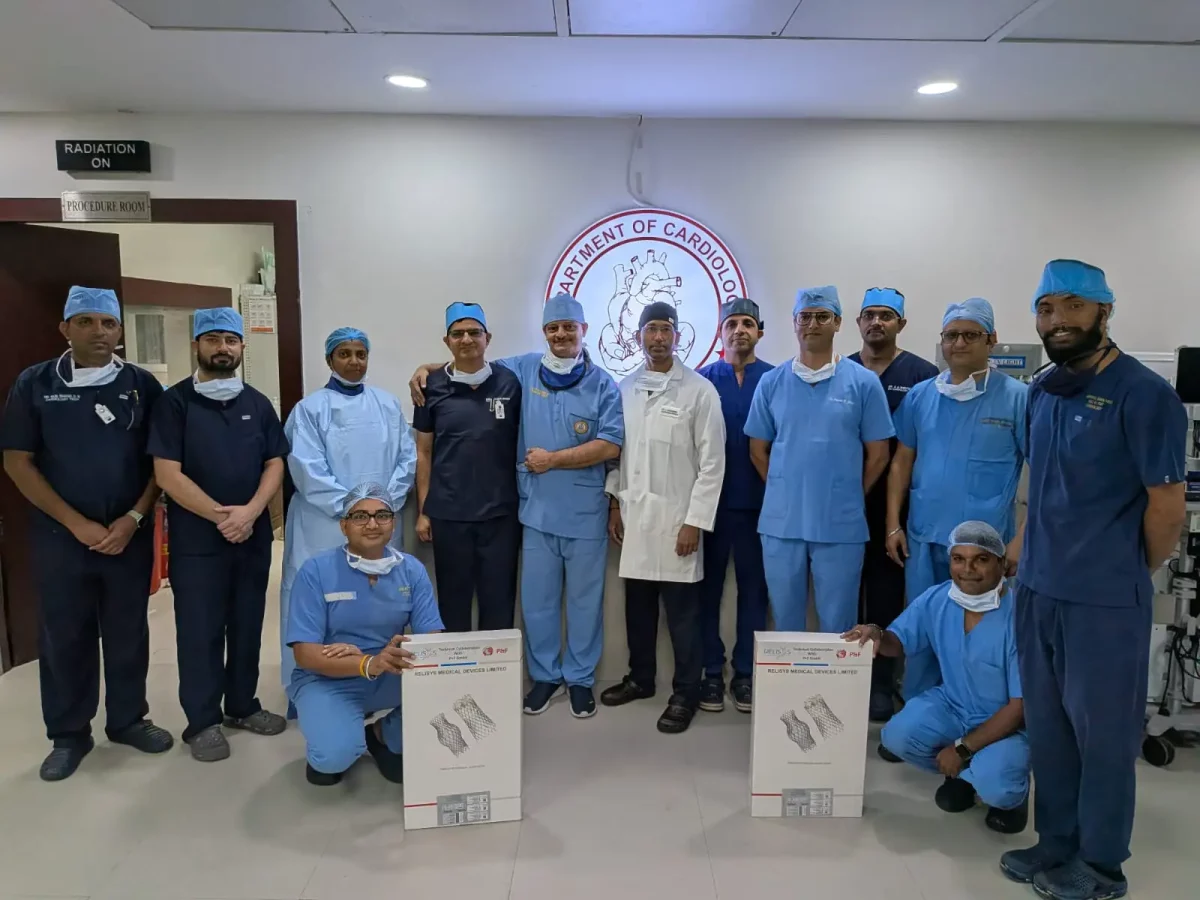
Pune, July 27: Specialists at the Army Institute of Cardio-Thoracic Sciences (AICTS), Pune, have successfully performed a rare and highly complex minimally invasive heart procedure, marking a significant milestone in advanced cardiac care within the Armed Forces Medical Services (AFMS). The breakthrough intervention was carried out on a patient with a history of previous heart valve replacement surgery who had later developed severe leakage of the heart’s right-sided tricuspid valve.

The procedure, known as bicaval transcatheter valve implantation (CAVI), involved the simultaneous implantation of two prosthetic valves in the superior vena cava and inferior vena cava—the two major veins that return blood to the right side of the heart. By adopting this innovative catheter-based technique, the AICTS team successfully treated the patient’s condition without the need for a repeat open-heart surgery, significantly reducing surgical risk and recovery time.
The achievement underscores the growing capability of military medical institutions in India to deliver cutting-edge structural heart interventions that are available only at a handful of highly specialised cardiac centres worldwide.
According to AICTS, the patient had previously undergone heart valve replacement surgery but later developed severe tricuspid regurgitation, a condition in which the tricuspid valve fails to close properly, allowing blood to flow backward into the body’s venous circulation instead of moving efficiently through the heart.
This condition often leads to serious and debilitating symptoms, including swelling of the legs and abdomen, liver congestion, fatigue, and breathlessness. For patients who have already undergone open-heart surgery, performing another surgical operation carries substantially higher risks due to scar tissue, previous interventions, and associated medical complications.
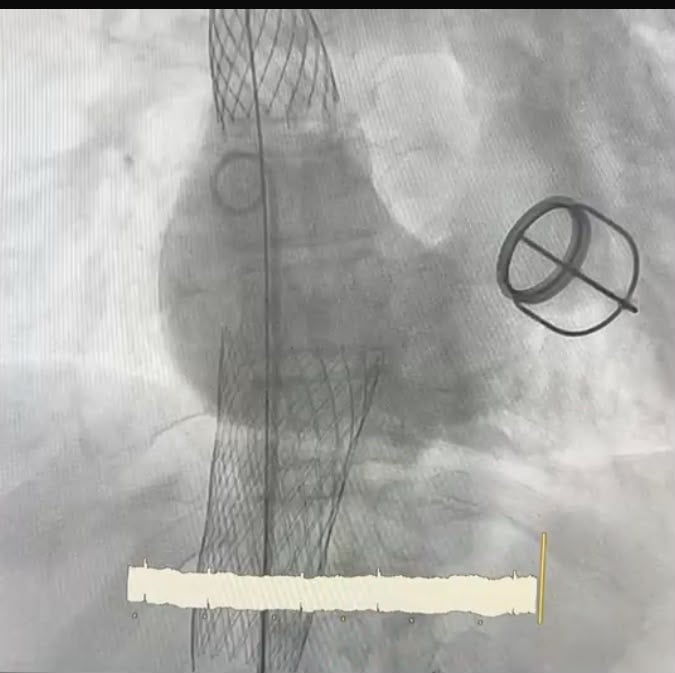
Recognising these challenges, the multidisciplinary cardiac team at AICTS opted for a minimally invasive catheter-based approach. Using advanced interventional techniques, they implanted two prosthetic valves simultaneously in the veins leading to the right atrium. The newly implanted valves effectively prevent the backward flow of blood, restoring improved circulation while eliminating the need for another major surgical procedure.
The patient recovered successfully following the intervention, highlighting the effectiveness of this advanced treatment option for carefully selected high-risk patients.
Medical experts describe bicaval transcatheter valve implantation as one of the most technically demanding procedures in the field of structural heart disease. Unlike Transcatheter Aortic Valve Replacement (TAVR), which has become a widely accepted treatment for aortic valve disease across the world, CAVI remains an emerging therapy with limited global experience.
The procedure is primarily recommended for patients suffering from severe tricuspid regurgitation who are considered unsuitable candidates for conventional surgery because of advanced age, prior cardiac operations, or multiple underlying health conditions. As experience with the technique grows internationally, it is increasingly being recognised as a promising alternative for managing complex right-sided heart valve disease.
The successful completion of this rare procedure at AICTS reflects the rapid advancement of minimally invasive cardiac care within India’s Armed Forces Medical Services. It also demonstrates the increasing expertise of Indian military cardiologists in adopting sophisticated catheter-based therapies that offer safer and more effective treatment options for patients who previously had limited alternatives.
The accomplishment further strengthens AICTS Pune’s reputation as one of India’s premier centres for complex cardiothoracic care and advanced cardiac interventions. As structural heart medicine continues to evolve globally, achievements such as this reinforce the institution’s commitment to delivering world-class healthcare and expanding access to innovative life-saving procedures for both serving personnel and civilians requiring specialised cardiac treatment.