
New Delhi, August 4, 2026: The Supreme Court on Tuesday urged all States and Union Territories to consider granting reservation to military cadets who are boarded out (outboarded) due to disabilities sustained during training under the quota meant for “ex-military personnel.” The Court held that this would enhance their employment prospects in the reserved category.

A Bench of Justice B.V. Nagarathna and Justice Manmohan, hearing the suo motu writ petition titled In Re: Cadets Disabled in Military Training Struggle (SMW(C) No. 6/2025), also directed the Union of India to frame a suitable welfare scheme for such cadets, particularly those whose benchmark disability is less than 40 per cent and who may not fully benefit from the Rights of Persons with Disabilities (RPwD) Act, 2016. Additional Solicitor General N. Venkataraman, appearing for the Centre, was asked to obtain necessary instructions on the matter.
The Court further clarified that outboarded cadets with benchmark disabilities of 40 per cent and above are entitled to the benefit of Section 34 of the RPwD Act, 2016. Under this provision, every appropriate government must reserve not less than 4 per cent of the total number of vacancies in the cadre strength in each group of posts for persons with benchmark disabilities. The Bench observed that such cadets “should also be entitled to the said provision and make their applications for employment accordingly.”
Key Directions and Observations
In its order, the Court noted that the provisions of the RPwD Act, 2016, may not apply to outboarded cadets in all cases, especially those with disability below the 40 per cent benchmark. “Therefore, for those cadets who are nevertheless outboarded and in respect of whom this Act does not apply, a suitable scheme must be prepared and extended to them,” the order stated. ASG Venkataraman submitted that he would seek instructions on this aspect.
The Court recorded its appreciation for those States and Union Territories that have already considered outboarded cadets in the category of ‘ex-servicemen’ for the purpose of employment. It specifically urged the remaining States and UTs to examine the possibility of including them in the “ex-military personnel” quota so that their chances of securing jobs under the reserved category improve.
On the sensitive issue of nomenclature, Justice Nagarathna orally observed that there must be a distinction between cadets who could not be commissioned because of injuries suffered during training and officers who completed training and were inducted into the forces. “Don’t expect that you will straightaway be called ex-servicemen for all purposes. You may be referred to as ex-servicemen loosely, but at the same time there should be some distinction no?” she remarked, while calling for a “realistic extension of benefits” to the affected cadets. The Court indicated it would explore appropriate benefits even without extending the full “ex-servicemen” tag.
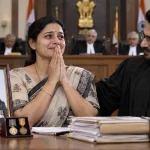
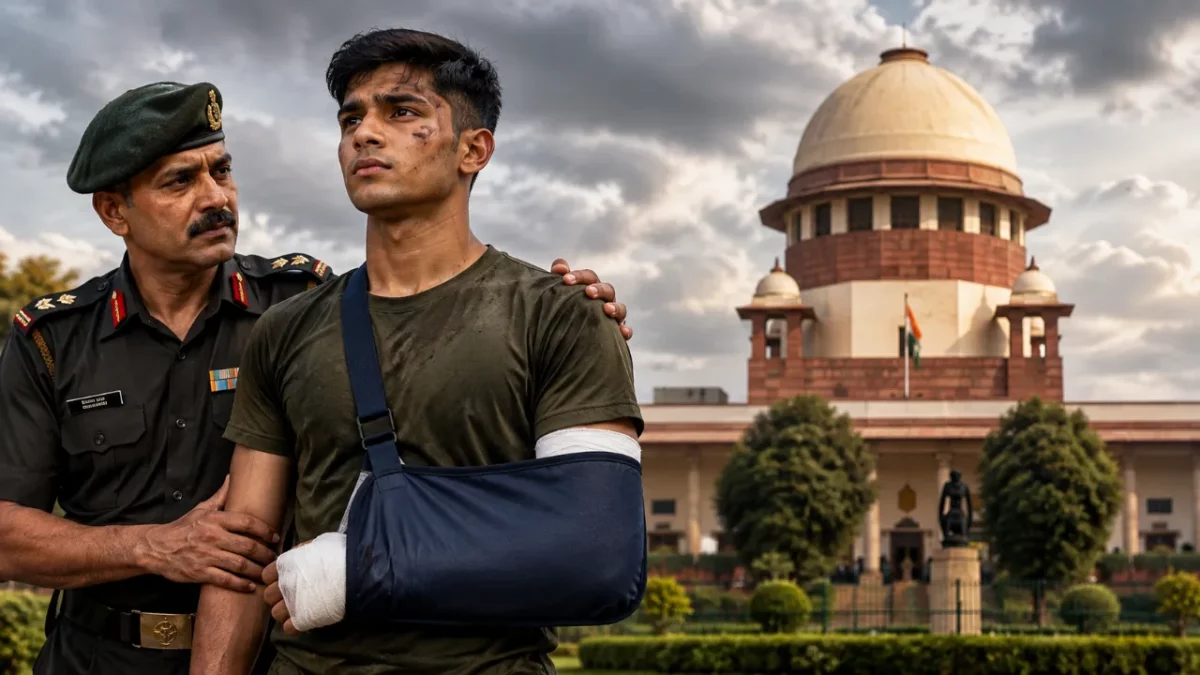
The Bench also took note of the high degree of disappointment faced by these young cadets and their families. Many of them had cleared rigorous entrance examinations and entered premier training institutions with high expectations of serving the nation, only for their careers to be cut short by accidents during training that were not attributable to any negligence on their part.
Background of the Suo Motu Case
The Supreme Court had taken suo motu cognisance in August 2025 on the basis of media reports (particularly investigative stories in The Indian Express) highlighting the severe hardships faced by officer cadets medically discharged from institutions such as the National Defence Academy (NDA), Indian Military Academy (IMA), Officers Training Academy (OTA), Air Force Academy, and Indian Naval Academy due to disabilities incurred during training.
These cadets were earlier left without the full benefits available to commissioned officers or even certain other ranks who suffer disabilities. They typically received only limited ex-gratia payments, faced mounting medical expenses, and lacked formal recognition as ex-servicemen, which blocked access to reservation in government jobs, comprehensive healthcare under the Ex-Servicemen Contributory Health Scheme (ECHS), and other resettlement measures. Estimates of the total number of such affected cadets over the years have ranged between a few hundred and around 2,000–2,500, with roughly 40–50 cadets being boarded out annually across the academies. The majority are in their 20s and 30s, making employment and rehabilitation particularly critical. Amicus Curiae Senior Advocate Rekha Palli has assisted the Court throughout, emphasising that a large percentage of these cadets can be rehabilitated with proper support.
Significant progress has already been made due to the Court’s continuous monitoring. Pursuant to earlier directions, the Ministry of Defence extended ECHS benefits to invalidated and outboarded cadets (with effect from 29 August 2025), covering their medical needs for life, and waived the one-time subscription fee. The Court has also been examining enhancement of the monthly ex-gratia amount (noting that the rates fixed in 2017 needed upward revision in light of inflation), the possibility of group insurance, rehabilitation into suitable desk or alternative roles where recovery permits, and reconsideration of recommendations made by the 2015 Sabharwal Committee (headed by Lt Gen (Retd) Mukesh Sabharwal), which had suggested treating such cadets as ex-servicemen and providing disability pension among other measures.
The 8th Central Pay Commission, which has been constituted, is expected to consider enhancement of the ex-gratia payments. The Court granted liberty to the affected persons to make representations before the Commission and expressed the hope that the Commission (now headed by a former woman judge) would approach the matter with the required degree of compassion.
Implications and Way Forward
The latest directions mark an important step towards providing structured employment support and welfare measures for a small but highly vulnerable group of young aspirants who suffered life-altering injuries while preparing to serve the country. By urging States and UTs to open the “ex-military personnel” quota and by affirming access to the 4 per cent disability reservation under the RPwD Act for those meeting the benchmark, the Court has sought to create practical pathways for livelihood.
The Centre has been asked to prepare a comprehensive scheme covering those who fall outside the RPwD Act’s strict criteria. The matter is likely to be taken up next on 8 September 2026.
The case continues to underscore the judiciary’s concern that rigorous military training carries inherent risks, and those who suffer injuries in the process should not be left without adequate institutional support, recognition, and opportunities for a dignified life.