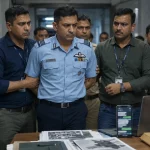

Air Marshal S Shrinivas, Air Officer Commanding-in-Chief (AOC-in-C), Training Command, Indian Air Force, visited the Basic Flying Training School (BFTS) on 7 August 2026 to review the institution’s progress in imparting foundational flying training to military aviators.


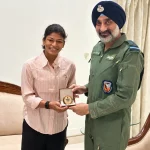
He was accompanied by Mrs Sunita Shrinivas, President, Air Force Families Welfare Association (AFFWA), Regional, during the visit. The engagement provided the Training Command chief an opportunity to assess the functioning of the school, interact with personnel and review the training environment being provided to trainee pilots.
The Basic Flying Training School plays an important role in developing the fundamental aviation skills of trainee pilots from the Indian Army and the Indian Coast Guard. The training conducted at the school introduces military aviators to essential flying principles, aviation discipline, flight safety procedures and the professional standards required for subsequent stages of their careers.
During the visit, Air Marshal S Shrinivas reviewed the progress made by the school in fulfilling its training responsibilities. He was briefed on various aspects of flying instruction and the measures being undertaken to maintain high standards of training while adapting to the evolving requirements of modern military aviation.
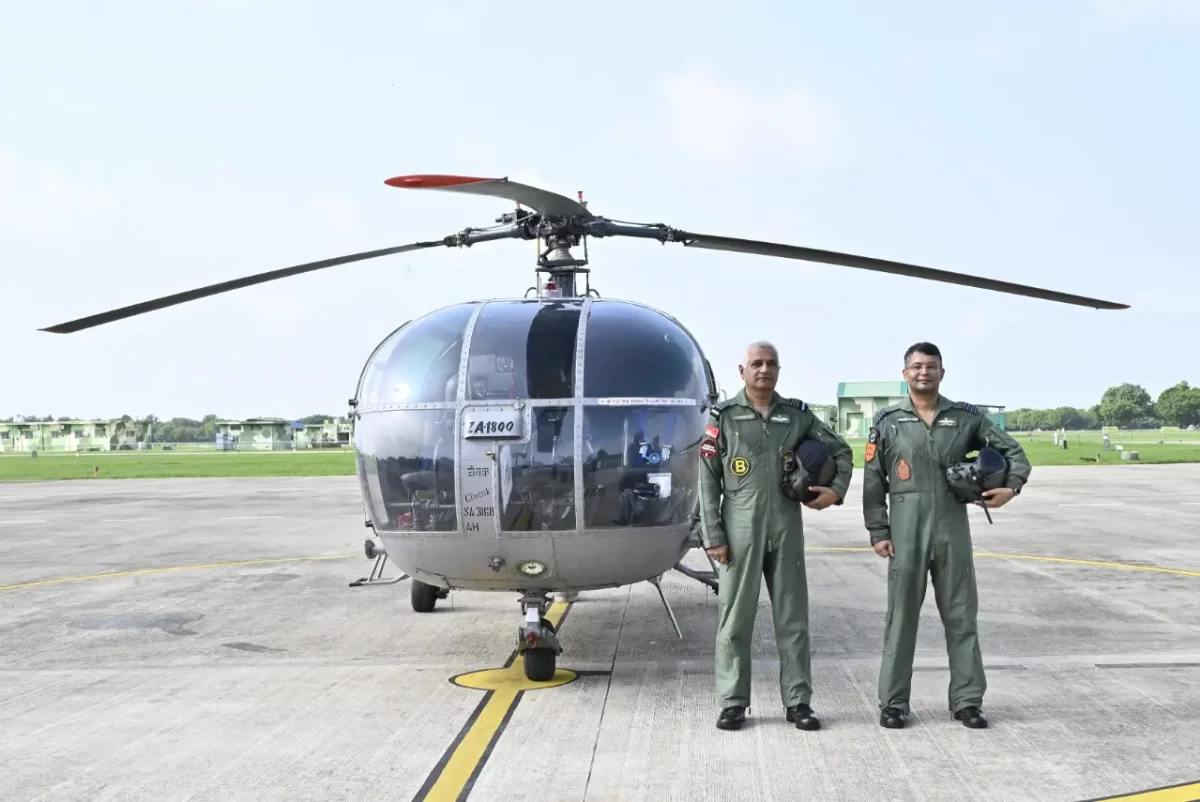
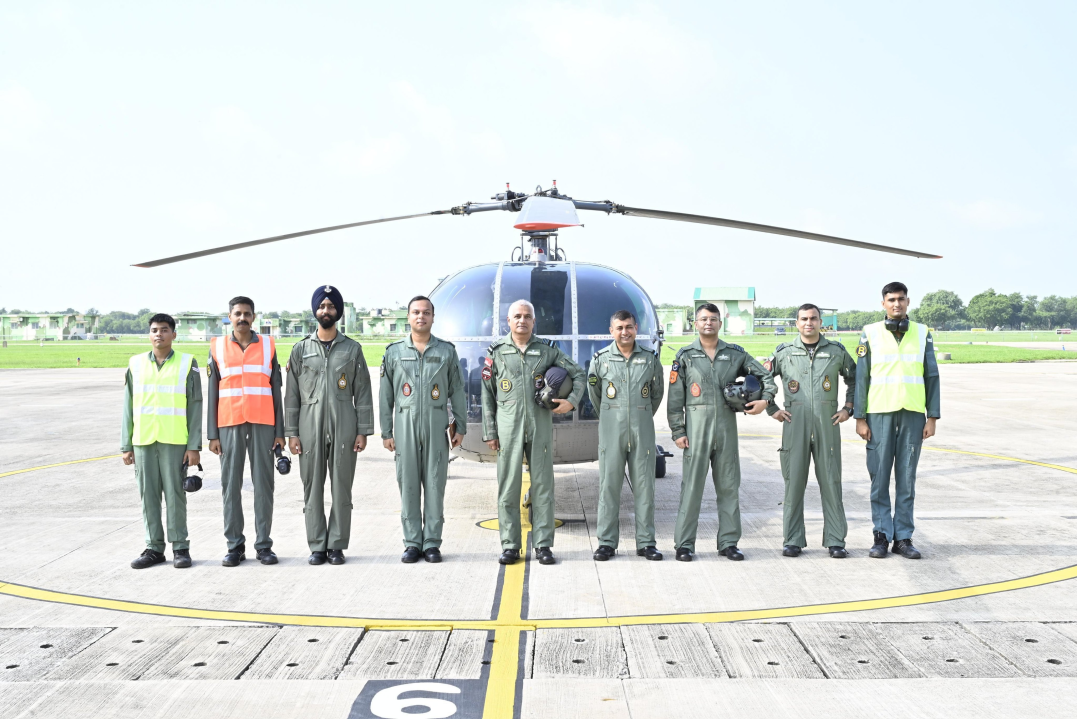
As part of his visit, the AOC-in-C also flew a sortie on a Chetak helicopter. The sortie provided him with a first-hand perspective of the flying environment and training ecosystem at the institution.
The Chetak has served the Indian Armed Forces for decades and continues to be utilised in a variety of training and operational roles. Its employment in the training environment allows young aviators to build basic flying skills, situational awareness and confidence before progressing to more advanced stages of military aviation.
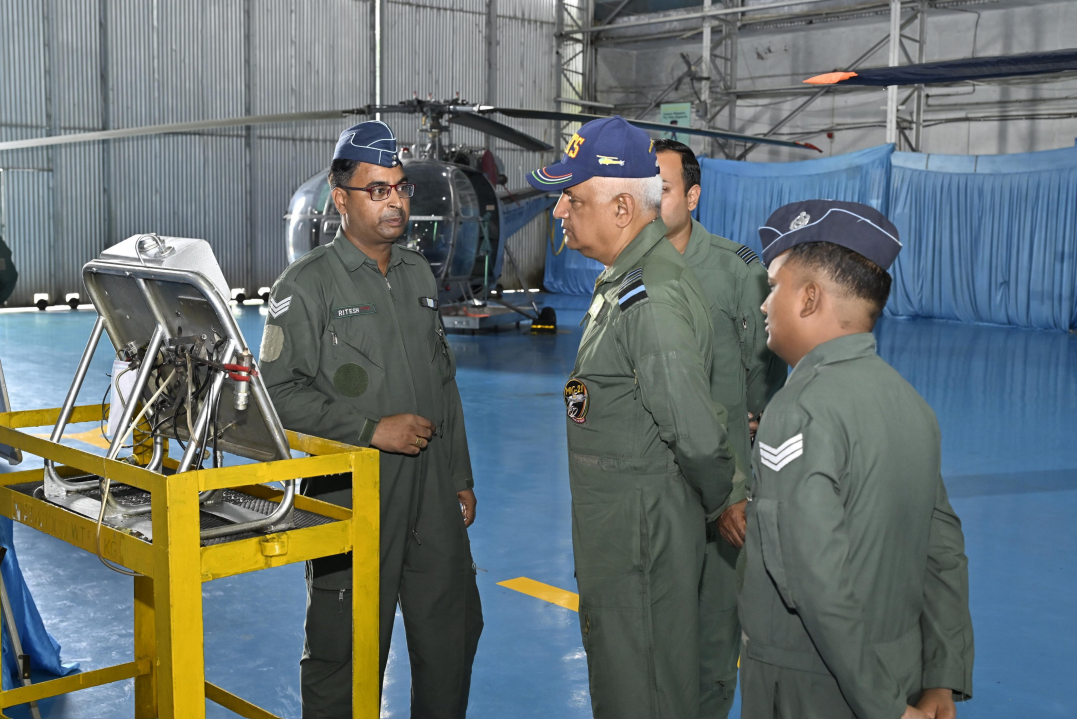
Addressing personnel of the Basic Flying Training School, Air Marshal Shrinivas highlighted flight safety as one of the fundamental pillars of military aviation. He emphasised that operational effectiveness and quality training must always be accompanied by a strong safety culture and strict adherence to established procedures.
He also stressed the importance of professionalism and excellence at every level of flying training. Instructors and support personnel, he indicated, have an important responsibility in shaping the skills, judgement and professional attitude of future military aviators.
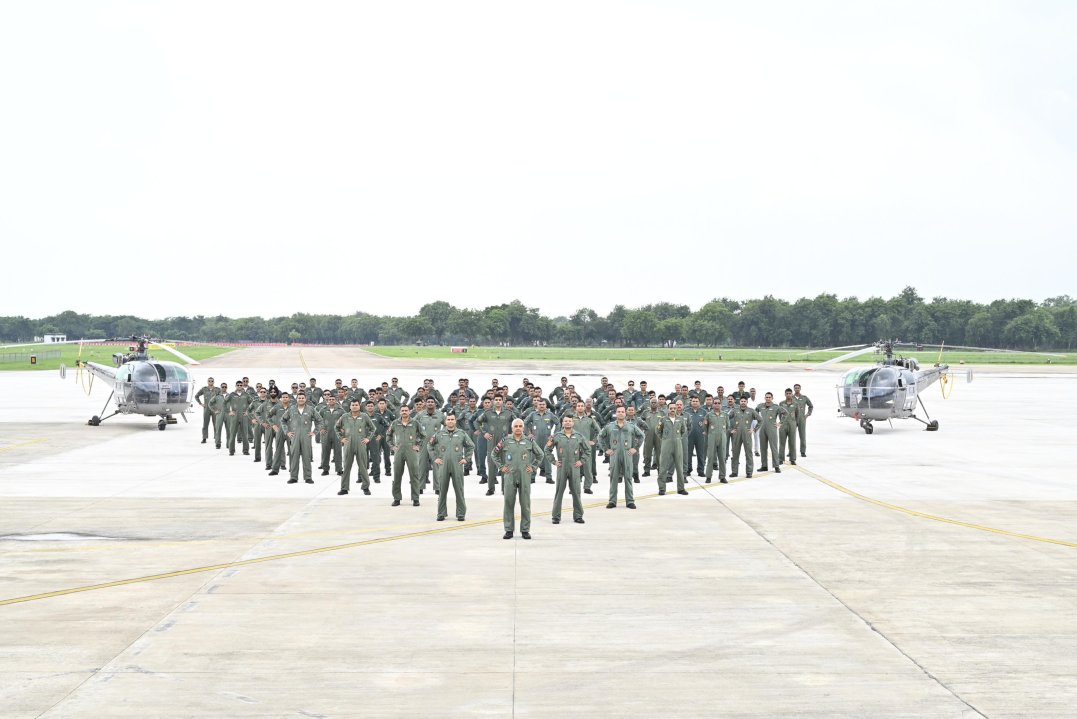
The AOC-in-C further highlighted the need to continuously modernise the military flying training system in response to rapid technological developments and the changing nature of air warfare.
He called for greater integration of technology into training and emphasised the importance of objective assessment methods that can accurately evaluate the performance and progress of trainee pilots. Modern training methodologies, supported by technology and data-driven evaluation, can help instructors identify strengths, address deficiencies and prepare aviators more effectively for increasingly complex operational environments.
Contemporary air operations are becoming progressively more technology-intensive, requiring pilots to operate within networked environments and coordinate closely with multiple platforms, sensors and services. Preparing aviators for such conditions requires training institutions to continually review their instructional techniques and introduce methods relevant to future operational challenges.
Air Marshal Shrinivas also drew attention to the importance of jointmanship in military training. Since the Basic Flying Training School trains aviators belonging to different services, the institution provides an opportunity to develop inter-service understanding from the earliest stages of a pilot’s professional journey.
He underscored that training together at the foundational level helps foster a spirit of jointmanship among personnel of the Armed Forces. Early interaction between aviators of different services contributes to a better appreciation of respective operational roles, capabilities and organisational cultures.
Such training assumes greater significance as the Indian Armed Forces continue to strengthen joint planning and integrated operations. Modern conflicts increasingly require the coordinated employment of land, air, maritime, space, cyber and other capabilities, making inter-service cooperation an essential component of military effectiveness.
By bringing trainee pilots from the Indian Army and Indian Coast Guard into a common foundational training environment, institutions such as the Basic Flying Training School help create professional relationships and mutual understanding that can contribute to more effective coordination during future operations.
The visit by the Training Command chief also highlighted the Indian Air Force’s continuing focus on maintaining high instructional standards while modernising its training philosophy. Training Command is responsible for developing skilled and professionally competent personnel capable of meeting the operational requirements of the service and supporting broader joint military objectives.
The emphasis on flight safety, technology-enabled instruction, objective assessment and jointmanship reflects the changing requirements facing military aviation training establishments. Future aviators will be expected not only to demonstrate strong flying skills but also to operate effectively within technologically advanced and increasingly integrated operational environments.
Air Marshal S Shrinivas’ visit to the Basic Flying Training School therefore served both as a review of the institution’s current training activities and as an opportunity to reinforce the priorities that will shape military aviation training in the years ahead.
The interaction with instructors, trainees and unit personnel reaffirmed the importance of rigorous foundational training in producing confident, disciplined and professionally capable military aviators prepared for the evolving challenges of future air warfare.