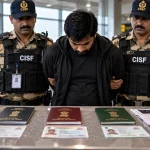


The Punjab and Haryana High Court has declined regular bail to an ex-serviceman accused of maintaining constant contact with Pakistan-based intelligence agencies and allegedly collecting and transmitting confidential information about Indian Army movements, war preparations, and military formations in exchange for money. Justice Manisha Batra, in an order dated August 6, 2026, held that the allegations were serious in nature, the material collected during investigation was significant, and larger public interest considerations made it inappropriate to grant bail at this stage.





The former serviceman, who served nearly 17 years in the Indian Army with what his counsel described as an unblemished record, is currently posted with the Defence Service Corps (DSC) at Air Force Station, Bikaner. The court noted that he was alleged to have established contact with Pakistani intelligence officials through various social media platforms and, leveraging his prior association with the Army, gathered and passed on sensitive information concerning the security, unity, and integrity of the country.
Background of the case and investigation findings
According to the prosecution, a secret informer approached the State Special Operation Cell in Amritsar with information that the ex-serviceman was in contact with Pakistani intelligence agencies via social media. He was allegedly using his old contacts within the Indian Army to collect highly confidential details on force movements and other sensitive data, then transmitting it to Pakistan for monetary consideration.
It was further alleged that on the relevant day, he had been tasked with gathering information specifically about enhanced Army movements in the Amritsar Cantonment area. Acting on the tip-off, an FIR was registered and investigation commenced. The accused was arrested on February 7 (with the petition noting he had been in custody since July 7 in the context of the regular bail plea). The investigation has since concluded and the challan (chargesheet) has been presented before the trial court.
During the probe, investigators found that the petitioner remained in constant touch with Pakistani intelligence agencies over the phone. The court observed that the material collected pointed to sustained communication rather than isolated or vague contacts.
Arguments advanced by the defence
Advocate Kuljit Singh Bal, appearing for the petitioner, contended that his client had been falsely implicated. He emphasised the accused’s long and unblemished military service of nearly 17 years. The counsel submitted that the man was not arrested from any prohibited or sensitive military area but was allegedly picked up from a marriage function in an illegal manner.
The defence argued that the allegations in the FIR were vague and general. They did not specify the exact nature of the confidential information allegedly shared, the precise mode of transmission, or any concrete instance of communication with a foreign agency. There was, according to the counsel, no material to establish that any secret information had actually been transmitted. The allegation of receiving Rs 3,000 was also disputed; the defence maintained that the amount came from a known person rather than any Pakistani handler.
Since the investigation had already concluded, the challan had been filed, and custodial interrogation was no longer required, continued detention would serve no useful purpose, the counsel urged. Bail was therefore sought.
Prosecution’s opposition and the Court’s reasoning
Additional Advocate General Sakshi Bakshi strongly opposed the plea. She submitted that the allegations were serious and specific. The investigation had established constant contact with Pakistan-based intelligence over the phone. Given the gravity of the charges and their direct bearing on national security, the accused did not deserve the concession of regular bail at this stage.
Justice Manisha Batra agreed with the prosecution’s broad assessment of the seriousness of the matter. The court recorded: “During the course of investigation, it has been found that the petitioner was in constant touch with intelligence agencies of Pakistan over the phone. The allegations against him are quite serious… the nature of the material collected during investigation and the larger public interest involved, this Court does not find it to be a fit case for extending the concession of regular bail to the petitioner at this stage.”
The order reiterated that the seriousness of the allegations, the nature of the investigative material, and larger public interest considerations weighed against granting bail. The court clarified that nothing stated in the order should be construed as an expression of opinion on the merits of the case, and the trial court was directed to proceed independently and uninfluenced by the High Court’s observations.
Broader context and implications
Cases involving alleged contact between serving or retired military personnel and foreign intelligence agencies, particularly those of Pakistan, have repeatedly come before Indian courts. Such matters typically attract heightened scrutiny because of the potential risk to operational security, troop movements, and national integrity. Social media platforms and phone-based communication have featured frequently in recent probes as channels through which handlers allegedly establish and maintain contact with individuals who have or once had access to defence-related information.
Ex-servicemen serving in the Defence Service Corps or similar organisations often retain residual knowledge of military practices, personnel networks, and base locations. When combined with allegations of ongoing communication and tasking related to specific locations such as Amritsar Cantonment (a sensitive border-area formation), courts tend to treat the public interest in national security as a significant factor at the bail stage.
The denial of bail does not amount to a finding of guilt. The accused continues to enjoy the presumption of innocence, and the trial will determine the veracity of the prosecution’s claims on the basis of evidence led in court. At the same time, the High Court’s emphasis on the “larger public interest” reflects the consistent judicial approach in matters touching upon alleged espionage or unauthorised disclosure of sensitive defence information: the threshold for liberty at the pre-trial stage is calibrated carefully against the potential consequences for national security.
The case will now proceed before the trial court on the basis of the chargesheet already filed. Further developments will depend on the evidence adduced during trial.