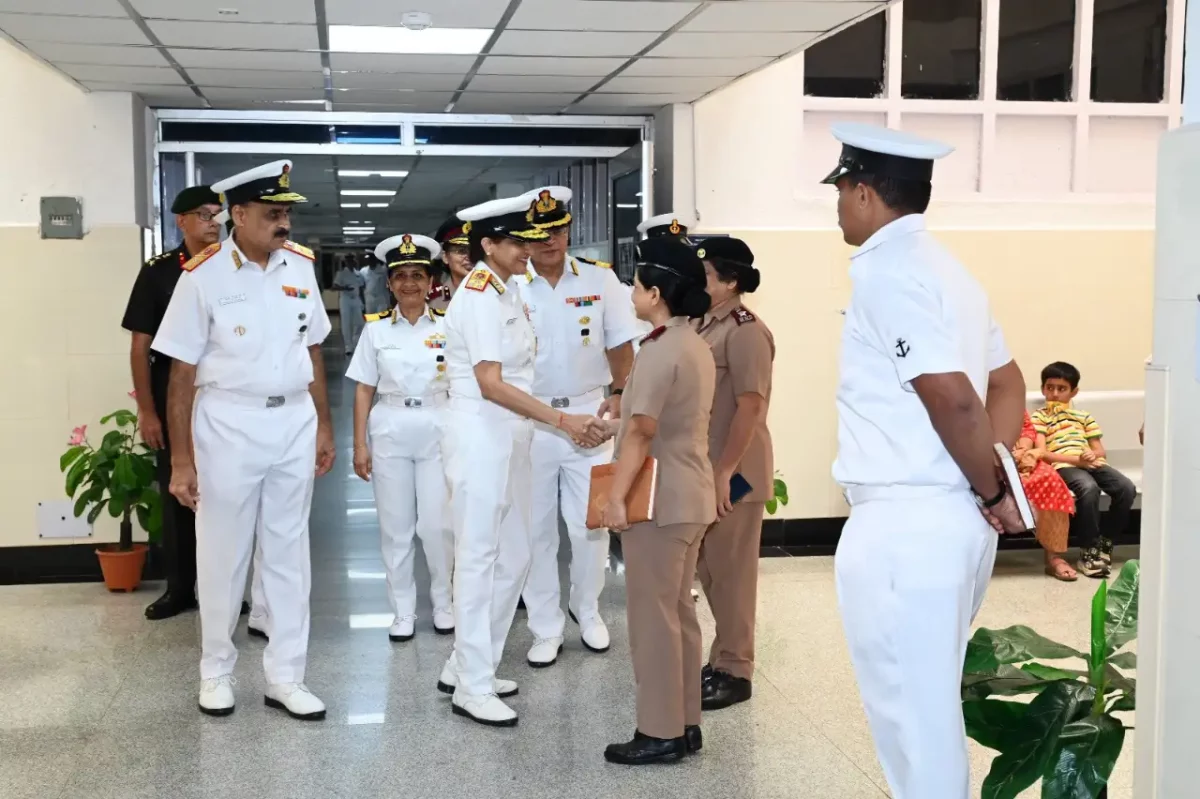
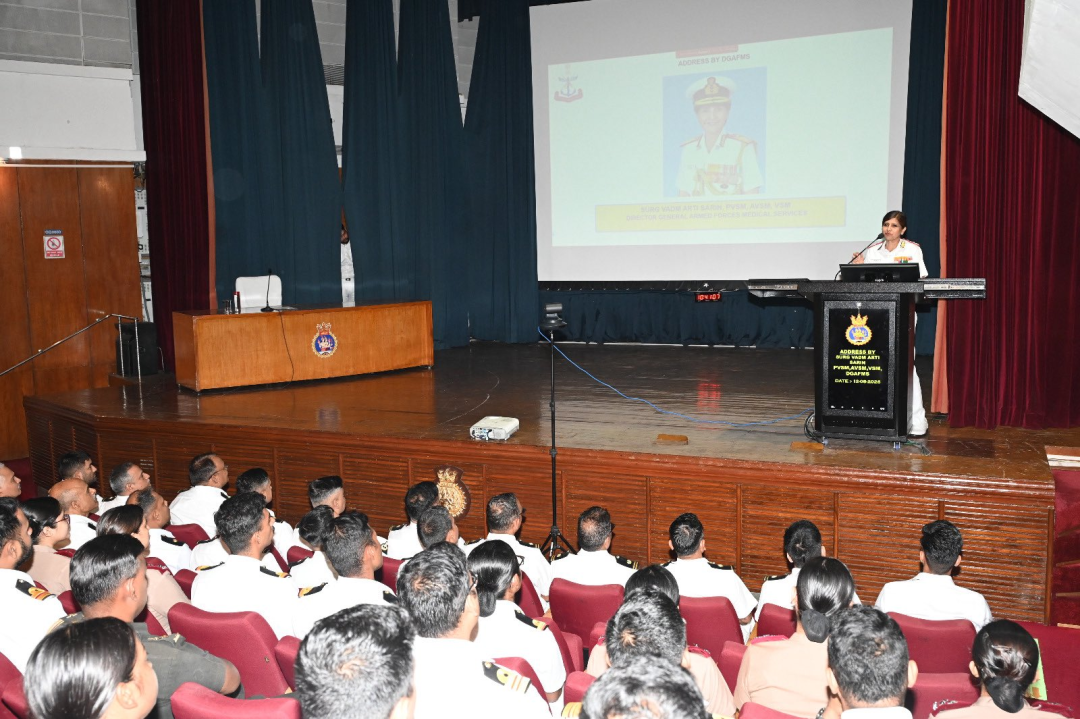
Surgeon Vice Admiral Arti Sarin, Director General Armed Forces Medical Services (DGAFMS), visited INHS Asvini on August 12, 2026, where she reviewed advanced medical facilities, patient care areas and the healthcare support being provided to serving personnel, veterans and other beneficiaries.





The visit highlighted the Armed Forces Medical Services’ continuing focus on maintaining high standards of clinical care while ensuring that the medical infrastructure supporting operational formations remains prepared to meet the requirements of personnel serving both ashore and at sea.
During her visit, Surg Vice Admiral Arti Sarin inspected various facilities at INHS Asvini and reviewed the functioning of key patient care areas. She interacted with medical professionals and personnel involved in delivering healthcare services and appreciated the hospital’s commitment to providing quality medical care.
Focus on Advanced Healthcare and Patient Care
INHS Asvini is one of the Indian Navy’s important tertiary-care medical establishments and has historically played a significant role in providing specialised healthcare to naval personnel and other authorised beneficiaries.
The hospital forms an important component of the wider medical support network of the Western Naval Command. Previous Ministry of Defence information has also highlighted the role played by INHS Asvini and other naval hospitals in providing medical support during national contingencies, demonstrating their ability to mobilise medical teams and resources when required.
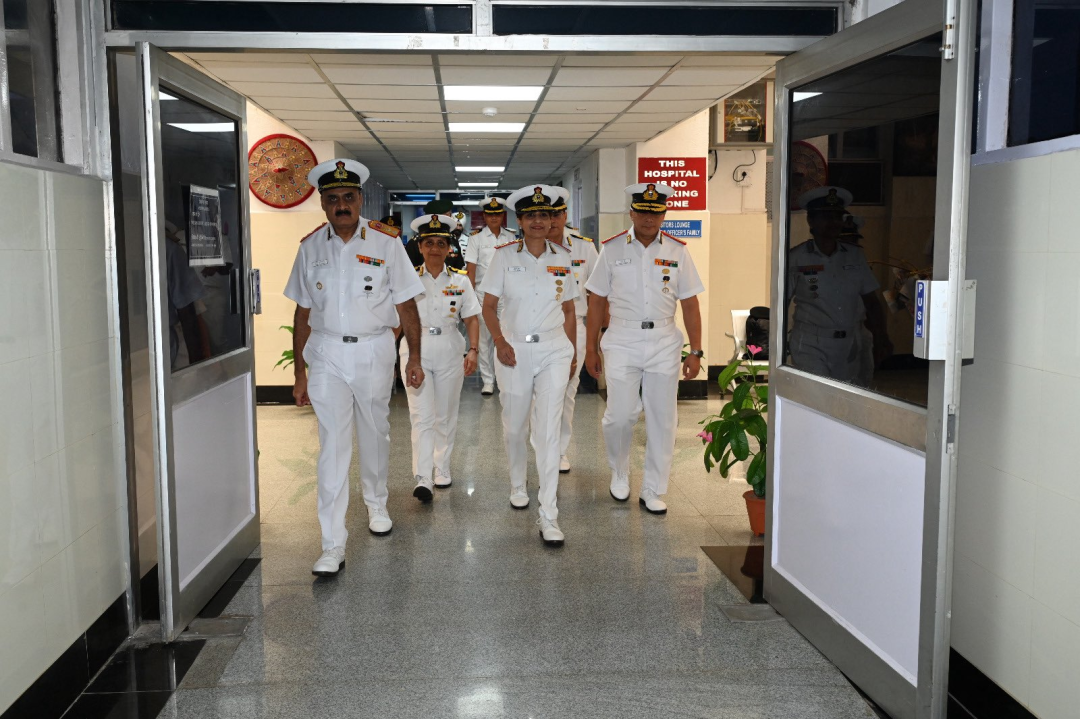
During the August 12 visit, the DGAFMS reviewed the hospital’s advanced medical facilities and patient care infrastructure. Her interaction with personnel also provided an opportunity to assess the delivery of healthcare across different levels of the naval medical system.
The emphasis on patient care assumes particular significance in the Armed Forces, where medical establishments are required not only to provide routine and specialised treatment but also to maintain the health and fitness of personnel entrusted with operational responsibilities.
DGAFMS Commends Naval Medical Personnel
Surg Vice Admiral Arti Sarin complimented personnel serving across the network of naval healthcare facilities, including sickbays, Medical Inspection Rooms (MI Rooms), secondary-care establishments and tertiary-care hospitals.
She appreciated the dedication, professionalism and unwavering commitment to patient care demonstrated by medical personnel at INHS Jeevanti, INHS Sandhani, INHS Patanjali and INHS Asvini.
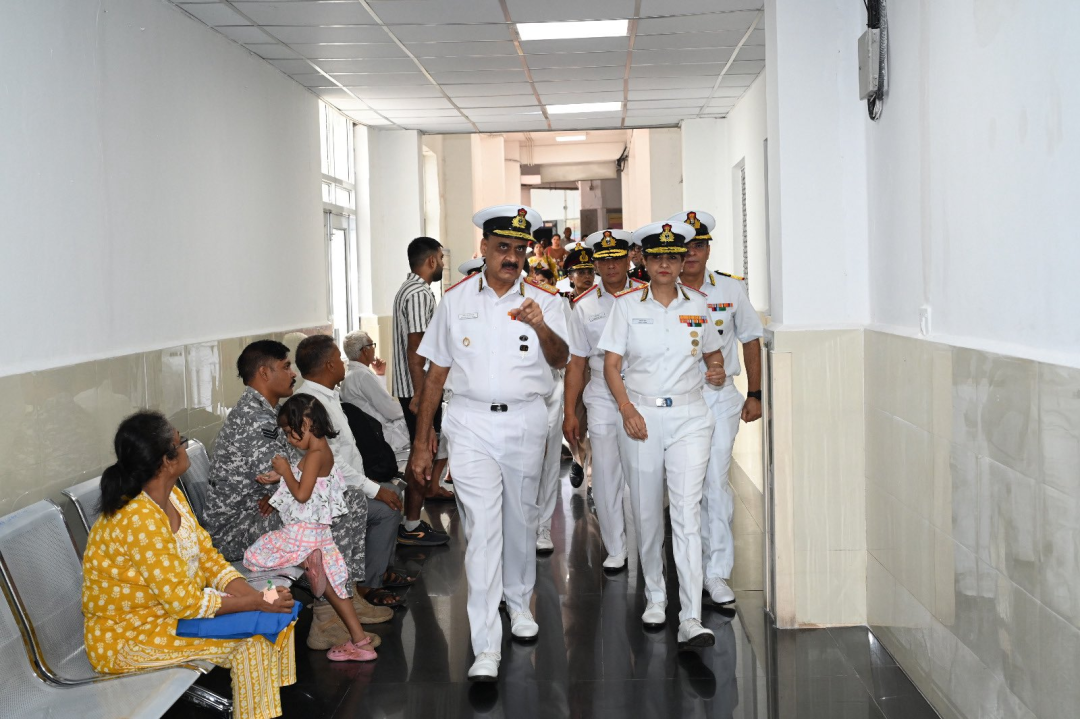
These establishments form part of a layered healthcare network designed to provide medical support ranging from primary treatment and routine medical assistance to specialised and tertiary-level interventions.
Official Ministry of Defence records have previously identified INHS Jeevanti in Goa, INHS Patanjali in Karwar, INHS Sandhani in Mumbai and INHS Asvini in Mumbai as important elements of the Western Naval Command’s medical infrastructure. During the COVID-19 emergency, these hospitals were also mobilised to support wider national healthcare requirements while continuing their responsibilities towards service personnel and beneficiaries.
Medical Support Critical to Operational Readiness
The DGAFMS underscored the contribution of medical personnel towards maintaining operational readiness, both at shore establishments and on the high seas.
For a maritime force such as the Indian Navy, an effective medical support system assumes particular importance because personnel can remain deployed aboard warships and at remote naval establishments for extended periods.
Sickbays and MI Rooms provide the first level of medical support, while secondary and tertiary-care hospitals offer progressively more specialised treatment. Together, these facilities create a healthcare chain capable of supporting personnel from routine medical requirements to complex clinical interventions.
The effectiveness of this system has a direct bearing on operational availability. Timely diagnosis, treatment, rehabilitation and preventive healthcare help ensure that sailors and officers can return to duty while also providing long-term medical support to the wider naval community.
INHS Asvini’s Role in Naval Healthcare
Located in Mumbai, INHS Asvini has long served as a major medical institution of the Indian Navy and provides tertiary-level healthcare across multiple specialties.
Its importance extends beyond routine hospital care. The establishment has previously demonstrated its ability to support large-scale medical contingencies. During the COVID-19 crisis, for example, INHS Asvini prepared composite medical teams for deployment at short notice, including personnel trained as Battlefield Nursing Assistants, under the direction of the DGAFMS.
Such capabilities illustrate the dual responsibility of Armed Forces hospitals: delivering high-quality healthcare during normal operations while retaining the capacity to rapidly respond during emergencies, operational deployments and national contingencies.
Surg Vice Admiral Arti Sarin herself has a longstanding association with INHS Asvini, having previously served as its Commanding Officer during her distinguished career in the Armed Forces Medical Services.
Strengthening the Armed Forces Medical System
As DGAFMS, Surg Vice Admiral Arti Sarin heads the integrated medical services responsible for supporting personnel of the Indian Army, Indian Navy and Indian Air Force.
Her visit to INHS Asvini comes as part of the broader emphasis on strengthening medical preparedness, modernising healthcare infrastructure and ensuring high standards of clinical and patient-centred care across the Armed Forces.
The Armed Forces Medical Services operate in a uniquely demanding environment. Medical personnel may be required to serve aboard ships, at air bases, in field formations, at remote military stations and in specialised hospitals. Their responsibilities consequently extend beyond conventional healthcare and form an essential part of the operational support architecture of the Armed Forces.
The August 12 visit therefore reinforced the importance of maintaining a robust continuum of healthcare beginning with sickbays and MI Rooms and extending through secondary and tertiary-care institutions.
By recognising personnel at INHS Jeevanti, INHS Sandhani, INHS Patanjali and INHS Asvini, the DGAFMS highlighted the collective contribution of the naval medical community towards safeguarding the health of personnel and sustaining the Indian Navy’s operational readiness.
Her appreciation of the professionalism and dedication displayed by doctors, nurses, medical assistants and supporting personnel also underlined a fundamental aspect of military medicine: quality healthcare remains an essential enabler of combat effectiveness.
Whether supporting personnel at shore establishments or sailors deployed thousands of kilometres from the Indian coastline, the naval medical network remains an integral component of the Indian Navy’s ability to remain mission-ready at all times.