

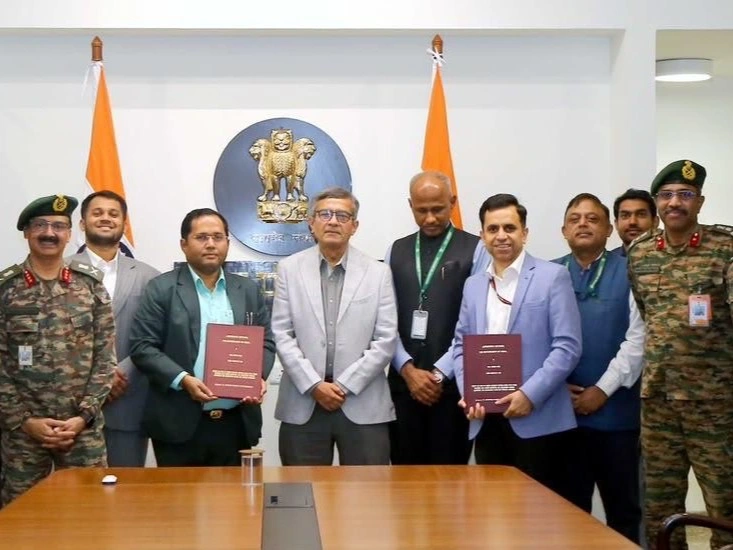
The Ministry of Defence on August 14, 2026, signed contracts worth approximately ₹1,577 crore with Tata Advanced Systems Limited and NIBE Private Limited for the procurement of loiter munition systems for the Indian Army.





The acquisition is aimed at strengthening the operational effectiveness of the Army’s artillery regiments and enhancing their ability to engage targets with greater precision and flexibility. Loitering munitions are designed to remain airborne over an area for a period of time, identify or receive information about targets and then engage them when required.
The procurement forms part of the Army’s broader efforts to modernise its combat capabilities and strengthen its precision-strike potential. The systems are expected to provide artillery formations with an additional capability for engaging suitable targets during military operations.
According to the Ministry of Defence, the contracts have been placed under the Buy (Indian) category through the Fast Track Procedure. The procurement will therefore contribute to strengthening domestic defence manufacturing and expanding the capabilities of Indian defence companies.
The involvement of Tata Advanced Systems and NIBE is also expected to support the development of a wider indigenous industrial ecosystem for loitering munition technologies, including manufacturing, components and associated systems.
The Ministry of Defence described the procurement as an important step towards modernising the Indian Army and empowering the domestic defence industry. The acquisition is aligned with the government’s broader Aatmanirbhar Bharat initiative, which seeks to reduce dependence on foreign defence imports and increase indigenous production.
The induction of loitering munition systems will add another layer to the Army’s evolving precision-strike capabilities, particularly as modern warfare increasingly emphasises rapid target acquisition, precision engagement and network-enabled operations.
The ₹1,577-crore contracts therefore represent both a capability enhancement for the Indian Army and another significant order for India’s growing indigenous defence manufacturing sector.