
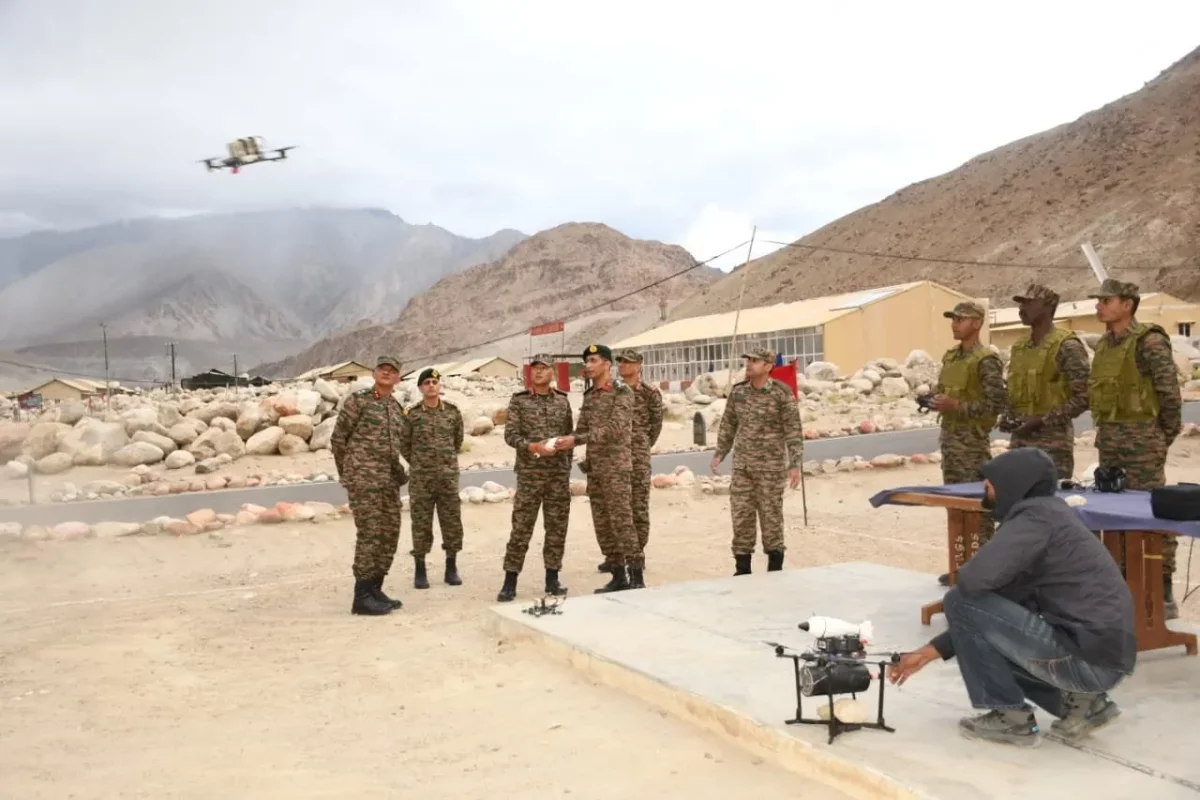
Lieutenant General Madanraj Pande, General Officer Commanding (GOC) of the Indian Army’s Fire and Fury Corps, visited the Trishul Division and forward areas of Ladakh to review the operational preparedness and combat readiness of formations deployed in the strategically important high-altitude region.

During the visit, the Corps Commander carried out a comprehensive assessment of the preparedness of troops operating under some of the most challenging terrain and climatic conditions faced by the Indian Army. The deployment in Ladakh requires formations to maintain a high degree of operational readiness while simultaneously overcoming the logistical, mobility and sustainability challenges associated with extreme altitudes and harsh weather.
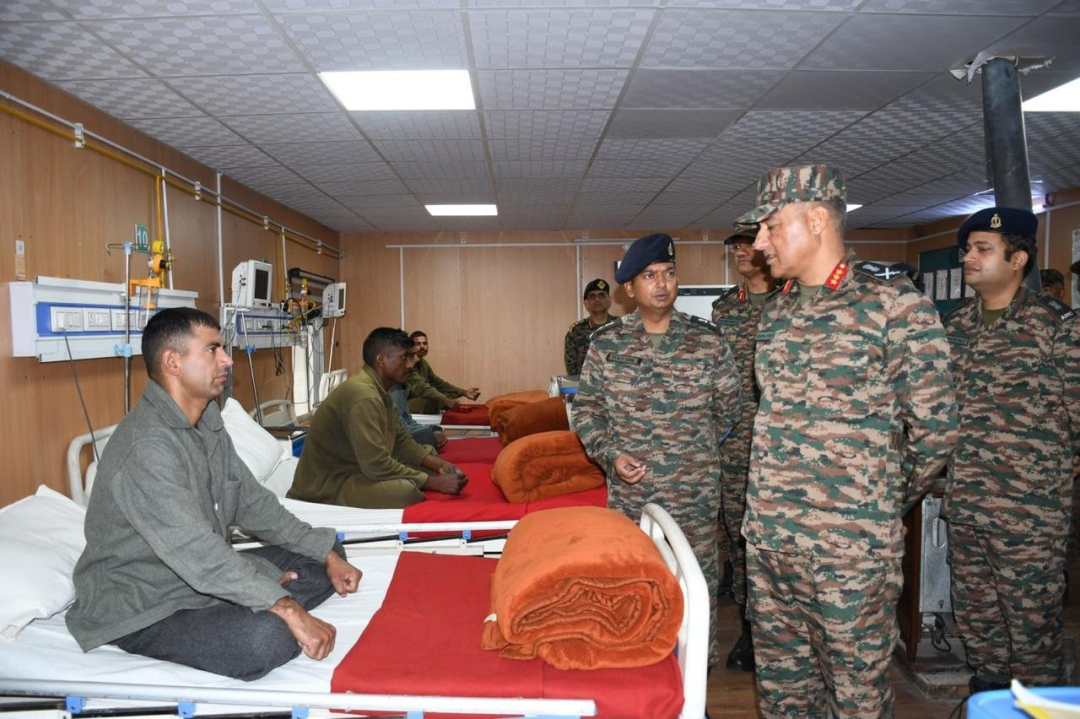
Lt Gen Madanraj Pande interacted with troops deployed in the forward areas and received updates on the operational situation, preparedness of formations and measures being undertaken to further strengthen their capabilities. His interaction with personnel also provided an opportunity to assess the effectiveness of equipment and operational practices being employed at the ground level.
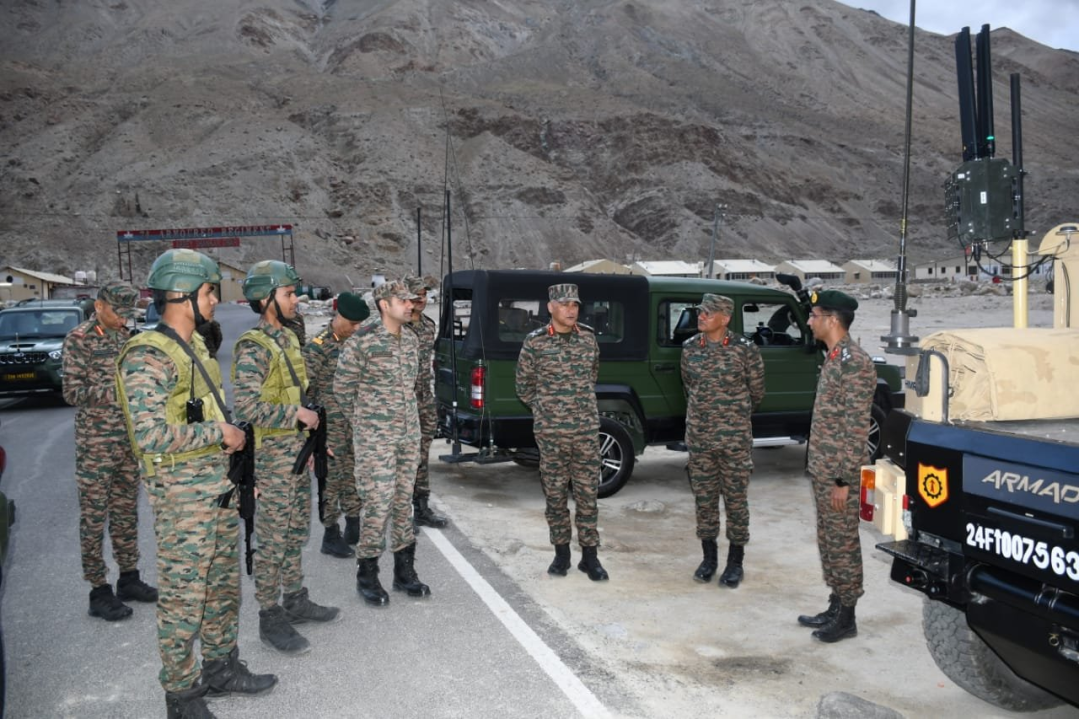
A significant focus of the visit was the induction of New Generation Equipment (NGE) into formations deployed in Ladakh. The Corps Commander reviewed the employment of these systems and their contribution towards improving the operational capability, mobility and sustainability of troops operating in the high-altitude environment.
The Indian Army has increasingly focused on introducing new-generation technologies and equipment into formations deployed along sensitive and difficult frontiers. These systems are intended to improve surveillance, communications, mobility, protection, logistics and the ability of troops to operate effectively for extended periods in demanding conditions.
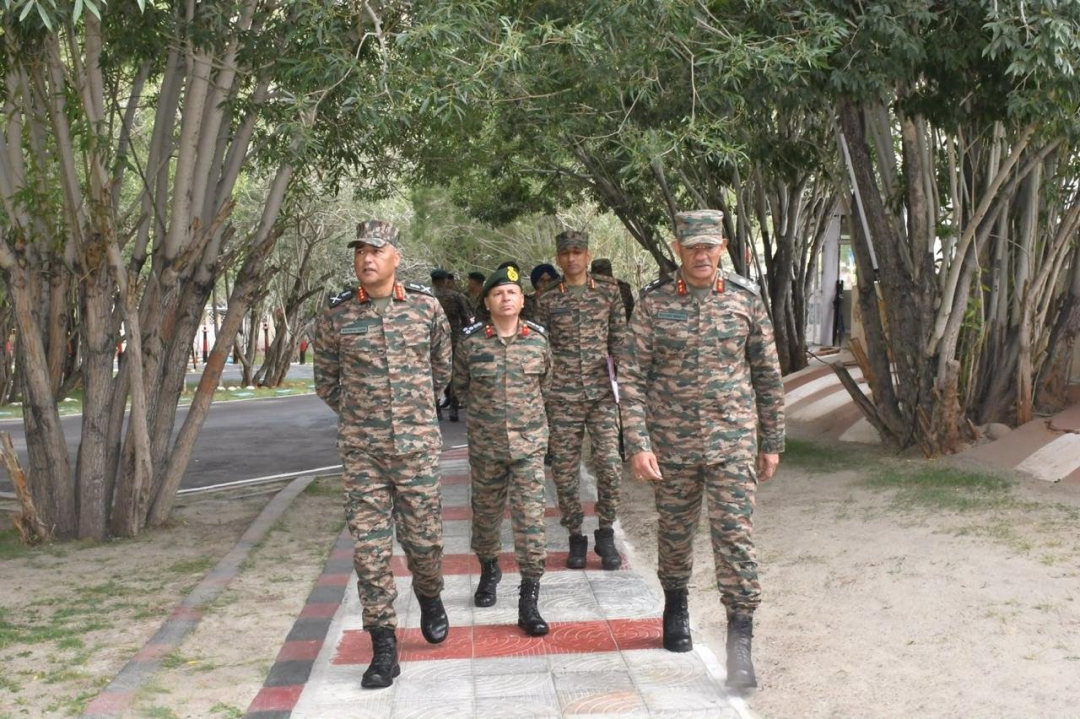
Lt Gen Pande also reviewed innovative indigenous solutions being adopted by formations in the region. The emphasis on locally developed and indigenous technologies reflects the Army’s wider efforts to address operational requirements through innovation while supporting the national objective of greater self-reliance in defence capabilities.
The extreme terrain of Ladakh presents unique operational challenges. Troops and equipment must function at elevations where reduced oxygen levels, freezing temperatures, strong winds and difficult terrain can significantly affect personnel, vehicles, weapons and electronic systems. Maintaining formations in such locations also requires an extensive logistics network capable of ensuring continuous supplies of ammunition, fuel, food, specialised clothing and other essential equipment.
Mobility is particularly important in the region because military formations must be capable of rapidly moving personnel, equipment and supplies across mountainous terrain. New-generation vehicles, specialised mobility platforms and indigenous technological solutions can therefore play an important role in strengthening the ability of troops to respond rapidly to emerging operational requirements.
Sustainability is another major component of high-altitude operations. Forward formations need reliable systems for accommodation, heating, power generation, communications, maintenance and logistics. Technological innovations that reduce logistical dependence or improve the efficiency of these systems can considerably enhance the endurance of deployed troops.
During his interaction with personnel, the Fire and Fury Corps Commander appreciated the formations for maintaining a high state of operational readiness despite the demanding environment. He also commended their innovative approach towards addressing operational and logistical challenges.
Lt Gen Pande exhorted all ranks to continue maintaining the highest standards of professionalism, mission readiness and operational excellence. The emphasis reflects the requirement for formations deployed in Ladakh to remain prepared to respond rapidly to any operational contingency while maintaining sustained readiness throughout the year.
The Fire and Fury Corps is one of the Indian Army’s most strategically important formations and is responsible for military operations across the challenging Ladakh region. Its formations operate across some of the world’s highest and most difficult military deployments, including areas characterised by extreme altitude, rugged mountains and severe climatic conditions.
The Corps plays a critical role in safeguarding India’s frontiers in Ladakh and maintaining operational preparedness along sensitive sectors. Its responsibilities require a combination of conventional combat capability, advanced surveillance, reliable communications, high-altitude logistics and specialised equipment.
The Trishul Division forms an important component of the Army’s operational posture in the region. Formations operating under the Fire and Fury Corps regularly undertake training, surveillance, infrastructure development and capability enhancement activities to ensure that troops remain prepared for contingencies across the spectrum of operations.
The Indian Army has considerably strengthened infrastructure and operational capabilities in Ladakh in recent years. Improvements in roads, bridges, communications, logistics infrastructure, troop habitats and forward connectivity have been accompanied by the induction of modern weapons, surveillance equipment, drones, specialised vehicles and other technologies.
The increased emphasis on indigenous innovation has also encouraged formations to develop solutions tailored specifically to local operational challenges. Technologies and equipment designed for high-altitude conditions can improve efficiency while reducing dependence on systems that may not have originally been designed for the demanding Himalayan environment.
Visits by senior commanders to forward formations are an important part of maintaining operational preparedness. Such visits allow commanders to directly assess readiness, interact with personnel, evaluate newly inducted equipment and identify requirements that may need to be addressed at higher levels of command.
Lt Gen Madanraj Pande’s visit to the Trishul Division and forward areas of Ladakh therefore underlines the Indian Army’s continuing focus on maintaining a robust operational posture in the region. The simultaneous emphasis on troop readiness, New Generation Equipment and indigenous innovation reflects the broader transformation underway within the Army towards a more technologically enabled and sustainable force.
With troops continuing to operate in one of the world’s most demanding military environments, the ability to combine professional training, modern equipment, reliable logistics and indigenous innovation remains critical. The Corps Commander’s appreciation of the formations and his call for continued professionalism and operational excellence reinforce the priority being placed on maintaining a consistently high level of readiness across the Fire and Fury Corps.