
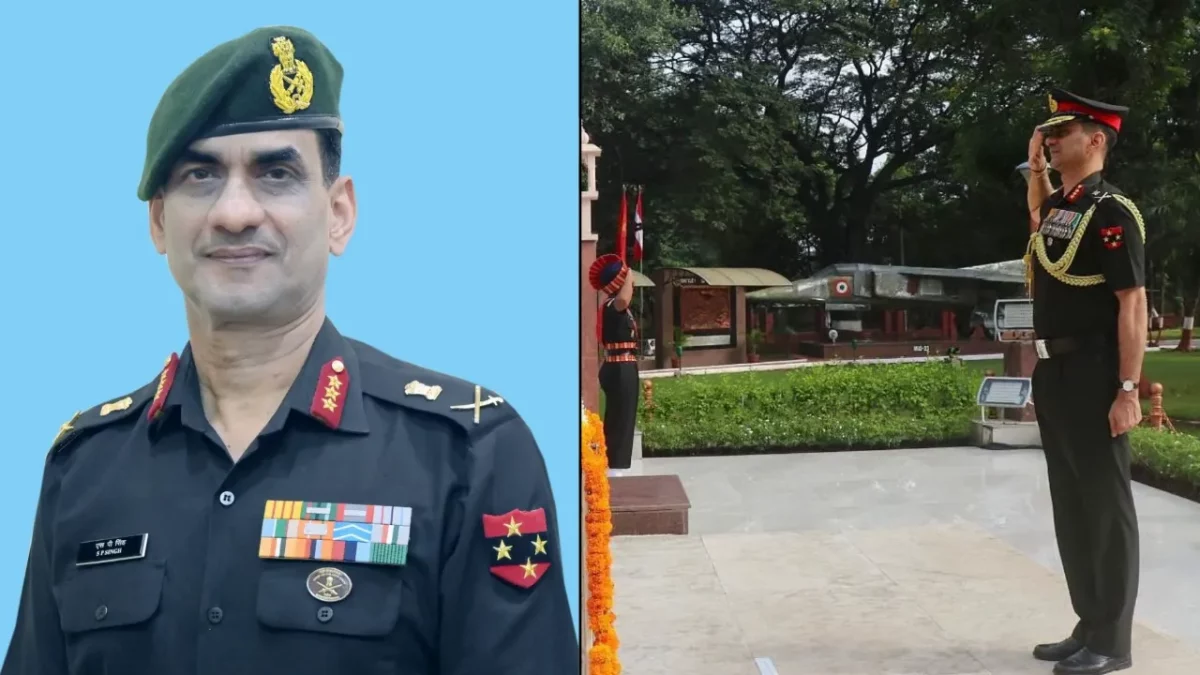
Lieutenant General Shrinjay Pratap Singh, AVSM, YSM, the incumbent Director General, Defence Intelligence Agency (DIA) and Deputy Chief of Integrated Defence Staff (Intelligence), is set to take over as the next General Officer Commanding-in-Chief (GOC-in-C) of Army Training Command (ARTRAC). The appointment will bring a highly experienced infantry officer with over three decades of service across diverse operational and strategic assignments to the helm of the Indian Army’s premier training command.





Lt Gen Shrinjay Pratap Singh was commissioned into the Kumaon Regiment on 10 June 1989 from the Indian Military Academy. During a career spanning more than three decades, he has held a wide spectrum of command and staff appointments, gaining experience across different operational environments and levels of military leadership. His career has included command of an infantry battalion in the semi-desert sector, a brigade during counter-insurgency and counter-terrorism operations in Jammu and Kashmir, and a division on the eastern borders.
His staff appointments have included serving as Colonel General Staff of an Infantry Division and Brigadier General Staff at Headquarters XV Corps. These assignments exposed him to operational planning, intelligence assessment, coordination and the employment of formations in challenging security environments. As a Major General, he went on to command the 21 Mountain Division, further strengthening his experience in mountain and eastern-border operational conditions.
Following his promotion to the rank of Lieutenant General in June 2023, Lt Gen Shrinjay Pratap Singh assumed command of IX Corps, succeeding Lieutenant General Pushpendra Pal Singh. Corps command represented an important stage in his career, involving responsibility for operational preparedness, planning and command at a higher formation level. In October 2024, he subsequently took over as Chief of Staff of Southern Command.
On 31 May 2025, Lt Gen Shrinjay Pratap Singh assumed the appointment of Director General, Defence Intelligence Agency and Deputy Chief of Integrated Defence Staff (Intelligence). In this assignment, he has operated at the strategic level, dealing with defence intelligence and assessment of the wider security environment. His forthcoming transition to ARTRAC will therefore bring together his field experience and strategic-level exposure in a command whose primary responsibility is to prepare the Army for future operational challenges.
The appointment assumes significance against the backdrop of a rapidly changing character of warfare. Military forces are increasingly required to prepare for operations involving multiple domains, including land, air, cyber, space, electronic warfare and the information environment. The proliferation of unmanned systems, artificial intelligence, precision weapons, autonomous technologies and networked battlefield systems is also placing new demands on military training and professional military education.
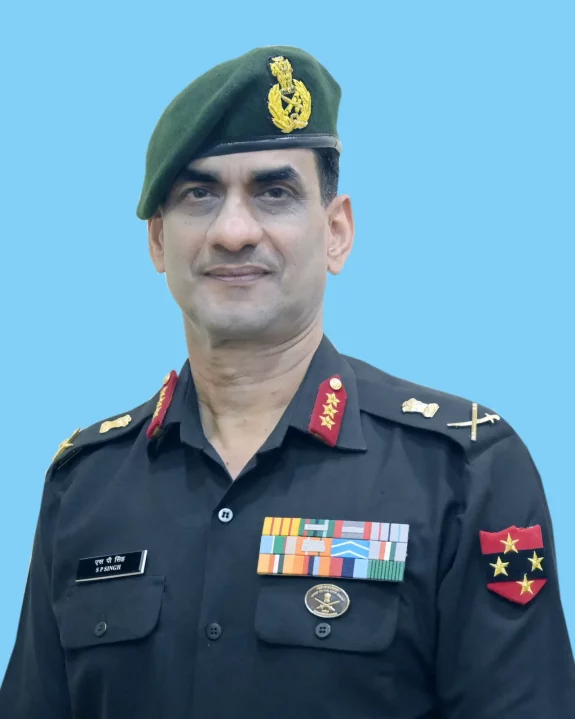
ARTRAC has a central role in addressing these requirements within the Indian Army. The command is responsible for training philosophy, doctrinal development, professional military education and the incorporation of operational lessons into training. Its work directly influences how officers and soldiers are prepared to operate in increasingly complex and technology-intensive battlefields.
Lt Gen Shrinjay Pratap Singh’s extensive operational background is particularly relevant to these responsibilities. His career has taken him through conventional infantry command, counter-insurgency and counter-terrorism operations, mountain warfare environments, corps-level leadership and strategic intelligence. This combination provides him with exposure to both the realities of battlefield command and the broader security environment that shapes military planning.
The General Officer is also an alumnus of several of India’s and the United States’ premier military institutions. His professional military education includes the National Defence Academy at Khadakwasla, the Indian Military Academy at Dehradun, the Defence Services Staff College, the Army War College at Mhow and the United States Army War College at Carlisle. He also holds a master’s degree from the University of Madras and an MPhil from Devi Ahilya Vishwavidyalaya.
His educational exposure at institutions focused on command, staff duties and higher military studies has complemented his extensive field experience. The combination is increasingly important for senior military leadership, where commanders are required not only to understand tactical and operational realities but also to assess strategic trends, emerging technologies and the changing nature of military competition.
Lt Gen Shrinjay Pratap Singh also comes from a strong military family associated with the Kumaon Regiment. His father, Major Dhirendra Nath Singh, served as an infantry officer in the Kumaon Regiment and was a veteran of the 1965 India-Pakistan War. His brother, Lieutenant General Viresh Pratap Singh Kaushik, is also a serving Indian Army officer and belongs to the Kumaon Regiment.
The family’s association with the Army and the Kumaon Regiment spans generations, while Lt Gen Shrinjay Pratap Singh’s own career has remained firmly rooted in infantry service. His professional profile reflects the traditional emphasis on physical fitness, discipline, fieldcraft and soldiering, while his subsequent appointments have provided extensive exposure to higher command, intelligence and strategic responsibilities.
His distinguished service has been recognised through the award of the Ati Vishisht Seva Medal and Yudh Seva Medal, apart from a Chief of Army Staff Commendation and several service and campaign decorations. The Ati Vishisht Seva Medal was awarded to him in 2025.
The move to Army Training Command will come at a time when the Indian Army is placing increasing emphasis on realistic training, technological adaptation and rapid incorporation of lessons from contemporary conflicts. Recent developments in modern warfare have demonstrated the importance of battlefield awareness, precision engagement, unmanned systems, counter-unmanned capabilities, electronic warfare and rapid decision-making.
For ARTRAC, the challenge is not limited to introducing new technologies into training. The command also has to ensure that technological capabilities are integrated with traditional military fundamentals, including leadership, tactical proficiency, physical fitness, discipline, morale and unit cohesion. Preparing soldiers and commanders to operate effectively under conditions of uncertainty remains a central requirement of modern military training.
Lt Gen Shrinjay Pratap Singh’s experience in defence intelligence is expected to provide an additional strategic dimension to this responsibility. His current appointment involves assessment and coordination of intelligence at the higher level, while his earlier assignments have given him direct exposure to operational command. The combination can contribute to linking assessments of emerging threats with the Army’s training and doctrinal requirements.
His career also demonstrates the progression of a combat-arms officer through increasingly senior responsibilities. From command of an infantry battalion and brigade to mountain division, corps and senior strategic appointments, he has operated across multiple levels of the Army’s command structure. His experience in both operational formations and higher headquarters gives him a broad understanding of how training, doctrine, intelligence and operational preparedness interact.
The forthcoming change at ARTRAC is consequently significant for the Indian Army’s continuing transformation of its training architecture. As the force seeks to become more technologically enabled, agile and adaptable, training institutions will remain central to ensuring that new capabilities are translated into effective battlefield skills and operational concepts.
Lt Gen Shrinjay Pratap Singh’s appointment will place a senior Kumaon Regiment infantry officer, decorated for distinguished service and experienced in both field command and strategic intelligence, at the head of this important command. His professional military education and varied operational career are expected to shape his approach to the Army’s training and doctrinal priorities.
His move from the Defence Intelligence Agency to Army Training Command therefore represents a significant transition from assessing the contemporary security environment to helping prepare the force for the challenges that could emerge from it. As GOC-in-C ARTRAC, his focus will be closely linked to developing an operationally prepared, technologically aware and adaptable Indian Army capable of meeting the demands of future warfare.