

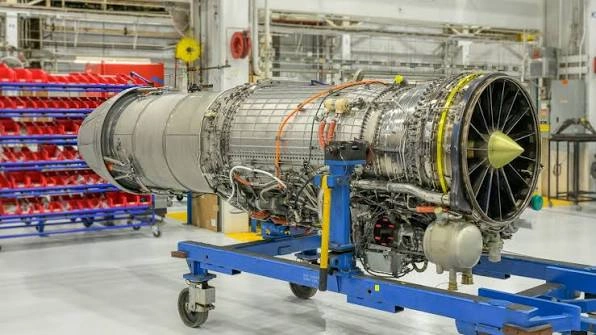
Hindustan Aeronautics Limited (HAL) has received three additional F404-IN20 engines from US aerospace major GE Aerospace for the indigenous Light Combat Aircraft (LCA) Tejas Mk1A programme, providing a further boost to a fighter project whose production and delivery schedule has been affected by delays in engine supplies.



GE Aerospace shipped the three F404-IN20 engines to HAL in August 2026, adding to the supply of powerplants required for the Tejas Mk1A production programme. The company said it remains proud to partner with HAL and the Indian Air Force in powering India’s indigenous fighter aircraft.
The latest shipment assumes significance as engine availability remains an important factor in the pace at which HAL can complete and deliver Tejas Mk1A aircraft. While HAL has maintained that its production infrastructure is ready to support the programme, the availability of the F404-IN20 engines is essential for completing individual aircraft and progressing them towards delivery.
Under a contract signed in 2021, GE Aerospace is to supply 99 F404-IN20 engines to HAL for the Tejas Mk1A programme. The contract is valued at approximately Rs 5,375 crore. The Indian Air Force has ordered 180 Tejas Mk1A aircraft from HAL, making a dependable engine supply schedule an important component of the overall execution of the programme.
Former HAL Chairman D.K. Sunil had stated in April that GE Aerospace had assured the company of delivering 20 F404 engines during the second half of 2026, covering the period from June to December. At the time, Sunil indicated that the figure was being treated as a pessimistic estimate, with the expectation that deliveries could potentially exceed that level. The three engines shipped in August form part of the supplies expected during this period.
The F404-IN20 is the powerplant selected for the Tejas fighter and has been adapted to meet the requirements of the Indian aircraft programme. According to GE Aerospace, the F404-IN20 has the highest thrust within the F404 family and incorporates features including a higher-flow fan, single-crystal turbine blades and specialised components developed for the Indian fighter.
The engine has a long operational history across military aviation and is used on thousands of combat aircraft globally. Its integration with Tejas has been an important element of the aircraft’s development since the fighter programme’s flight-test phase.
The current supply of F404-IN20 engines is also linked to the revival of a production line that had previously been shut down. GE Aerospace had completed its earlier commitment to HAL in 2016, supplying 65 F404-IN20 engines for the original Tejas LCA programme. With no additional requirement at that stage, production of the engine was subsequently discontinued.
The situation changed in 2021 when HAL placed an additional order for 99 F404-IN20 engines for the Tejas Mk1A programme. GE Aerospace consequently restarted production of the engine after a five-year shutdown and re-engaged suppliers across its international supply chain to support the renewed requirement.
Restarting production of an established military engine after a prolonged gap involves more than simply reopening an assembly line. It requires the reactivation of supplier networks, manufacturing processes and specialised industrial capabilities. The F404-IN20 programme has therefore also highlighted the importance of maintaining resilient aerospace supply chains for long-running defence programmes.
GE Aerospace and the Tejas programme teams had also worked over several years to customise the engine to meet the requirements of the Indian Air Force. The resulting F404-IN20 configuration provides the propulsion capability for the single-engine Tejas platform and forms a critical part of the aircraft’s overall performance.
The availability of engines has emerged as one of the recurring challenges associated with the Tejas Mk1A production schedule. HAL has previously indicated that its manufacturing facilities are capable of supporting the programme, but aircraft completion and delivery are dependent on receiving the required engines from GE according to schedule.
The issue has also had contractual implications. HAL officials have previously stated that the engine supply agreement contains provisions for liquidated damages in the event of delays in the delivery of F404 engines. Such provisions are intended to provide contractual safeguards where scheduled deliveries are not met.
The latest three-engine shipment therefore represents a tangible addition to the inventory of powerplants available for the Tejas Mk1A production effort. Continued and predictable deliveries will remain important as HAL seeks to increase the pace of aircraft production and fulfil the Indian Air Force’s requirements.
The Tejas Mk1A programme is a major component of India’s effort to strengthen indigenous combat-aircraft manufacturing and reduce dependence on imported fighter platforms. The aircraft is based on the indigenous Tejas programme and involves a wider ecosystem of Indian aerospace and defence suppliers alongside international partners for selected critical systems.
For HAL, maintaining production momentum will require synchronisation across the entire aircraft manufacturing chain. Engine availability is one of the most visible dependencies, but aircraft production also involves the timely availability and integration of numerous other systems, components and equipment.
For the Indian Air Force, the timely expansion of the Tejas fleet is important to its broader effort to modernise and strengthen its combat-aircraft inventory. The 180-aircraft Mk1A order represents a substantial commitment to the indigenous fighter programme and provides a long-term production requirement for HAL.
The continued arrival of F404-IN20 engines is consequently being closely watched as the Tejas Mk1A programme progresses. The three engines shipped in August add to the flow of critical propulsion systems and could support further aircraft production as HAL works to accelerate deliveries.
The latest development also highlights the interconnected nature of modern fighter programmes, where the delivery of an indigenous aircraft can depend on a combination of domestic manufacturing capabilities and international supply chains for specialised components. Ensuring reliability and predictability across these chains remains essential for maintaining production schedules.
The August shipment of three F404-IN20 engines is therefore an important development for the Tejas Mk1A programme, even as the broader engine supply requirement remains substantial. With GE contracted to provide 99 engines and the IAF having ordered 180 aircraft, sustained deliveries will be central to HAL’s ability to build production momentum and meet the programme’s long-term objectives.