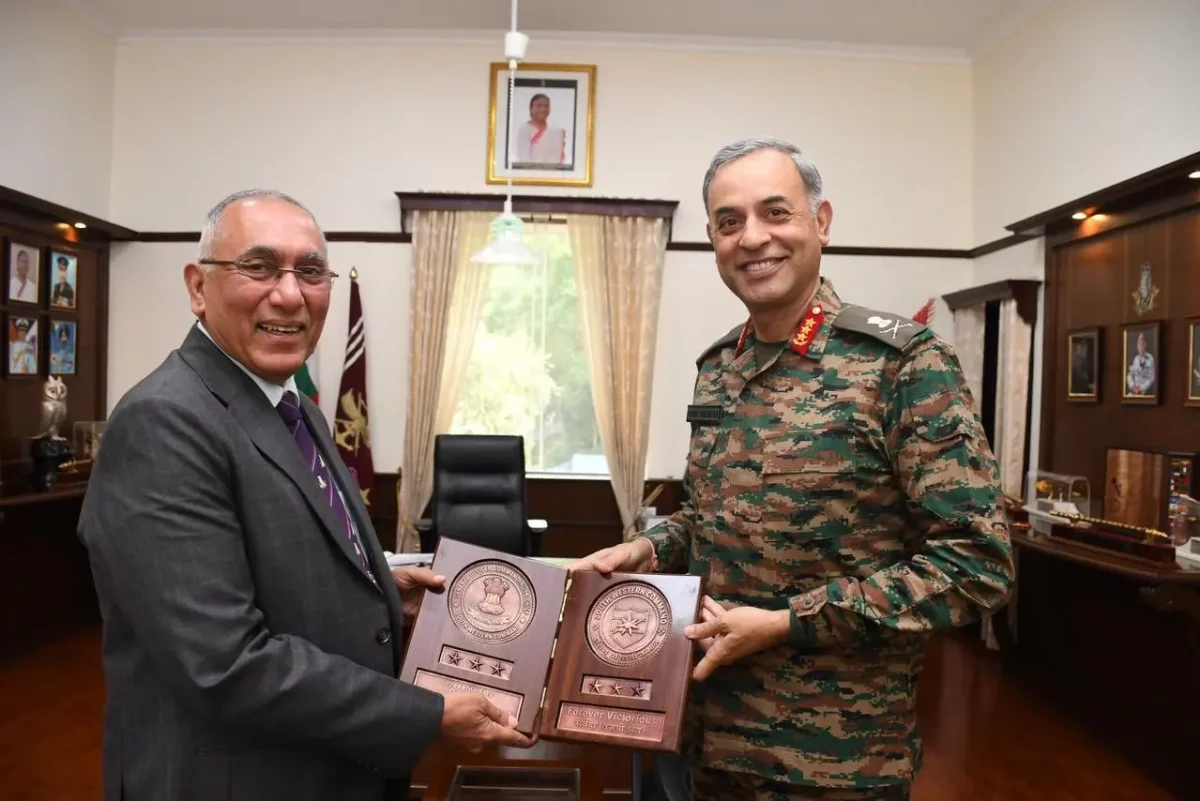
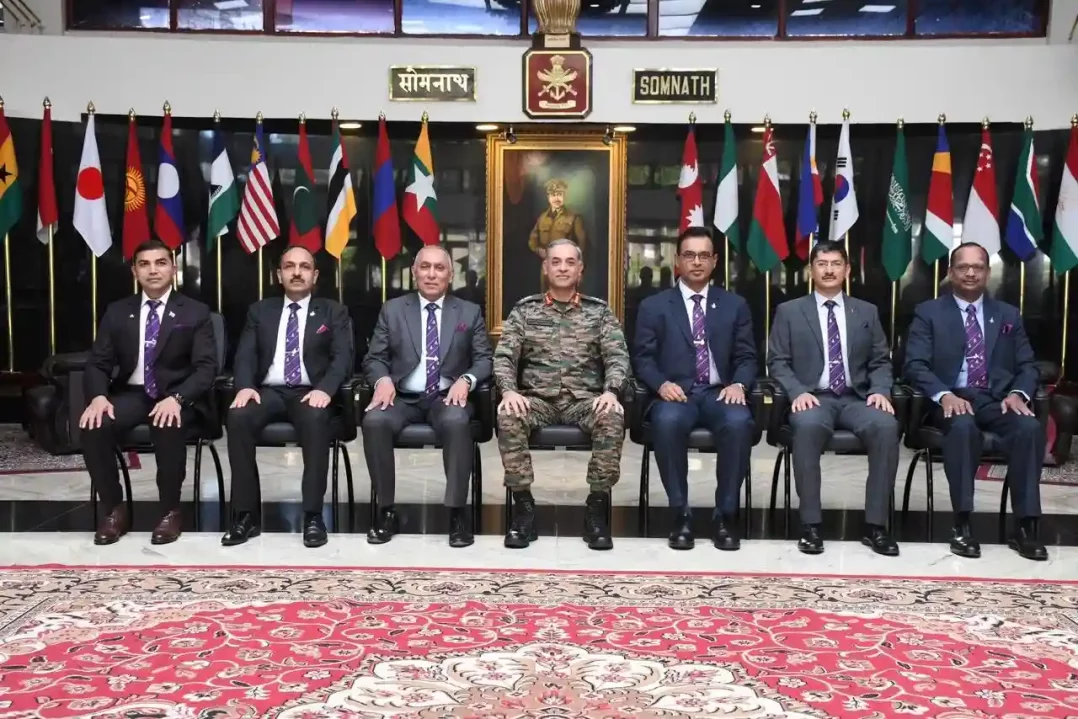
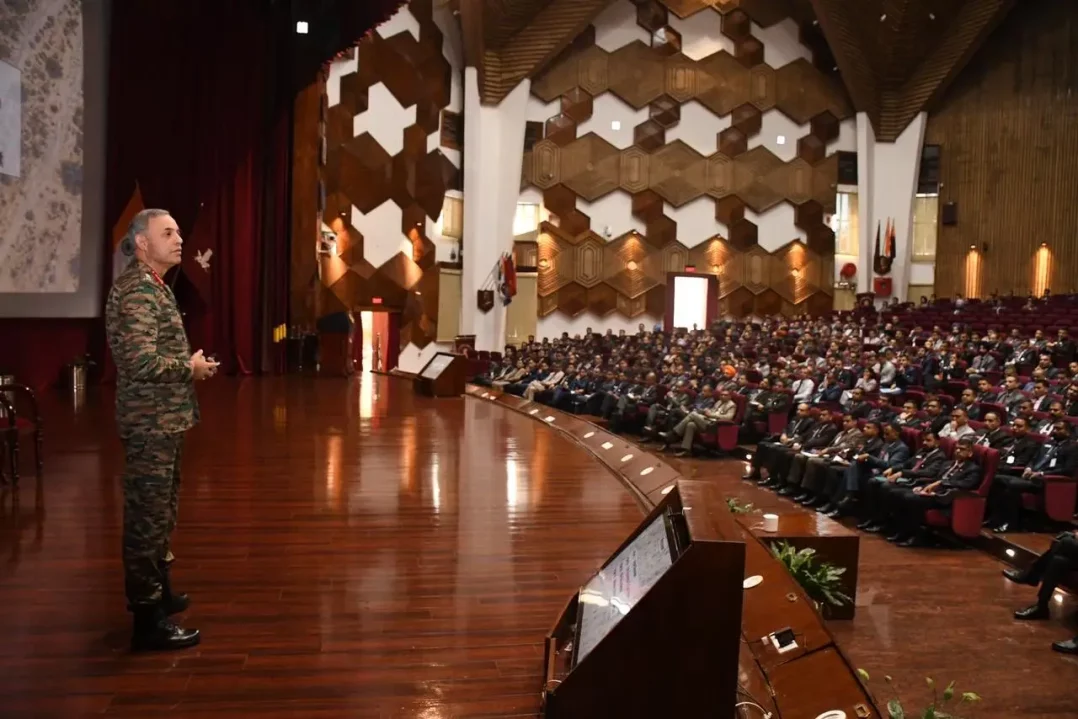
Lieutenant General Mohit Malhotra, General Officer Commanding-in-Chief, South Western Command, provided student officers of the Defence Services Staff College (DSSC) with a strategic perspective on India’s national and military security, with particular emphasis on the operational dynamics along the Western Front.





Addressing the officers of DSSC 82, the Army Commander discussed the evolving security environment and the operational considerations associated with the Western Front. His interaction provided the student officers with an understanding of the broader strategic context within which tactical and operational decisions are made.
Lt Gen Mohit Malhotra also spoke about the ongoing transformation and modernisation of the Indian Army. He highlighted recent initiatives involving organisational restructuring and technology infusion, which are aimed at enhancing the Army’s ability to respond to contemporary and future security challenges.
The Army’s modernisation effort is increasingly focused on creating formations and capabilities that are agile, adaptable and capable of operating effectively in a rapidly changing battlespace. Organisational restructuring, combined with the induction and integration of emerging technologies, is intended to improve operational effectiveness while enabling faster decision-making and more efficient employment of combat power.
During his interaction, Lt Gen Malhotra emphasised that these transformation initiatives are intended to contribute towards building a ‘Future-ready Force’. The objective is not limited to introducing new equipment but also involves adapting organisational structures, operational concepts and methods of employment to meet the requirements of modern warfare.
Particular emphasis was placed on the Western Front and the requirement for the Indian Army to maintain the capability to generate a swift and decisive offensive response when required. The Army Commander’s remarks highlighted the importance of preparedness, operational agility and the ability to translate technological and organisational advantages into battlefield effectiveness.
The interaction with DSSC 82 was also significant from the perspective of professional military education. The Defence Services Staff College provides officers with an opportunity to develop a deeper understanding of operational planning, strategy and joint military affairs. Exposure to senior operational commanders forms an important part of this learning process.
The student officers gained insights into the operational and tactical nuances associated with the Western Front as they prepare to undertake the ensuing Western Front capsule. The interaction was aimed at enhancing their understanding of the complexities involved in planning and executing military operations in a challenging security environment.
The Army Commander’s discussion also reinforced the relationship between strategic thinking and tactical execution. Officers preparing for staff and command responsibilities need to understand not only the immediate requirements of battlefield operations but also the larger national-security objectives that shape military planning.
Technology infusion was another important element of the discussion. The character of warfare is changing rapidly with the growing relevance of advanced sensors, unmanned systems, artificial intelligence, precision capabilities, information systems and other emerging technologies. Integrating such technologies effectively requires corresponding changes in training, organisation and operational concepts.
The focus on organisational restructuring similarly reflects the Army’s effort to ensure that its structures remain suited to contemporary operational requirements. Modernisation, in this context, involves a combination of personnel, organisation, equipment, training and doctrine rather than relying on technology alone.
For the Western Front, maintaining operational preparedness requires forces to remain capable of responding across a range of contingencies. This demands realistic training, continuous evaluation of operational concepts and the ability to adapt rapidly as the security environment evolves.
Lt Gen Malhotra’s interaction therefore provided DSSC student officers with a broader understanding of how these requirements are connected. The creation of a future-ready force depends on integrating strategic direction with operational planning and tactical execution.
The emphasis on a decisive offensive punch also underlines the importance of maintaining credible combat capability. Such capability depends on preparedness across multiple dimensions, including force structures, equipment, training, logistics, intelligence and command-and-control systems.
The interaction further demonstrated the importance of professional military education in preparing officers for increasingly complex operational responsibilities. Officers graduating from DSSC will be required to apply strategic and operational concepts in diverse command and staff appointments, making exposure to contemporary operational thinking particularly valuable.
The student officers of DSSC 82 reportedly gained significantly from the interaction, which added to their preparation for the Western Front capsule. The session provided them with an opportunity to connect classroom learning with the practical considerations of operational command and planning.
Lt Gen Mohit Malhotra’s address ultimately brought together three interconnected themes—national security, military transformation and operational preparedness. His emphasis on organisational restructuring and technology infusion reflected the Army’s broader effort to evolve into a more agile and capable force, while the focus on the Western Front highlighted the continuing requirement for readiness and decisive combat capability.
As the Indian Army continues its transformation towards a future-ready force, professional military education will remain an important enabler in preparing officers to understand and employ these evolving capabilities. For DSSC 82, the interaction with the South Western Army Commander offered valuable perspective on the operational environment and the demands of future military leadership.