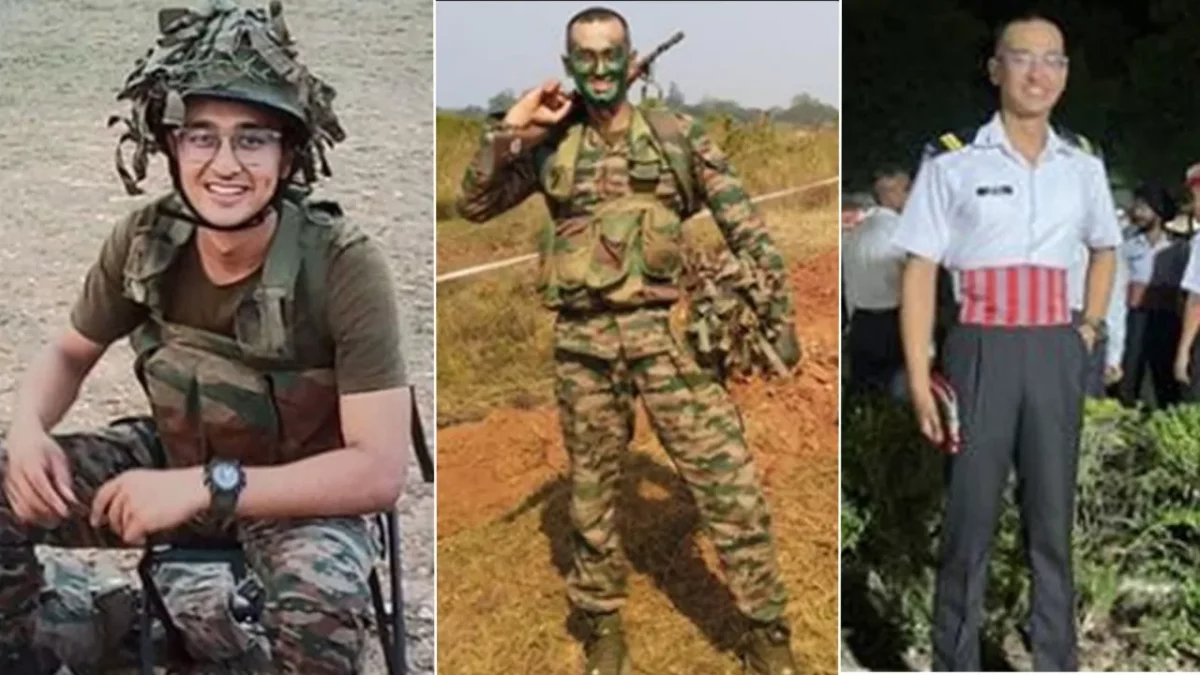
For Battalion Under Officer (BUO) Sparsh Chhetri of Dehradun, wearing the Olive Green is more than a career choice—it is the continuation of a distinguished fourth-generation family legacy of military service. With his great-grandfather having served in the British Indian Army, followed by his grandfather and father as Infantry officers and his mother serving in the Army Educational Corps, service to the nation has been deeply woven into his family’s history and way of life.





Growing up in such an environment, Sparsh was exposed from an early age to the values associated with military service—discipline, courage, duty and commitment. The uniform was not an unfamiliar symbol in his household; it represented a family tradition that had passed through generations. For him, joining the Indian Army became a natural continuation of that legacy while also representing his own commitment to serving the nation.
Despite having a strong military background, Sparsh first pursued a career in the technology sector. He graduated in Computer Science from Thapar University, establishing a professional foundation in one of the most rapidly evolving fields of the modern economy. His technical education eventually led him to a successful corporate career as a Senior Data Analyst with a leading multinational company.
The position offered the stability and professional opportunities associated with a flourishing corporate career. Yet, despite this success, Sparsh remained drawn towards the military path that had shaped his family for generations. His decision to leave a promising career in the corporate sector demonstrated that his aspiration to serve in uniform was driven by purpose rather than professional convenience.
Choosing the Indian Army meant walking away from a comfortable and established career and entering a profession defined by responsibility, discipline and service. For Sparsh, however, the decision represented an opportunity to carry forward the legacy of his family while creating his own identity as an officer.
His journey towards the Army was also distinguished by an exceptional sporting record. A versatile all-rounder, Sparsh achieved success across several sporting disciplines. He became a national-level equestrian medallist and also earned medals at the district level in badminton and swimming.
His sporting achievements reflected qualities that complement military training, including physical fitness, competitive spirit, discipline and the ability to perform under pressure. Participation in multiple sports also required adaptability and the capacity to continuously develop different physical and mental skills.
Sparsh’s record of achievement extended beyond sports. He was also recognised as a Best Firer, highlighting his proficiency in an important military skill. His earlier experience as an NCC Under Officer further strengthened his exposure to military discipline, leadership and organisational responsibilities.
The combination of NCC experience, sporting excellence, technical education and a family steeped in military service provided Sparsh with a diverse foundation as he moved towards becoming an officer. Each aspect of his background contributed to the leadership qualities that would later be reflected during his training at the Officers Training Academy, Gaya.
At OTA Gaya, Sparsh took on key cadet appointments, including the responsibility of Battalion Under Officer. Such appointments place significant responsibility on officer cadets and provide opportunities to demonstrate leadership, discipline, teamwork and the ability to coordinate with fellow cadets.
His appointment as Battalion Under Officer was also a reflection of the confidence placed in his leadership abilities. Having already experienced leadership through NCC and developed discipline through competitive sport, Sparsh was able to bring those qualities into the demanding academy environment.
His journey is particularly notable because of the deliberate choice he made between two successful career paths. On one side was a flourishing career in the technology industry as a Senior Data Analyst; on the other was the uncertain and demanding path of military service. Sparsh chose the latter because of a deeper sense of purpose and the desire to continue his family’s tradition of service.
The four-generation legacy that he carries is equally distinctive. His great-grandfather’s service in the British Indian Army represents the earliest known chapter of the family’s military association, while his grandfather and father continued the tradition as Infantry officers. His mother further strengthened the family’s connection with the Armed Forces through her service in the Army Educational Corps.
For Sparsh, this legacy represents more than a family achievement. It carries with it an expectation to uphold the values associated with military service while demonstrating those values through his own conduct and leadership. His journey at OTA Gaya represents the latest chapter in that continuing story.
His experience also demonstrates how military leadership can draw strength from diverse professional and personal backgrounds. A Computer Science education and experience as a data analyst provide a technical perspective, while sporting achievements contribute physical resilience and competitive discipline. Combined with military exposure through NCC and a family tradition of service, these experiences create a broad foundation for leadership.
In an increasingly technology-driven battlefield, technical expertise and military leadership are becoming closely interconnected. Sparsh’s background in Computer Science and data analysis provides him with an understanding of technology and analytical thinking, while his transition into military training places those abilities within a framework of operational responsibility and service.
His sporting achievements similarly demonstrate a willingness to compete and excel across different domains. From equestrian sport at the national level to badminton and swimming at the district level, Sparsh has consistently pursued excellence beyond a single discipline.
The story of BUO Sparsh Chhetri ultimately represents the convergence of legacy, choice and individual achievement. He inherited a proud tradition of military service, but he also made a conscious decision to continue it. He built a successful civilian career, yet chose to leave it behind in pursuit of a larger purpose. At OTA Gaya, he translated his previous experiences into leadership responsibilities, culminating in his appointment as Battalion Under Officer.
From the military service of his great-grandfather to the Infantry careers of his grandfather and father, and his mother’s contribution through the Army Educational Corps, four generations of service have now shaped Sparsh’s journey. His decision to join the Army ensures that the family’s connection with the uniform continues into another generation.
His journey serves as an example for young aspirants who may be confronted with competing career choices. It demonstrates that success is not defined solely by professional comfort or financial opportunity, but also by the purpose an individual chooses to pursue.
For BUO Sparsh Chhetri, that purpose is the Olive Green. Carrying forward a four-generation legacy while forging his own path through technology, sport, leadership and military training, he represents a new generation of officer aspirants who combine inherited values with individual ambition.
His story is ultimately one of continuity and choice—a proud military tradition passed from one generation to the next, strengthened by personal determination and expressed through a conscious commitment to serve the nation.