
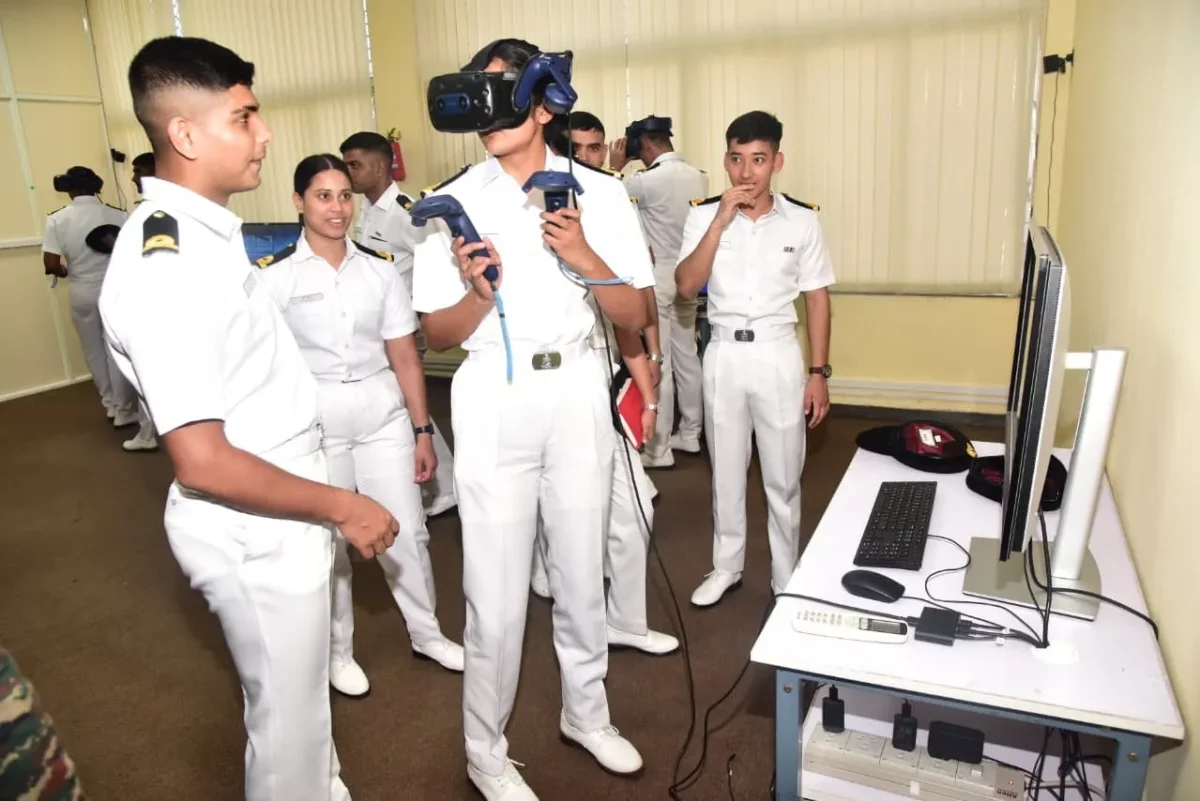
A delegation of 21 officers from INS Shivaji visited the Military College of Electronics and Mechanical Engineering (MCEME) in Secunderabad on September 15 and 16, 2026, as part of the Annual Training Visit Calendar, providing the officers with exposure to advanced military technologies, contemporary training methodologies and indigenous capability development.



The visit focused on strengthening professional interaction between the Indian Army and Indian Navy while providing the naval officers with an insight into the technical training ecosystem developed by MCEME for personnel of the Corps of Electronics and Mechanical Engineers (EME).
During the visit, the delegation was briefed on MCEME’s role in imparting advanced technical training to officers, Junior Commissioned Officers (JCOs) and technicians of the Corps of EME. The briefings covered contemporary approaches to technical training, indigenous capability development and the infrastructure supporting operational readiness.
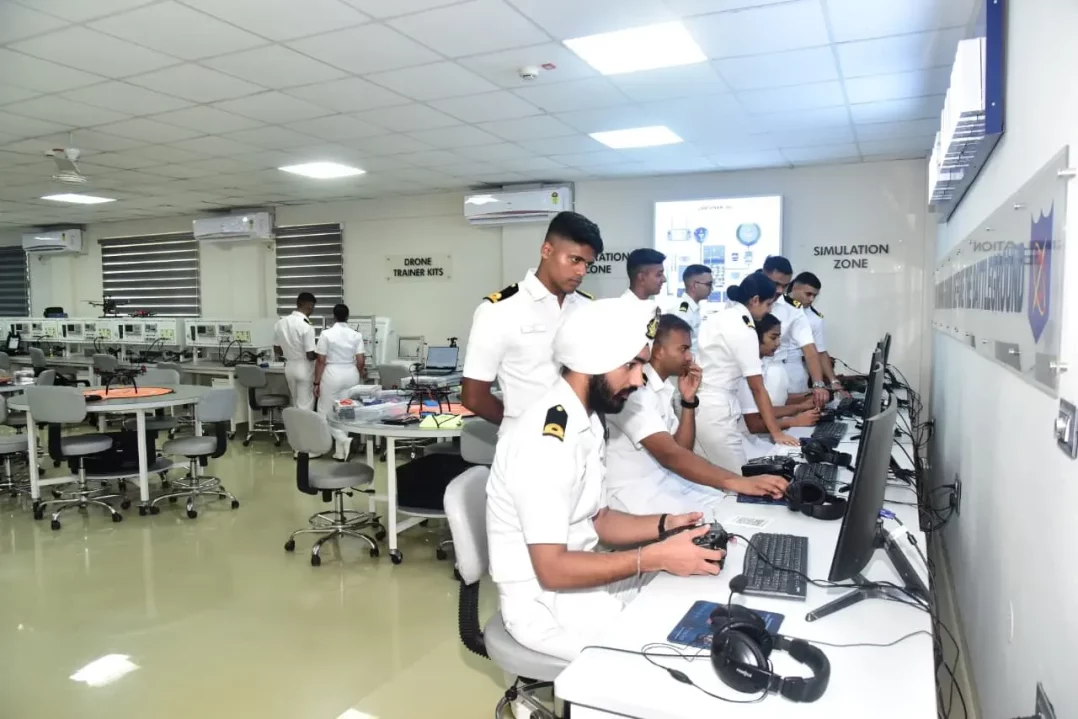
The engagement comes amid the increasing technological complexity of modern military operations, where advanced engineering, electronics, communications, robotics, artificial intelligence and autonomous systems are becoming integral to military capability.
The officers visited various faculties, Centres of Excellence and advanced laboratories at MCEME, gaining first-hand exposure to technologies and systems being explored and developed within the institution.
Among the facilities visited were Dronalaya, Yantralaya and Rachnalaya. These centres provided the delegation with exposure to a range of emerging technologies, including drones, robotics, artificial intelligence, additive manufacturing, electronic warfare, aviation systems and advanced communication technologies.
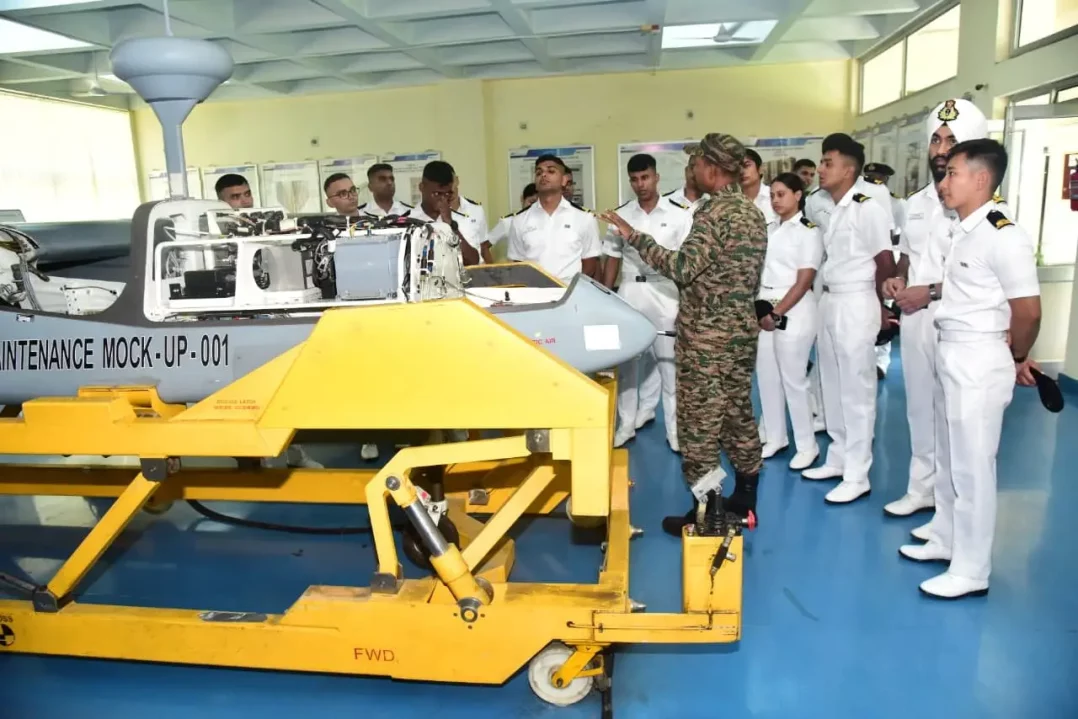
The visit to Dronalaya provided an opportunity for the officers to understand developments relating to unmanned and drone technologies. Drones and autonomous systems are increasingly being integrated into military operations for surveillance, reconnaissance and other operational roles, making technological familiarity increasingly important for future military leaders.
The delegation also visited Yantralaya and Rachnalaya, gaining exposure to technological applications involving robotics, advanced manufacturing and other emerging military capabilities. Such facilities demonstrate the growing emphasis on combining engineering expertise with indigenous innovation to address operational requirements.
Artificial intelligence was another important area of exposure during the visit. AI-enabled systems are increasingly being examined across the armed forces for applications ranging from data processing and decision support to autonomous systems and operational technologies. Familiarity with such technologies is becoming an important component of preparing military personnel for future operating environments.
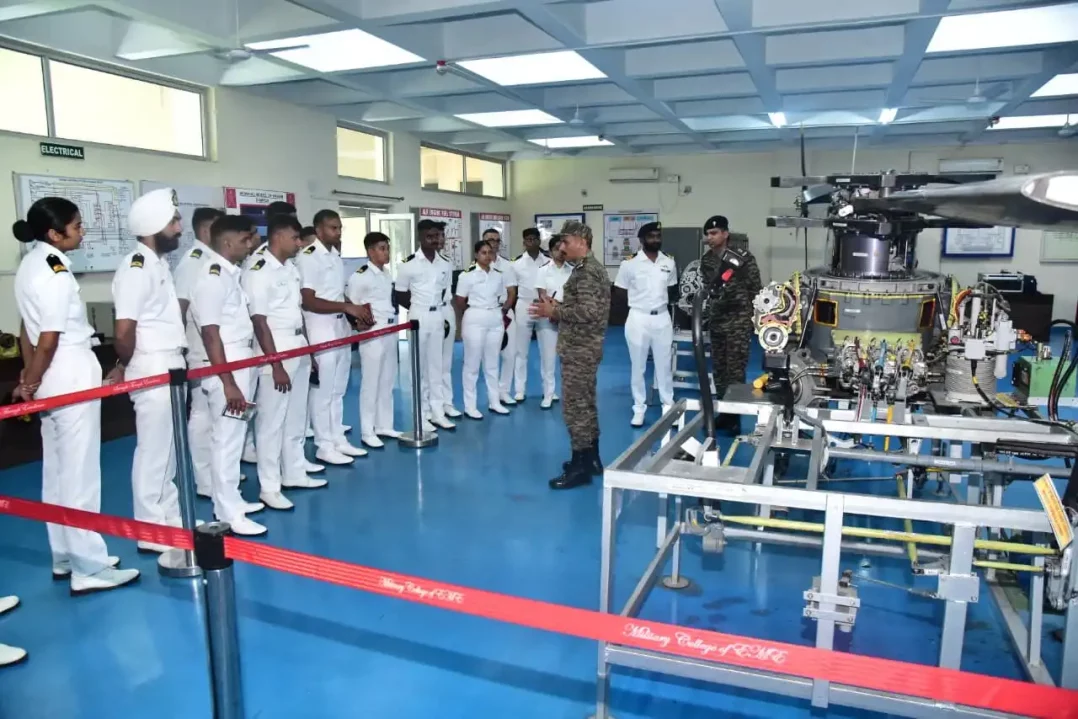
The officers were also introduced to additive manufacturing capabilities. The technology can support the development and production of components and prototypes while offering potential applications in maintenance, repair and logistics. For military organisations operating in diverse environments, technological solutions that can improve equipment availability and reduce dependence on conventional supply chains can have operational relevance.
Electronic warfare and advanced communication technologies formed another part of the technological exposure. As modern battlefields become increasingly dependent on networks, sensors and electromagnetic systems, the ability to operate effectively in contested electromagnetic and information environments is becoming an important aspect of military preparedness.
The delegation’s visit also covered aviation systems and other advanced technical domains. The exposure enabled the officers to gain an understanding of the diverse technological capabilities being incorporated into military training and capability development.
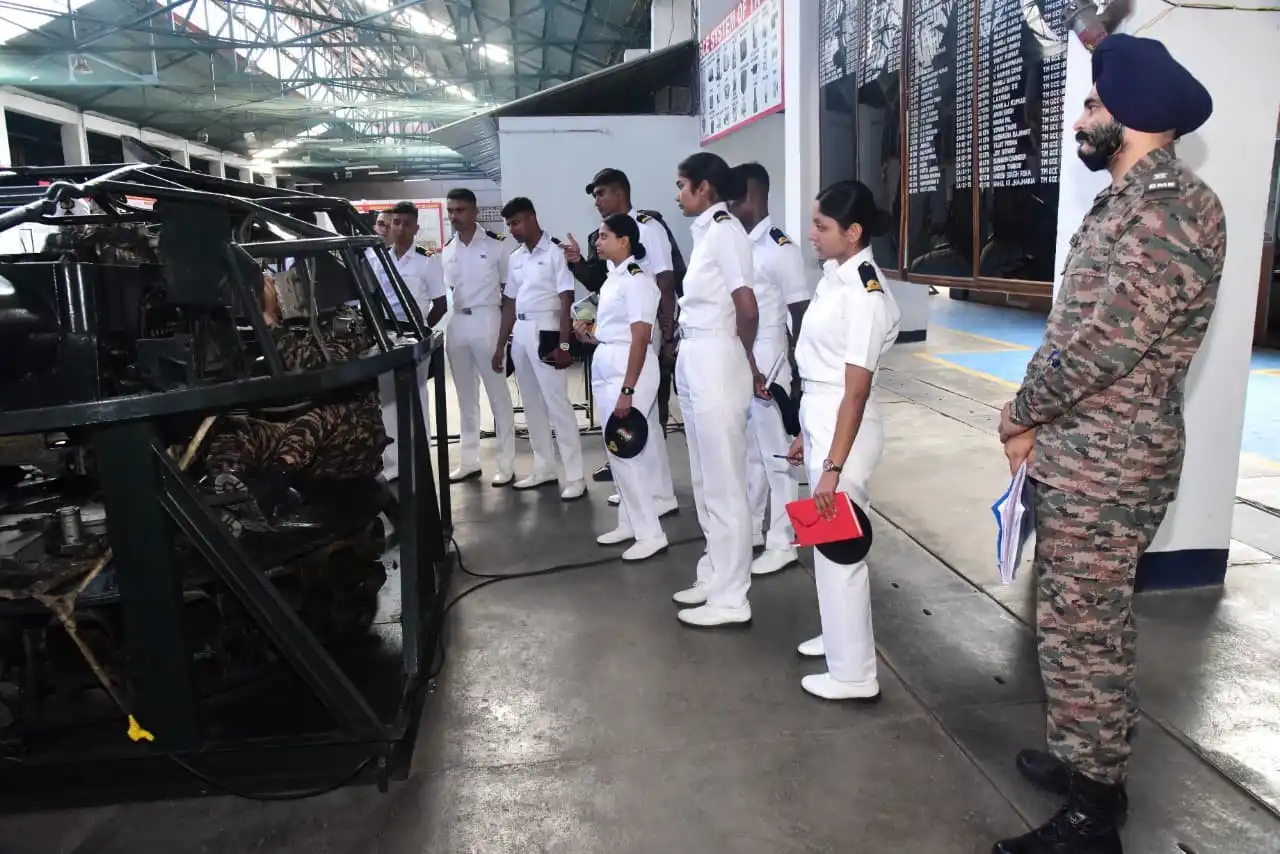
MCEME occupies an important position in the Indian Army’s technical training ecosystem. The institution is associated with the training and professional development of personnel responsible for maintaining and supporting complex military equipment and systems.
The Corps of EME provides engineering and technical support to the Indian Army, contributing to the maintenance, recovery and operational availability of a wide range of military platforms and equipment. Training institutions such as MCEME therefore play an important role in ensuring that personnel remain capable of dealing with increasingly sophisticated technologies.
The interaction with INS Shivaji officers also highlighted the importance of inter-Service cooperation in the technological domain. Although the Army and Navy operate different platforms and systems, many of the technological challenges associated with electronics, communications, autonomy, engineering and maintenance increasingly overlap.
The visit provided an opportunity for professional exchange between personnel from the two Services and reinforced the broader objective of jointness and integration within India’s Armed Forces.
The increasing convergence of military technologies means that innovation is no longer restricted to individual Service-specific domains. Developments in artificial intelligence, unmanned systems, robotics, communications, electronic warfare and advanced manufacturing have applications across multiple operational environments.
Such exchanges can help personnel understand technological developments beyond their immediate Service-specific roles and contribute to greater awareness of the capabilities and challenges faced by sister Services.
The Annual Training Visit Calendar provides a structured mechanism for professional exposure and interaction. For the INS Shivaji delegation, the visit to MCEME offered an opportunity to observe how technical education, research-oriented activities and advanced infrastructure are being integrated to support military capability development.
The visit also highlighted MCEME’s continuing transformation into a hub for technological excellence and innovation. Its Centres of Excellence and specialised laboratories provide an institutional environment where personnel can engage with emerging technologies relevant to contemporary and future warfare.
The emphasis on indigenous capability development is particularly significant in the context of India’s broader effort to strengthen self-reliance in defence technology. Developing and adapting technologies within the country can contribute to reducing external dependence while enabling the Armed Forces to address specific operational requirements.
The engagement between INS Shivaji and MCEME therefore extended beyond a conventional training visit. It provided a platform for professional interaction, technological familiarisation and exchange of ideas between the Indian Army and Indian Navy.
The visit concluded with an emphasis on the importance of jointness, integration and inter-Service cooperation in addressing the technological and operational challenges of future warfare. As military capabilities become increasingly technology-driven, collaboration between Services can contribute to a more integrated approach towards innovation, training and capability development.
The two-day visit of the 21 officers from INS Shivaji to MCEME thus brought together technical education, emerging technologies and inter-Service engagement. By exposing naval officers to the Army’s advanced technical training infrastructure and Centres of Excellence, the programme reinforced the growing importance of technological cooperation in building India’s future-ready military capabilities.