

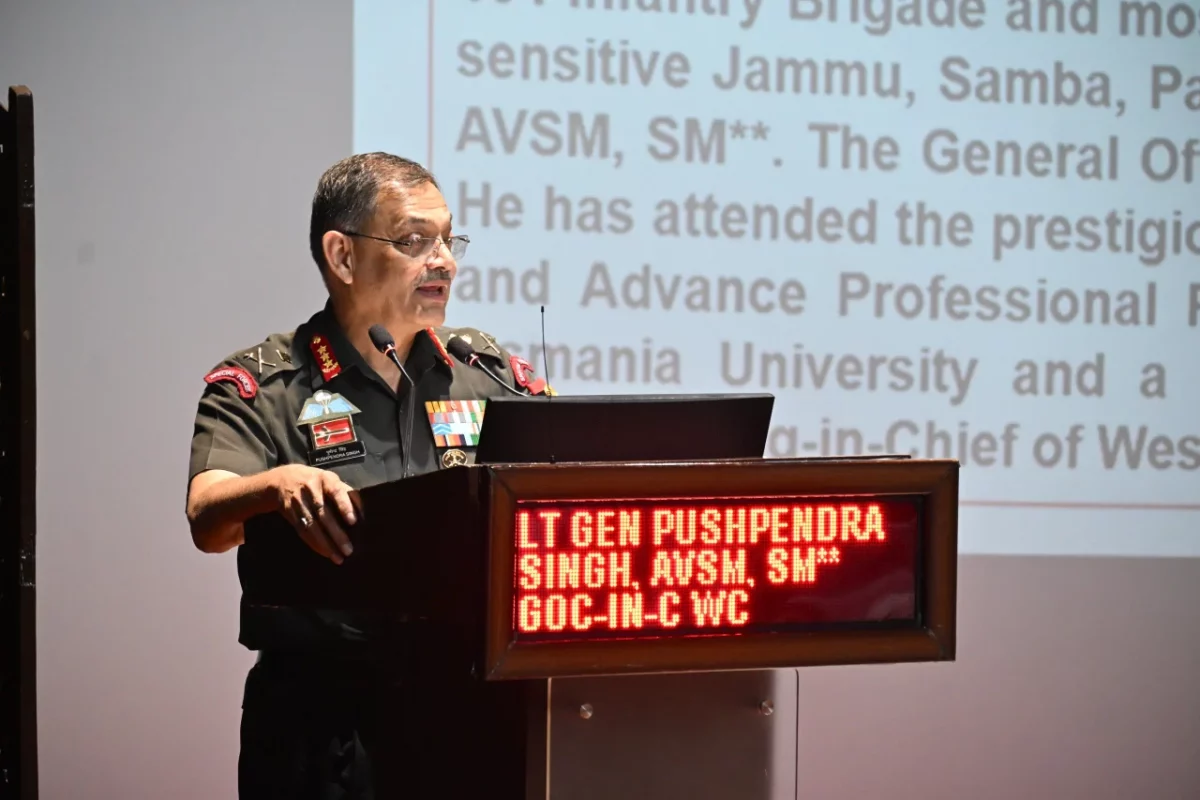
The Indian Army’s Regiment of Artillery organised the 4th Gen SF Rodrigues Memorial Seminar 2026 at Western Command, Chandimandir, focusing on the growing role of networked precision fires, artificial intelligence, unmanned systems and long-range capabilities in shaping the future of artillery warfare.





The seminar, themed “Asymmetric Capability through Networked Precision Fires by Artillery,” was organised in collaboration with the Centre for Land Warfare Studies (CLAWS). It brought together senior military leaders, veterans, academics, defence industry representatives and domain experts to discuss emerging technologies, contemporary battlefield challenges and lessons from recent conflicts.
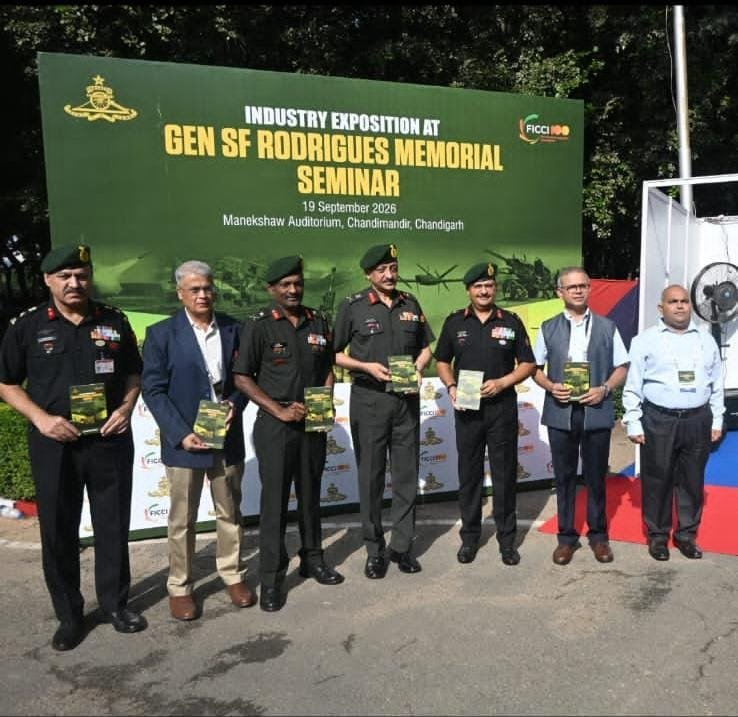
The event featured expert presentations, professional deliberations and a display of innovative technologies and contemporary solutions relevant to artillery and Multi-Domain Operations.
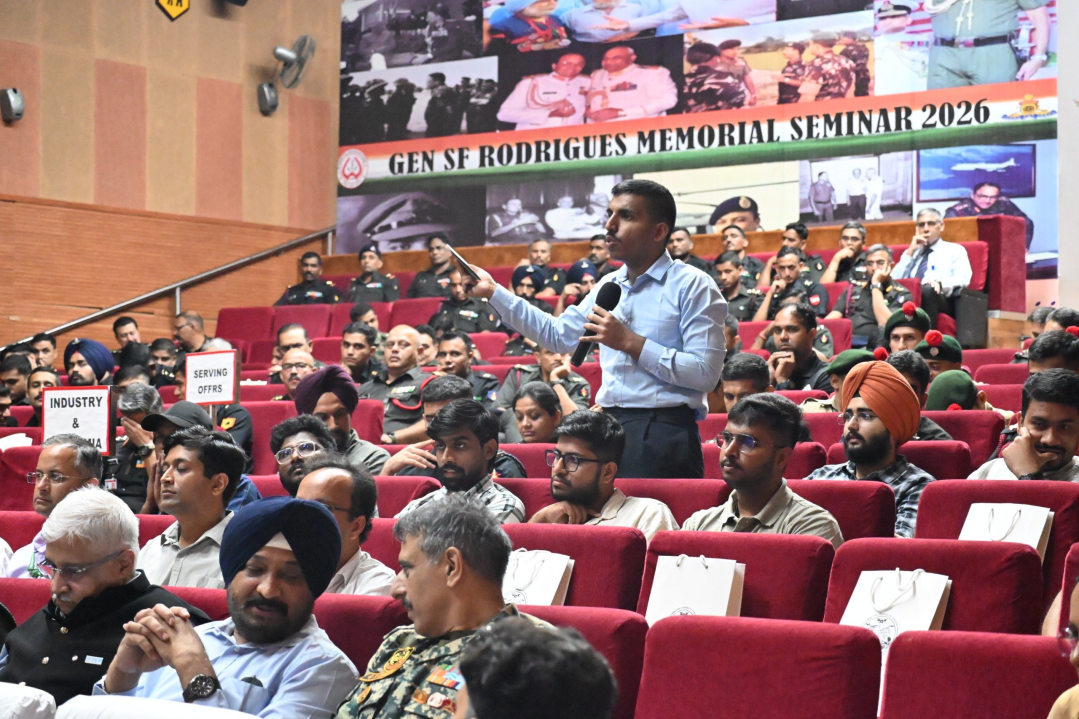
Discussions examined global trends in asymmetric warfare and the increasing importance of networked precision fires, long-range engagements, automation and faster battlefield decision-making. A major focus was the growing convergence of artillery, unmanned aerial systems, artificial intelligence, electronic warfare, surveillance platforms and precision-guided munitions.
Participants discussed the importance of seamlessly connecting battlefield sensors, weapon systems and decision-makers to enable targets to be detected, assessed and engaged rapidly and accurately. Such networking is becoming increasingly important in modern artillery operations, where information gathered by surveillance assets and unmanned platforms can be integrated with long-range weapon systems to shorten the sensor-to-shooter cycle.
The seminar also examined lessons emerging from contemporary conflicts, particularly the rapidly evolving relationship between drones, surveillance, electronic warfare and precision-strike capabilities. The deliberations highlighted how technological developments are changing traditional artillery operations and increasing the importance of persistent surveillance, automation, resilient communications and precision engagements across greater distances.
In his concluding address, Western Army Commander Lt Gen Pushpendra Singh, AVSM, SM & Bar, highlighted the continuing transformation of artillery through improvements in range, precision, artificial intelligence, automation, persistent surveillance and battlefield networking.
He emphasised the need for doctrines, technologies, organisational structures and training methodologies to continuously evolve alongside emerging battlefield requirements to retain a decisive combat edge across the entire depth of the battlefield.
The seminar reflected the Indian Army’s broader emphasis on technology absorption, innovation and capability development as warfare becomes increasingly networked and multi-domain.
By integrating sensors, shooters and decision-makers with AI-enabled systems, surveillance platforms, electronic warfare capabilities and precision weapons, the Army is seeking to develop a more connected, agile and future-ready force capable of seeing farther, deciding faster and striking with precision in an increasingly complex battlespace.