
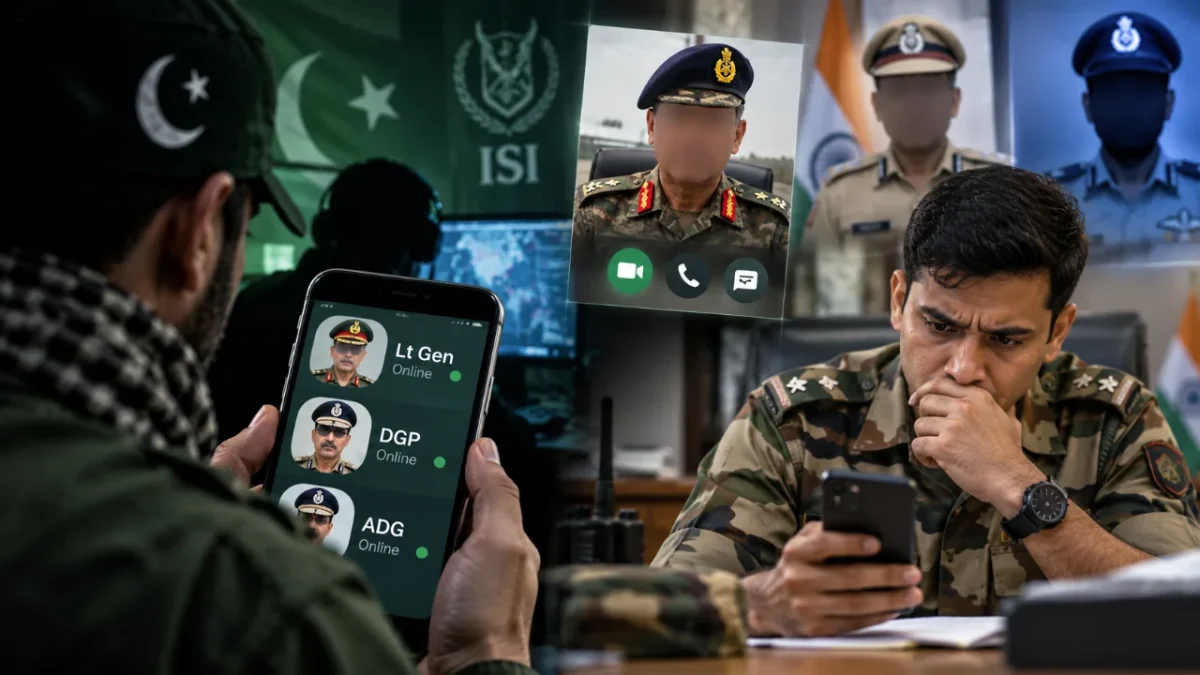
New Delhi, October 24, 2026: The Intelligence Bureau (IB) has flagged a fresh and sophisticated espionage tactic employed by Pakistan’s Inter-Services Intelligence (ISI), involving the creation of forged communication channels impersonating senior Indian Army and police officers. These channels are designed to trap junior personnel and extract sensitive information under the guise of urgency.




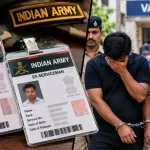
The warning follows the arrest of a husband-and-wife couple from Kalu Wala village in Ferozepur district, Punjab the last village along the India-Pakistan international border by Army Intelligence in coordination with the police. The couple has been accused of running an ISI-linked network that collected and transmitted highly sensitive details about Indian Army establishments, including maps of military locations, weapons and ammunition depots, cantonment areas, troop movements, deployments in border areas, and overall military preparedness and security arrangements. A case has been registered under Sections 3 and 4 of the Official Secrets Act, 1923. Several mobile phones have been seized, and investigators are examining data for further leads on handlers operating from Pakistan and Malaysia.
Investigations revealed that the woman allegedly posed as a police officer and used social media platforms such as Instagram and Snapchat to contact Army personnel, attempting to lure them into relationships through a suspected honey-trap operation to obtain confidential information. The couple was also reportedly sharing border-related classified information with Pakistan-based smugglers.
An IB official noted that while honey-trapping has long been an ISI method, the growing use of impersonation represents a major concern. Individuals recruited by the ISI are now forging communication channels that appear to belong to high-ranking police and Army officers. These channels do not become active immediately. Instead, operators monitor junior officers who may be vulnerable. After a period of silence, the channels send messages carrying a severe sense of urgency, creating an artificial emergency.
“When an artificial emergency is created, the junior officer tends to pass on information almost urgently. The officer tends to prioritise the urgency rather than cross-checking whether the communication channel is genuine or not,” an official explained. In some cases, such messages have pressured lower-ranking personnel to bypass established protocols or provide access to unauthorised networks while transmitting sensitive information. Once the required data is obtained, the forged channel is immediately shut down.
This short operational lifespan using an impersonation network for a single operation before dismantling it and setting up a new one makes it significantly harder for Indian agencies to trace links or identify the masterminds behind the activity. Officials describe the tactic as a “fresh challenge.”
The shift in ISI methods has intensified since Operation Sindoor in May 2025, launched in response to the Pahalgam terror attack. During and after the operation, India demonstrated military strength while gaining an intelligence edge; several ISI modules and honey-trap networks were dismantled, and Pakistan has struggled to fully revive many proxies or sustain infiltrations. Assessments indicate that these setbacks have prompted the ISI to reinvent its approach by rapidly establishing short-lived impersonation networks to extract as much information as possible about the Indian armed forces.
Security agencies continue to investigate the full extent of the Ferozepur network and any associated modules. The development underscores the need for heightened vigilance among Army and police personnel, particularly regarding verification of urgent communications claiming to originate from senior officers, especially in border areas.