
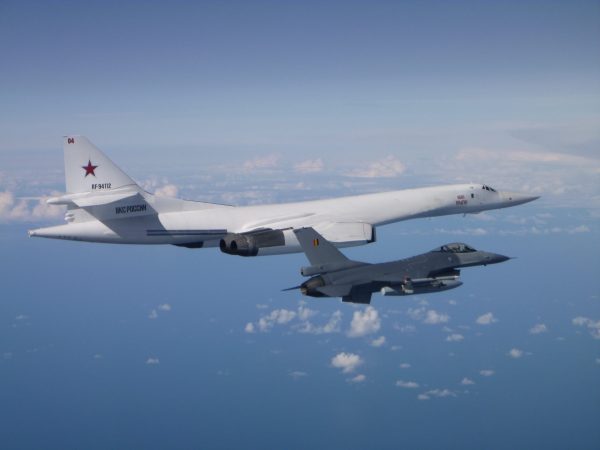
Russia has recently offered India the chance to acquire the Tu-160M strategic bombers, widely recognized as the “White Swan,” which could significantly enhance the Indian Air Force’s (IAF) aerial capabilities. The proposal comes amidst an environment of heightened geopolitical tensions and shifting global power dynamics, with India considering bolstering its defense assets.

Former Chief of Air Force, Air Chief Marshal Arup Raha, previously noted India’s keen interest in the Tupolev Tu-160, especially as it has been actively employed by Russia during the ongoing war in Ukraine. As India evaluates this offer, various considerations emerge, including its practicality, implications for regional security, and the impact on the longstanding Indo-Russian defense relationship.
Originally developed in the Soviet Union during the late 1970s, the Tupolev Tu-160 stands as the world’s largest and fastest supersonic bomber. The modernized Tu-160M variant boasts significant enhancements, including advanced avionics, superior navigation systems, and state-of-the-art NK-32-02 engines that improve operational efficiency and extend mission capabilities. Each aircraft has the capacity to carry up to 12 long-range cruise or nuclear missiles, making it capable of executing precision strikes from a considerable distance. With an impressive range of 12,000 kilometers without the need for refueling, and adaptive variable-sweep wings for flexible mission profiles, the Tu-160M retains its status as a preeminent long-range strategic bomber.
The proposal aligns with Russia’s strategy to deepen its defense collaboration with India amid evolving global alliances. The relationship between the two countries has historically been robust, characterized by substantial arms sales and technology transfer. This partnership has endured despite India’s growing defense ties with Western powers, particularly the United States. Accepting the Tu-160M offer could reaffirm the bilateral relationship, thereby counterbalancing Western influence and allowing India to diversify its defense procurement sources. This diversification is crucial for navigating the complexities of the current strategic landscape.
Moreover, the offer comes at a time when Russia is seeking to reinforce its position within the global arms market, especially in light of economic sanctions and geopolitical conflicts. By providing advanced military equipment like the Tu-160M, Russia aims to bolster its image as a key supplier of cutting-edge technology to important allies, including India.
While the Indian Air Force has typically prioritized multirole fighters over dedicated strategic bombers, the acquisition of the Tu-160M could significantly reshape India’s defense approach. Currently, India relies on aircraft such as the Sukhoi Su-30MKI and Dassault Rafale, which, despite their versatility, do not match the Tu-160M’s range and payload capabilities. The inclusion of a strategic bomber could enhance India’s ability to project power within the Indo-Pacific, serving as a robust deterrent amidst evolving threats in the region.
As geopolitical rivalries escalate, particularly concerning China’s military assertiveness, the acquisition of the Tu-160M could provide India with an extended reach for naval and land-based operations. This addition would strengthen India’s nuclear triad, enhancing its deterrent posture against regional adversaries.
However, despite the potential operational advantages, the high cost associated with the Tu-160M poses budgetary challenges. Additions such as specialized training, infrastructure modifications, and maintenance would significantly increase the total cost of ownership. The operational demands of such a large aircraft would necessitate adaptations at airbases, including logistical support.
Furthermore, the survivability of the bomber in contested airspace presents an additional concern. Integrating the Tu-160M into the IAF’s current operations would require substantial investments in training and mission planning resources. Historically, the Indian Air Force has not operated heavy bombers, which means establishing a new operational doctrine for their usage would generate further challenges.
Presently, the Tupolev Tu-160 may not be a top priority in the IAF’s acquisition strategy, which is largely focused on missile defense and enhancing air superiority through multirole aircraft and advanced cruise missiles. Although the Tu-160M represents a formidable strategic asset, its high acquisition and maintenance costs, combined with existing alternative deterrents, might affect its immediate relevance to India’s strategic goals.
The prospect of acquiring the Tu-160M bomber presents a notable opportunity for India to enhance its strategic military capabilities while solidifying its status as a regional power. While the advantages of increased range, payload, and deterrent capability are significant, considerations around cost, logistics, and geopolitical implications must be weighed carefully. Successfully integrating the Tu-160M into the IAF would herald a pivotal development in India’s defense modernization journey, reinforcing its strategic deterrence stance at a time of changing global dynamics.
Ultimately, the decision regarding the Tu-160M acquisition will reflect India’s long-term vision for its position within the regional and global security framework, underscoring a broader strategic calculus in a rapidly evolving defense landscape.