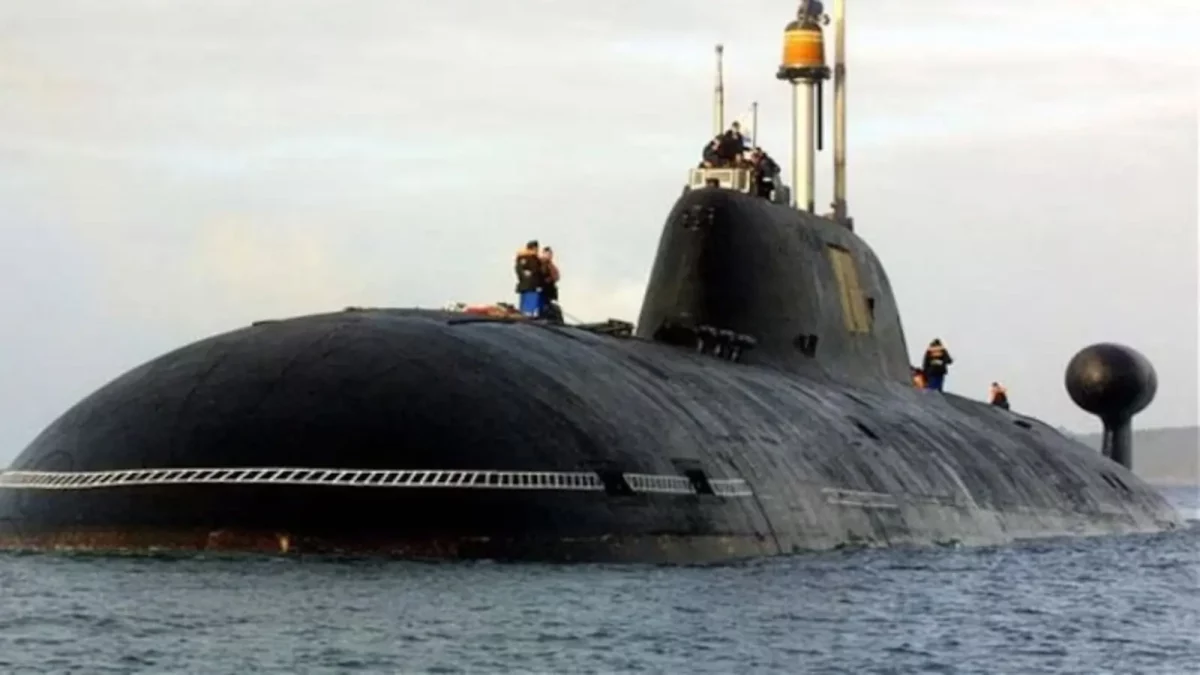
India’s fourth Arihant-class nuclear-powered ballistic missile submarine (SSBN), designated S4*, is likely to be commissioned as INS Arisudan, further strengthening the country’s sea-based nuclear deterrent.





The submarine was launched on October 16, 2025, by Defence Minister Rajnath Singh and represents a major milestone in India’s indigenous strategic submarine programme. If formally approved, the name Arisudan—meaning “destroyer of enemies” in Sanskrit—will continue the thematic lineage of the class, following INS Arihant, INS Arighaat, and INS Aridhaman.
Naming and Commissioning Process
As per established naval protocol, the proposed name originates from the Indian Navy’s ship-naming committee and is subsequently forwarded to the Ministry of Defence for clearance. Final approval rests with the President of India. The commissioning of INS Arisudan is currently targeted for 2027, marking a significant boost to India’s nuclear triad at a time of evolving regional security dynamics.
Progress of the Arihant-Class Fleet
The third submarine of the class, INS Aridhaman, is nearing induction and is expected to join the fleet in early 2026 after completing extensive sea trials. Launched in November 2021 at the Ship Building Centre, Visakhapatnam, it features an upgraded compact light water reactor, offering improved stealth, endurance, and operational flexibility.
Compared to the lead boat INS Arihant, the newer submarines are larger by nearly 1,000 tonnes and are equipped with eight vertical launch tubes, enabling them to carry longer-range submarine-launched ballistic missiles (SLBMs).
Enhanced Missile Capability and Strategic Role
While INS Arihant was initially limited to the K-15 Sagarika missile with a range of about 750 km, subsequent Arihant-class submarines are designed to operate the K-4 SLBM, which has a reported range of approximately 3,500 km. Successful trials of these missiles, conducted by DRDO in coordination with the Strategic Forces Command, have significantly enhanced India’s assured second-strike capability.
As the most survivable leg of India’s nuclear triad, SSBNs play a central role in upholding the country’s no-first-use nuclear doctrine, ensuring credible deterrence through continuous at-sea patrols.
Broader Submarine Modernisation
Parallel to the Arihant-class programme, India is advancing the Project P-77 initiative for indigenous nuclear-powered attack submarines (SSNs). Approved in October 2024 with an estimated cost of ₹40,000 crore, the project aims to build two SSNs initially at Visakhapatnam with high indigenous content, with the first delivery projected in the mid-2030s.
In the interim, India continues to rely on leased nuclear attack submarines, including the Akula-class INS Chakra III, expected to be delivered by Russia in 2028.
Strategic Significance
With INS Arisudan likely to join the fleet later this decade, the Arihant-class programme underscores India’s steady progress toward a robust, indigenous, and credible sea-based nuclear deterrent—reinforcing its strategic autonomy and long-term security posture in the Indo-Pacific region.