

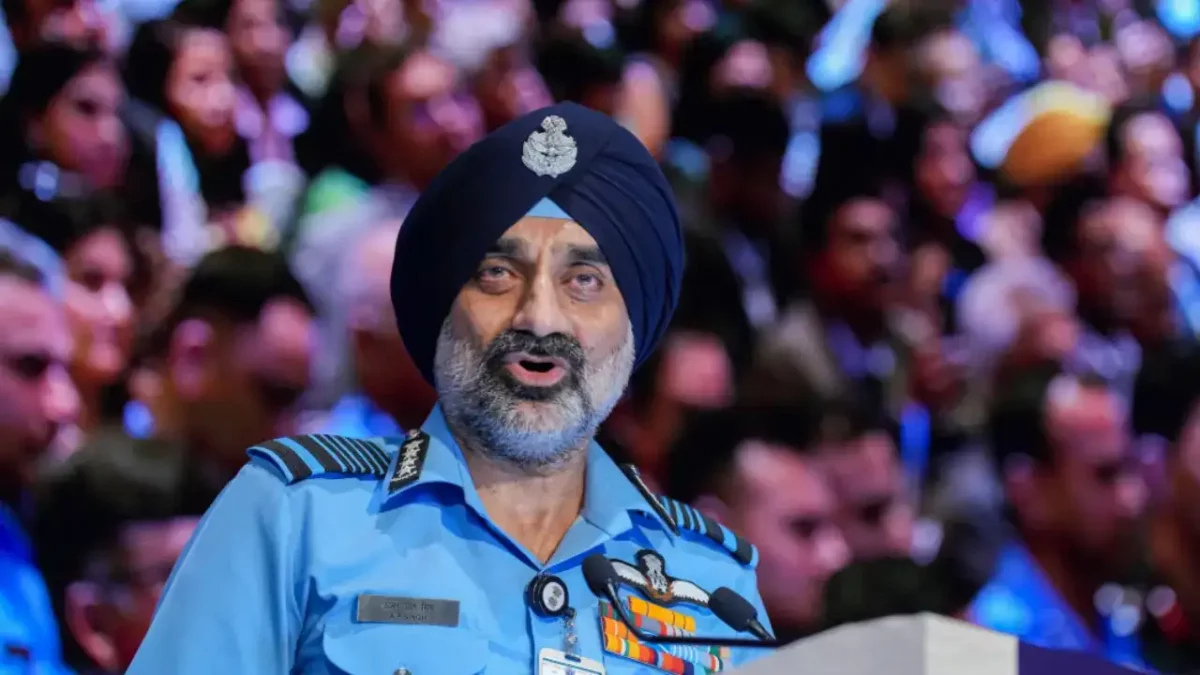
Air Chief Marshal A. P. Singh, Chief of the Air Staff, has strongly urged the Aeronautical Development Agency (ADA) to strictly adhere to delivery timelines for key indigenous aviation projects, underlining that delays could adversely impact the Indian Air Force’s (IAF) operational readiness in a rapidly evolving security environment.





The Air Chief made these remarks while inaugurating the two-day national seminar ‘Aeronautics 2047’, organised by the ADA at the Centre for Airborne Systems (CABS), Bengaluru. The seminar marks 25 years of the Light Combat Aircraft (LCA) Tejas flight programme, a milestone that the Air Chief congratulated ADA and the wider Indian aerospace ecosystem for achieving.
Timely Induction Critical for IAF
Highlighting the current geopolitical flux and persistent security challenges, Air Chief Marshal Singh emphasised that timely induction of platforms such as the LCA Tejas Mk-1A is non-negotiable, especially at a time when the IAF continues to address gaps in squadron strength. He stressed that operational preparedness depends not just on design success, but on predictable and disciplined delivery schedules.
Focus on Self-Reliance and Future Technologies
Addressing the seminar, Dr Samir V. Kamat, Secretary, Department of Defence R&D and Chairman of DRDO, underscored the importance of developing cutting-edge indigenous technologies to reduce reliance on imports. He linked defence innovation directly with the national vision of Viksit Bharat@2047, calling for deeper collaboration between government, industry, and academia.
Aeronautics 2047: Shaping the Future
The seminar has brought together domain experts, industry partners, academia, and aviation professionals from across the aerospace ecosystem. Key focus areas include:
- Next-generation aircraft manufacturing and assembly
- Digital manufacturing and digital twin technologies
- Advances in aerodynamics, propulsion, and flight control systems
- AI-enabled design processes and avionics integration
- Certification challenges and maintainability of modern aircraft
Tejas: A Flagship Indigenous Success
A significant part of the seminar traces the evolution of the LCA Tejas from concept to frontline service. Designed and developed by ADA, the aircraft has completed over 5,600 successful flight sorties, supported by more than 100 government labs, academic institutions, and industries.
The Tejas incorporates advanced technologies such as carbon composites, fly-by-wire flight controls, glass cockpit architecture, and digital utility management systems—cementing its status as a fourth-generation fighter. To date, 38 Tejas aircraft (32 fighters and six trainers) have been inducted into the IAF across two squadrons.
Road Ahead
The upcoming Tejas Mk-1A is expected to meet IAF operational requirements with enhanced avionics and mission systems, while the Tejas Mk-2 and Naval variants are under active development to expand capabilities across air and maritime domains.
The seminar also features exhibitions by DPSUs, private industry, and MSMEs showcasing indigenously developed airborne systems—reflecting the growing maturity of India’s aerospace manufacturing base.
Strategic Message
Air Chief Marshal Singh’s emphasis on delivery timelines sends a clear strategic message: indigenous capability must be matched by execution discipline. As India targets aerospace leadership by 2047, the convergence of leadership direction, technological innovation, and industry collaboration showcased at Aeronautics 2047 is expected to play a decisive role in ensuring the IAF maintains a credible operational edge in contested skies.