

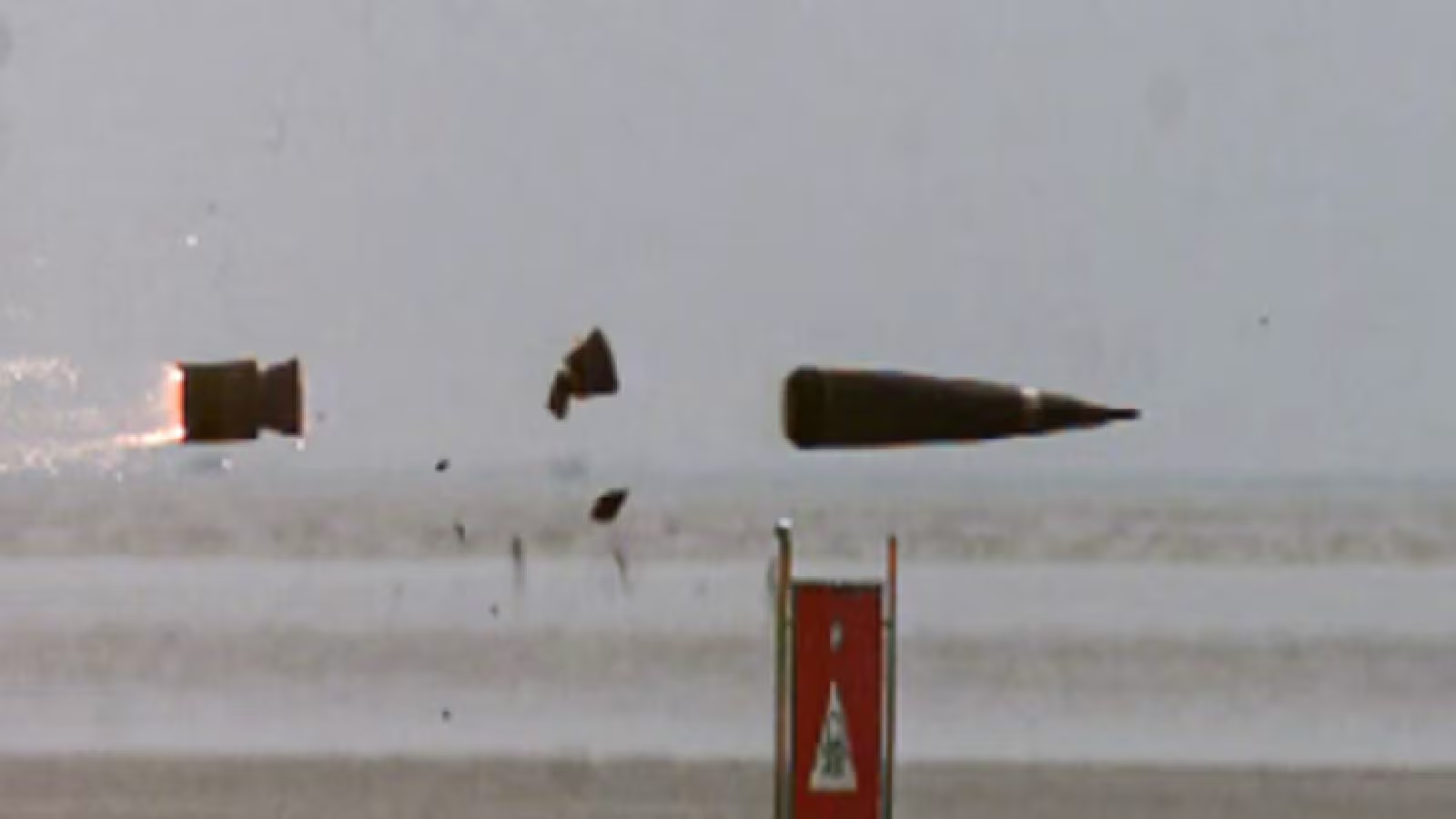
In a major breakthrough for indigenous defence technology, Indian Institute of Technology Madras (IIT Madras) has successfully developed ramjet-assisted artillery shells that can enhance the range of existing gun systems by nearly 50 per cent without compromising lethality.





The innovation integrates a ramjet engine into standard 155 mm artillery ammunition, replacing the conventional base-bleed unit. Unlike traditional shells that rely solely on initial muzzle velocity, the new design enables sustained propulsion after the shell exits the gun barrel, significantly extending its flight range.
Significant Range Enhancement Across Artillery Systems
According to IIT Madras, the ramjet-assisted shells have demonstrated substantial range improvements across multiple frontline Indian artillery platforms:
- ATAGS (Advanced Towed Artillery Gun System): Range extended from ~40 km to ~70 km
- K9 Vajra-T: Range increased from ~36 km to ~62 km
- Dhanush Artillery Gun: Range enhanced from ~30 km to ~55 km
These gains have been achieved without altering the gun systems themselves, highlighting the potential of ammunition-centric upgrades to dramatically improve battlefield effectiveness.
Army Collaboration and Successful Trials
The project was launched in 2020 in close collaboration with the Indian Army and has since undergone extensive gun and field trials. These trials successfully validated:
- Clean and safe gun exit
- Stable mid-course flight
- Reliable ramjet ignition and sustained propulsion
The results confirm the feasibility of deploying ramjet-assisted projectiles in real combat conditions.
Alignment With Atmanirbhar Bharat
The development strongly aligns with India’s Atmanirbhar Bharat initiative by demonstrating how upgrading existing weapon systems, rather than replacing them, can deliver cost-effective, survivable, and future-ready firepower. By extending range significantly, such ammunition also enhances crew survivability by allowing artillery units to operate farther from enemy counter-battery fire.
Leadership and Research Team
The project was led by P A Ramakrishna, with key contributions from a multidisciplinary team including P R Shankar, Hari Mohan Iyer, and senior IIT Madras faculty members HSN Murthy, G Rajesh, M Ramakrishna, Murugaiyan, Lazar C, and Dr Yogesh Kumar Velari.
Strategic Impact
Defence analysts see this development as a potential game-changer for Indian artillery doctrine. By combining long-range reach with existing gun platforms, ramjet-assisted shells could significantly enhance deep-strike capability, reduce logistics burden, and strengthen deterrence in future high-intensity conflicts.