
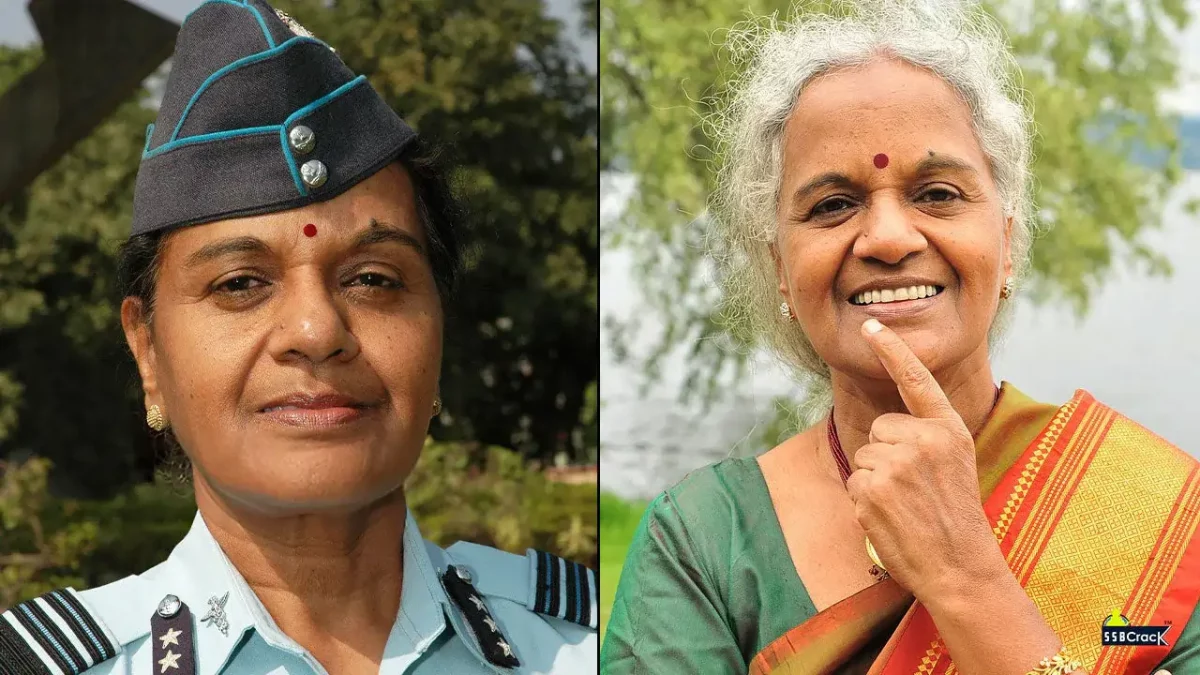
Air Marshal Padmavathy Bandopadhyay stands among the most remarkable pioneers in the history of the Indian Armed Forces. A decorated officer, an accomplished medical specialist, and a trailblazer in aviation medicine, she became the first woman officer of the Indian Air Force to rise to the rank of Air Marshal. Her journey is not only a story of personal achievement but also a powerful example of how determination, professional excellence, and courage can break long-standing barriers.

Born as Padmavathy Swaminathan on 4 November 1944 in Tirupati, she grew up in a Tamil-speaking Iyer family. Her early life was marked by responsibility and hardship. During her childhood in New Delhi, her mother suffered from tuberculosis, and young Padmavathy had to shoulder caregiving duties at a very early age. This experience deeply influenced her personality and inspired her interest in medicine. Living close to the renowned physician Dr S.I. Padmavati and observing medical work at Safdarjung Hospital further strengthened her desire to become a doctor.
At a time when social expectations often limited women’s educational choices, her father supported her studies. She moved from the humanities stream to science, completed her pre-medical education at Kirori Mal College, University of Delhi, and later joined the Armed Forces Medical College in Pune. In 1968, she graduated as a doctor and stepped into a career that would eventually make military history.
Air Marshal Bandopadhyay was commissioned into the Army Medical Corps on 22 January 1968 and was immediately seconded to the Indian Air Force. Her long and distinguished career began at the Air Force Hospital in Bangalore. In the same year, she married Flight Lieutenant Sati Nath Bandopadhyay. The couple later earned a rare distinction by becoming the first Indian Air Force husband-and-wife pair to receive a President’s award in the same investiture ceremony.
One of the defining phases of her early service came during her posting at Air Force Hospital, Halwara, in Punjab. During the 1971 Indo-Pak War, she handled the Family Ward and Station Family Planning Section while also assisting surgical teams under demanding wartime conditions. Her dedication, accurate diagnosis, innovation in creating an incubator for premature babies, and efforts to maintain the morale of families during the conflict earned her the Vishisht Seva Medal in 1973. The award citation praised her exceptional devotion to duty, professional capability, and extraordinary capacity for hard work beyond the call of duty.
Her career was filled with several firsts. In 1975, she became the first woman officer in the Armed Forces to specialise in Aviation Medicine. She earned a Diploma in Aerospace Medicine from Bangalore University and continued to strengthen her academic credentials with an MSc in Defence Sciences, an MD in Physiology, and later a PhD in High Altitude Physiology. In 1978, she became the first woman Armed Forces officer to complete the prestigious Defence Services Staff College course at Wellington, another landmark achievement in a male-dominated military environment.
As she rose through the ranks, Air Marshal Bandopadhyay became known for her deep expertise, administrative ability, and commitment to modernising military medical systems. She was promoted to Wing Commander in 1985, Group Captain in 1995, Air Commodore in 2000, Air Vice Marshal in 2002, and finally Air Marshal on 1 October 2004. Her elevation to the three-star rank was a historic moment for the Indian Air Force and for women in uniform across the country.
As Air Officer Commanding of the Air Force Central Medical Establishment in Delhi, she played an important role in improving medical evaluation systems for aircrew. Her tenure focused on better infrastructure, modern medical procedures, and improved standards for assessing the fitness of flying personnel. She later served as Additional Director General, Armed Forces Medical Services, before taking over as Director General Medical Services (Air) at Air Headquarters. She held this important appointment until her retirement on 30 November 2005.
Beyond administration, her scientific work made a lasting impact on military medicine. Air Marshal Bandopadhyay conducted several research projects and wrote extensively on subjects such as hypoxia, G-stress, flying clothing design, high-altitude physiology, and pilot performance. Her work at the Defence Institute of Physiology and Allied Sciences contributed to improved acclimatisation schedules for troops deployed in high-altitude regions. She also worked on protocols related to High Altitude Pulmonary Oedema and High Altitude Cerebral Oedema, both of which are serious medical challenges for soldiers operating in extreme terrain.
One of her most remarkable scientific achievements came in 1989–90, when she participated in an Indo-Russian physiological research expedition to the Arctic during winter. She became the first Indian woman to conduct scientific research at the North Pole. Her work helped gather important data on human adaptation from tropical conditions to extreme cold environments. The findings had direct relevance for improving combat effectiveness and survival in harsh climates. For this achievement, she was honoured with the Indira Priyadarshini Award.
Her contribution during the 1999 Kargil conflict was also significant. As an experienced aviation medicine specialist and military medical administrator, she supported the medical preparedness and operational needs of the Indian Air Force during a period of intense military activity. She also helped introduce telemedicine across IAF stations, supported the establishment of a Medical Evaluation Centre in the Eastern sector, and pushed for advanced diagnostic equipment in Command Hospitals.
Air Marshal Bandopadhyay received some of the highest honours for her service. She was awarded the Vishisht Seva Medal in 1973, the Ati Vishisht Seva Medal in 2002, and the Param Vishisht Seva Medal in 2006. In January 2020, she was conferred the Padma Shri, becoming the first woman officer of the Indian Air Force to receive the civilian honour for distinguished service in medicine. Her other medals include the Paschimi Star, Sangram Medal, Operation Vijay Medal, High Altitude Service Medal, and several long-service and commemorative medals.
After retirement, Air Marshal Bandopadhyay continued to serve society in different ways. She has been involved in health camps, public welfare initiatives, telemedicine outreach, and mental health advisory work. Her efforts have particularly focused on helping economically weaker sections and people living in remote areas. She has also been associated with gender sensitisation initiatives and has consistently encouraged women’s education, professional confidence, and leadership.
Her life remains an inspiring example of what can be achieved through discipline and perseverance. From a young girl who cared for her ailing mother to a doctor who served in wartime conditions, from an aviation medicine specialist to the first woman Air Marshal of the Indian Air Force, her journey reflects courage at every stage. She not only broke barriers but also created new standards for those who followed.
Air Marshal Padmavathy Bandopadhyay’s legacy is far greater than the ranks and awards she earned. She changed perceptions, opened doors for women in the Armed Forces, and strengthened India’s military medical capabilities through her research, leadership, and service. Her career remains a milestone in the history of the Indian Air Force and a source of motivation for generations of officers, doctors, and young Indians who dream of serving the nation with honour.