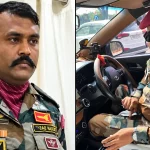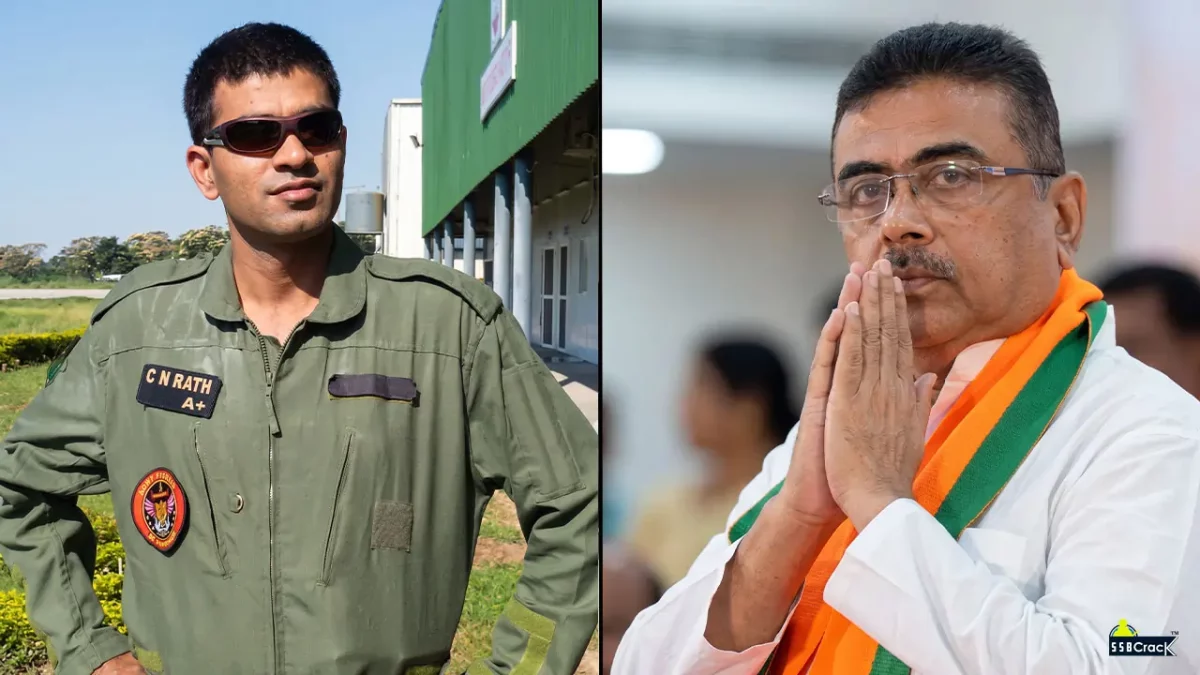
In the charged aftermath of the 2026 West Bengal Assembly elections, the brutal assassination of Chandranath Rath has sent shockwaves through the state’s political landscape. A 41-year-old former Indian Air Force officer turned low-profile strategist and executive assistant to BJP leader Suvendu Adhikari, Rath was gunned down in a meticulously planned attack on the night of May 6, just 48 hours after the declaration of results that saw the BJP make significant gains and Adhikari prevail in the high-stakes Bhabanipur constituency against Chief Minister Mamata Banerjee.





Rath’s killing, described by investigators as a “professional hit” executed in under 60 seconds, has intensified accusations of post-poll vendetta while raising urgent questions about political violence in West Bengal.
From Spiritual Roots to the Skies
Born on July 17, 1984, in Chandipur, Purba Medinipur district, Chandranath Rath grew up in a region deeply intertwined with Suvendu Adhikari’s political rise. He attended Rahara Ramakrishna Mission, where the institution’s emphasis on discipline, service, and spiritual values left a lasting impression. Family friends recall that the young Rath even briefly contemplated a monastic or spiritual life before choosing a different path of disciplined service.
That path led him to the Indian Air Force. Rath served for nearly two decades, rising through administrative and operational roles that honed his organisational skills, attention to detail, and ability to operate under pressure. Colleagues from his IAF days remember him as methodical and dependable — traits that would later define his political work. Following voluntary retirement, he spent a brief period in the corporate sector before gravitating toward political coordination.
The Trusted “Mr. Dependable”
Rath formally joined Suvendu Adhikari’s team around 2019, when Adhikari was still a minister in the Mamata Banerjee government. Their association, however, stretched back more than two decades through family ties in Purba Medinipur. Rath’s mother, Hasi Rath (Hasirani Rath), had served as a local panchayat member during the TMC’s expansion in the district; the family switched allegiance to the BJP alongside Adhikari in 2020.
Within Adhikari’s inner circle, Rath quickly became indispensable. Officially his executive assistant and personal aide, he was known internally as “Mr. Dependable” — the quiet troubleshooter who managed office operations, campaign logistics, organisational planning, and sensitive political assignments. Soft-spoken and fiercely low-profile, he avoided the limelight yet wielded considerable influence behind the scenes.
His most visible impact came during the 2026 elections. Rath was a core member of the BJP team that mounted a fierce challenge in Bhabanipur, coordinating ground operations, mobilisation, and strategy in the constituency long considered a TMC stronghold. Party insiders credit him with playing a pivotal role in the dramatic late-night standoff outside the Bhabanipur counting centre on April 30–May 1, when tensions over strongroom security and EVM allegations reached boiling point. His death, many within the BJP believe, was not random but targeted precisely because of this central role.
The Night of the Assassination
On the evening of May 6, 2026, Rath was returning to his residence in Madhyamgram, North 24 Parganas, in a white Scorpio SUV accompanied by his aide, Buddhadeb Bera. Around 10:30 p.m., near Doharia on Jessore Road — barely 200 metres from his flat — the vehicle was intercepted in what police describe as a classic ambush.
A silver Santro car bearing a fake registration plate (WB74AX2270) and tampered chassis first overtook and blocked the SUV, forcing it to slow. Motorcycle-borne assailants then moved in. Multiple rounds were fired at point-blank range through the front windshield. Rath sustained fatal gunshot wounds to the chest, abdomen, and head. Bera was critically injured and remains hospitalised.
The attackers abandoned the blocking vehicle and fled on motorcycles. Forensic teams later recovered five shell casings. Preliminary ballistic analysis and post-mortem findings suggest the use of a semi-automatic pistol, possibly a Glock-type weapon. Investigators note the operation bore hallmarks of professional planning: prior reconnaissance lasting two to three days, coordinated movement, and rapid escape via congested internal roads rather than the nearby highway.
Investigation: SIT Formed, Leads Pursued
West Bengal Police have constituted a Special Investigation Team (SIT) headed by an IG-rank CID officer, drawing personnel from the CID Homicide wing, Intelligence Branch, and the Bengal STF. The probe has been classified as a premeditated conspiracy.
CCTV footage from the area, including a 49-second clip, has captured helmeted suspects fleeing on a motorcycle moments after the shooting. Three local history-sheeters have been detained for questioning, though the primary shooters remain at large. Forensic examination of the Scorpio and the abandoned Santro continues. Suvendu Adhikari has confirmed he is in regular contact with the Director General of Police and that “key leads” are being actively pursued.
As of May 8, 2026, the investigation remains in its early but intensive phase, with additional central forces deployed in Madhyamgram and adjoining areas.
Political Fallout and Competing Narratives
The assassination has sharply polarised Bengal politics. BJP leaders across the spectrum have condemned it as a “targeted political assassination” and “cold-blooded murder” carried out in revenge for Adhikari’s victory over Mamata Banerjee in Bhabanipur. Adhikari himself stated that Rath’s “only fault was being my PA.” Rath’s mother, speaking publicly on May 7, demanded life imprisonment for the perpetrators and directly linked the killing to the electoral outcome.
The Trinamool Congress has strongly denied any involvement, condemned the murder, and demanded a CBI inquiry. Party spokespersons have alleged that BJP-backed miscreants have themselves been responsible for post-poll violence against TMC workers. The killing has added fresh fuel to longstanding accusations of political vendetta and lawlessness in the state.
Emotional scenes marked Rath’s funeral, with senior BJP figures, including Adhikari’s brother Soumendu, visibly overcome with grief. Thousands gathered to pay respects, turning a political tragedy into a deeply personal one.
A Life of Quiet Service, A Death That Resonates
Chandranath Rath embodied the archetype of the behind-the-scenes operator — a disciplined former serviceman who brought military precision to political warfare without ever seeking the spotlight. His journey from the disciplined corridors of the IAF and the spiritual ethos of Ramakrishna Mission to the rough-and-tumble of Bengal politics reflects a larger story of shifting loyalties and high-stakes ambition in the state.
His death, occurring at a moment when the BJP appeared poised for greater influence, has transformed a trusted aide into a symbol. Whether the investigation ultimately points to political conspiracy, personal enmity, or organised crime remains to be seen. What is already clear is that the killing has deepened the fault lines in West Bengal’s fractious politics and raised uncomfortable questions about the safety of those who operate in the shadows of power.
As the SIT continues its work and political temperatures remain high, Chandranath Rath’s legacy — one of quiet competence and unwavering loyalty — stands in stark contrast to the violent manner of his passing.