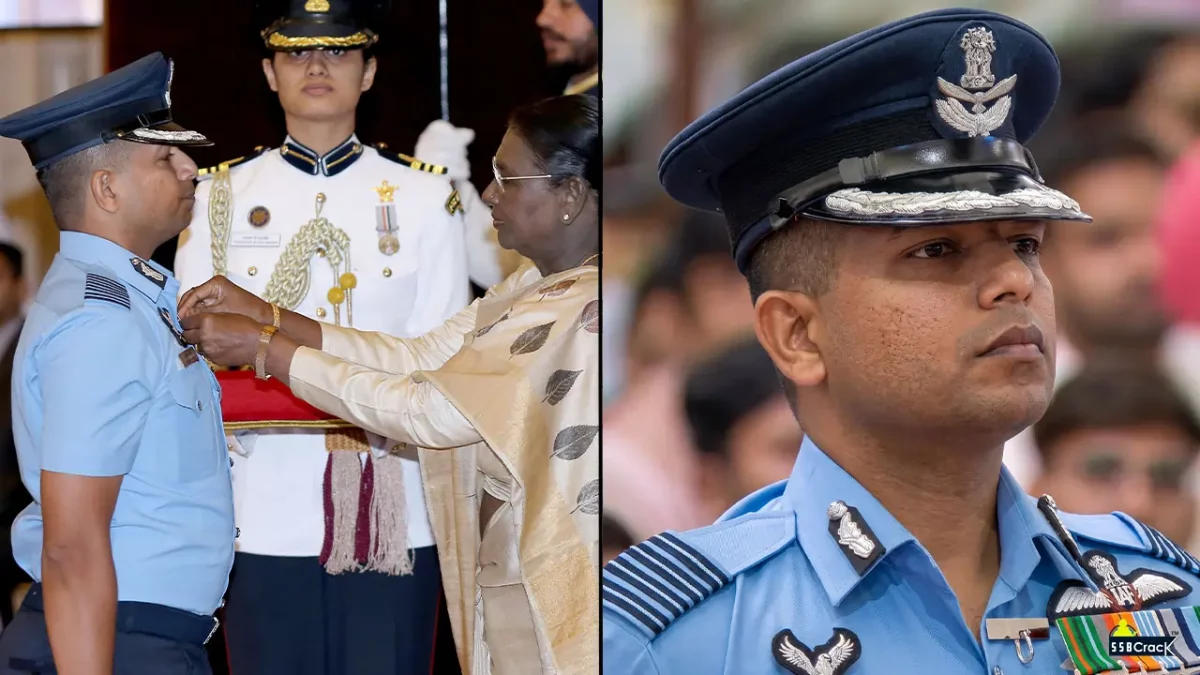
Group Captain Animesh Patni, Vir Chakra, is among the distinguished Indian Air Force officers whose courage, leadership and operational brilliance came to the forefront during Operation Sindoor. A fighter pilot by training and an air defence commander by role, he was awarded the Vir Chakra for his exceptional bravery and devotion to duty while commanding a Surface-to-Air Missile Squadron at a forward airfield during a high-pressure operational phase.





His citation was read during the Defence Investiture Ceremony 2026 Phase-1, where his leadership under enemy threat, tactical mobility, protection of men and equipment, and successful neutralisation of multiple enemy aerial targets were highlighted. His role became even more significant because his unit was associated with the combat employment of India’s advanced S-400 air defence system, also known as Sudarshan in Indian service.
Group Captain Patni’s story is not just about a missile kill. It is about planning, vigilance, calm command under fire, and the ability to lead men and machines in one of the most demanding operational environments.
Early Life and IAF Career
Group Captain Animesh Patni hails from Baran in Rajasthan. He was commissioned into the Indian Air Force on 17 December 2005 in the Flying Pilot branch with service number 28689 F(P), as part of the 176 Course.
He began his career as a fighter pilot and specialised in the MiG-29, one of the Indian Air Force’s frontline air superiority fighters. Over the years, he gained wide operational exposure and accumulated more than 2,500 flying hours on advanced fighter aircraft, including the MiG-29, Su-30MKI and Mirage 2000.
His background as a fighter pilot gave him a deep understanding of aerial combat, enemy tactics, aircraft behaviour and airspace management. This experience later proved valuable when he transitioned into commanding a modern long-range air defence system.
He was promoted to the rank of Wing Commander on 17 December 2018 and later rose to the rank of Group Captain.
From Fighter Pilot to S-400 Commander
In 2024, Group Captain Animesh Patni was selected to command a regiment of the S-400 Triumf surface-to-air missile system. The S-400, inducted by India under a major defence agreement with Russia, is one of the most advanced long-range air defence systems in the world.
In Indian service, the system is also referred to as Sudarshan. It is designed to detect, track and engage a variety of aerial threats, including fighter aircraft, drones, cruise missiles, and airborne early warning and control platforms.
For a fighter pilot to command such a system was a significant operational choice. Group Captain Patni brought with him the mindset of a combat aviator. He understood how enemy pilots think, how strike packages operate, and how aerial threats can attempt to evade detection and engagement. This combination of flying experience and air defence responsibility made him ideally suited for a critical command role during Operation Sindoor.
Operation Sindoor and the Air Defence Challenge
Operation Sindoor was India’s military response to the terrorist attack in Pahalgam’s Baisaran area in Jammu and Kashmir on 22 April 2025. The operation involved precision strikes against terrorist infrastructure in Pakistan and Pakistan-occupied Kashmir, supported by a wider air defence and counter-air posture.
During this period, Indian air defence units had to remain alert against possible enemy retaliation. Forward airfields, strategic military assets, and operational formations had to be protected from aerial threats.
Group Captain Animesh Patni was commanding a Surface-to-Air Missile Squadron at a forward airfield during this challenging operation. His responsibility was immense. He had to ensure that his firing units remained ready, protected, mobile and effective even under enemy pressure.
Leading Two Firing Units Under Enemy Fire
According to his citation, Group Captain Patni successfully led two firing units that effectively intercepted and neutralised multiple enemy aerial targets. This required high levels of coordination, technical understanding, tactical decision-making and nerves of steel.
Surface-to-air missile operations are not simple launch-and-hit events. They involve detection, identification, threat evaluation, tracking, engagement decisions and coordination with the wider air defence network. In a live operational environment, the commander must take decisions within seconds while ensuring that friendly aircraft, civilian air traffic and strategic assets remain safe.
Group Captain Patni displayed exceptional command ability in this environment. Under his leadership, the firing units maintained operational readiness and delivered effective firepower without suffering damage to personnel or equipment.
Tactical Mobility to Deceive the Enemy
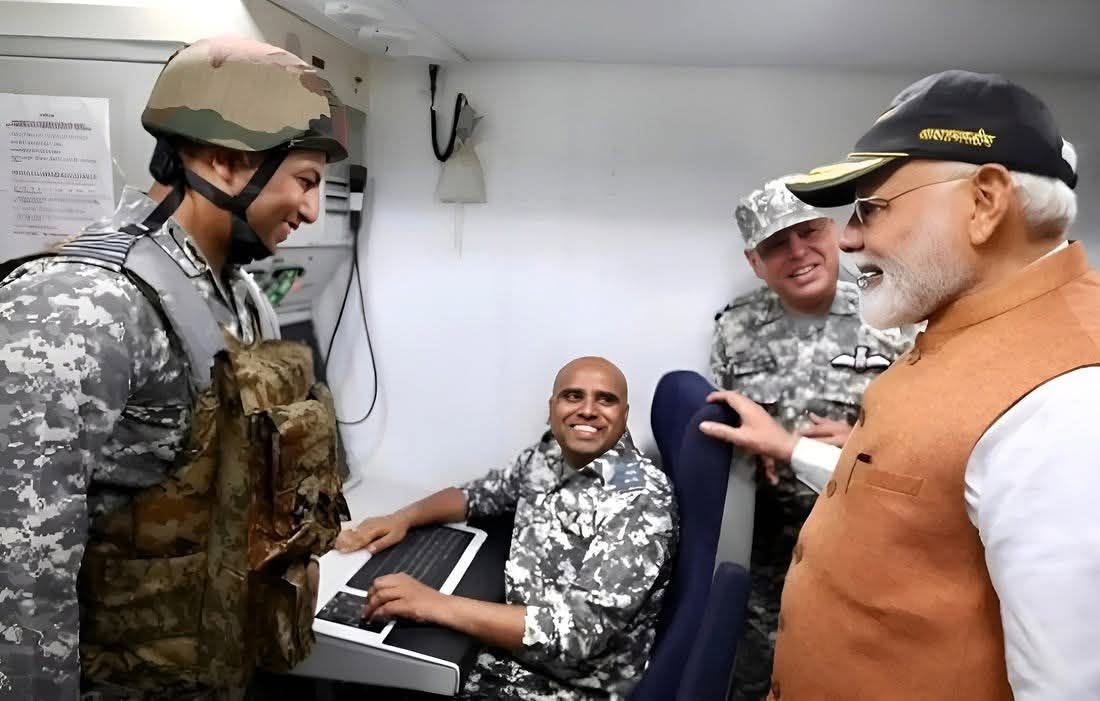
One of the key highlights of his citation was his tactical brilliance in continuously altering the positions of his units to deceive the enemy. This was a crucial decision.
Modern air defence systems are high-value targets. Once detected, they can be targeted by enemy aircraft, missiles, drones or electronic warfare assets. Remaining static in a forward area can expose the system to danger.
Group Captain Patni understood this threat clearly. By frequently changing the positions of his firing units, he denied the enemy a fixed target and maintained the survivability of his squadron. This constant movement also helped preserve the element of surprise and ensured that his units remained effective throughout the operation.
Even while under heavy enemy fire, he ensured the absolute safety of his personnel and protected critical strategic equipment. This reflects his calmness, foresight and professional competence as a commander.
Apprehension of a Suspected Enemy Spy
Another important part of his citation was his vigilance on the ground. Under his alert guidance, a suspected enemy spy was apprehended on site.
In wartime or near-war conditions, air defence locations are extremely sensitive. Any leakage of information regarding deployment, movement or readiness can compromise the entire operation. The presence of a suspected enemy operative near such a location could have posed a serious threat.
Group Captain Patni’s sharp situational awareness helped detect and address this danger. This episode showed that his leadership was not limited to missile operations alone. He was equally focused on ground security, counter-intelligence and the protection of his men and assets.
Historic 314 km Air Defence Kill
Group Captain Animesh Patni’s unit is widely associated with the historic long-range air defence engagement during Operation Sindoor, in which India’s S-400 system reportedly achieved a 314 km interception. This engagement has been described as the longest confirmed surface-to-air missile kill in aviation history.
The target was reported to be a Pakistani Saab 2000 Erieye Airborne Early Warning and Control aircraft. Such aircraft are valuable assets because they provide long-range surveillance, battlefield awareness and command-and-control support to fighter aircraft.
The destruction of such an aerial platform would have had a major operational impact. It would have reduced the enemy’s ability to monitor Indian air activity and coordinate air operations.
Reports also credit Indian air defence units with successful engagements against other Pakistani aerial targets, including fighter aircraft. While some details remain within the domain of operational secrecy, the reported 314 km interception became one of the defining military achievements linked to Operation Sindoor.
The First Combat Employment of India’s S-400
The operation was also significant because it marked the combat validation of India’s S-400 system. The S-400 had already been regarded as a major addition to India’s air defence capability, but its operational use during a real conflict scenario demonstrated its value in the Indian context.
Under Group Captain Patni’s command, the system was not merely deployed as a deterrent. It was used as an active operational asset that helped dominate the airspace and deny the enemy freedom of action.
The achievement showed the importance of long-range air defence in modern warfare. It also highlighted how technology becomes truly effective only when handled by trained, motivated and courageous personnel.
Personal Leadership and Morale
One of the most important aspects of Group Captain Patni’s leadership was his ability to motivate his team under pressure. Air defence crews operate in high-stress conditions. They may not be in the cockpit like fighter pilots, but their decisions directly shape the outcome of air operations.
The commander must inspire confidence, maintain discipline and ensure that every operator performs with precision. Group Captain Patni did exactly that.
His leadership helped maintain morale, readiness and operational focus during a dangerous phase. His personnel performed their duties effectively even when the enemy was actively targeting the region.
Accounts from military literature have described the tension surrounding the first live launch into enemy airspace, the command decision to fire, and the moment of confirmation after the target was hit. Such moments reflect the enormous pressure placed on commanders during live operations.
Awarded the Vir Chakra
For his extraordinary courage, leadership under fire and absolute dedication to the nation, Group Captain Animesh Patni was awarded the Vir Chakra, India’s third-highest wartime gallantry award.
The Vir Chakra recognises acts of bravery in the presence of the enemy, whether on land, at sea or in the air. Group Captain Patni’s award reflects the importance of his contribution during Operation Sindoor and the risks faced by air defence personnel in modern combat.
His citation praised his command of Surface-to-Air Missile firing units, the neutralisation of multiple enemy aerial targets, his tactical repositioning under fire, his protection of personnel and strategic equipment, and his vigilance that led to the apprehension of a suspected enemy spy.
The award stands as a recognition not only of one officer’s bravery but also of the growing importance of India’s integrated air defence network.
Recognition and Legacy
Group Captain Animesh Patni’s actions during Operation Sindoor have placed him among the notable Indian Air Force officers associated with modern air defence warfare. His journey from fighter pilot to S-400 commander reflects the changing nature of air power.
Modern wars are no longer fought only by aircraft in the sky. They are fought through networks, sensors, missiles, electronic warfare, surveillance systems and real-time command decisions. Officers like Group Captain Patni represent this new generation of air warriors who combine flying experience with technological command.
His achievement also underlines the Indian Air Force’s focus on adaptability. A fighter pilot who once flew high-performance combat aircraft went on to command one of the world’s most advanced air defence systems and led it successfully in combat.
Conclusion
Group Captain Animesh Patni’s story is one of courage, professionalism and operational excellence. As the commanding officer of an S-400 air defence formation during Operation Sindoor, he led his men through a challenging and dangerous operational environment.
He commanded two firing units, neutralised multiple enemy aerial threats, protected critical strategic equipment, deceived the enemy through continuous movement, maintained the safety of his personnel, and remained vigilant enough to help apprehend a suspected enemy spy.
The historic 314 km air defence kill associated with his command has become a landmark moment in modern military aviation. More importantly, his conduct under fire showed the character of an officer who combined calm judgement with decisive action.
For his exceptional bravery and devotion to duty, Group Captain Animesh Patni was rightly honoured with the Vir Chakra. His story will continue to inspire defence aspirants, air warriors and every Indian who takes pride in the courage and professionalism of the Indian Armed Forces.