
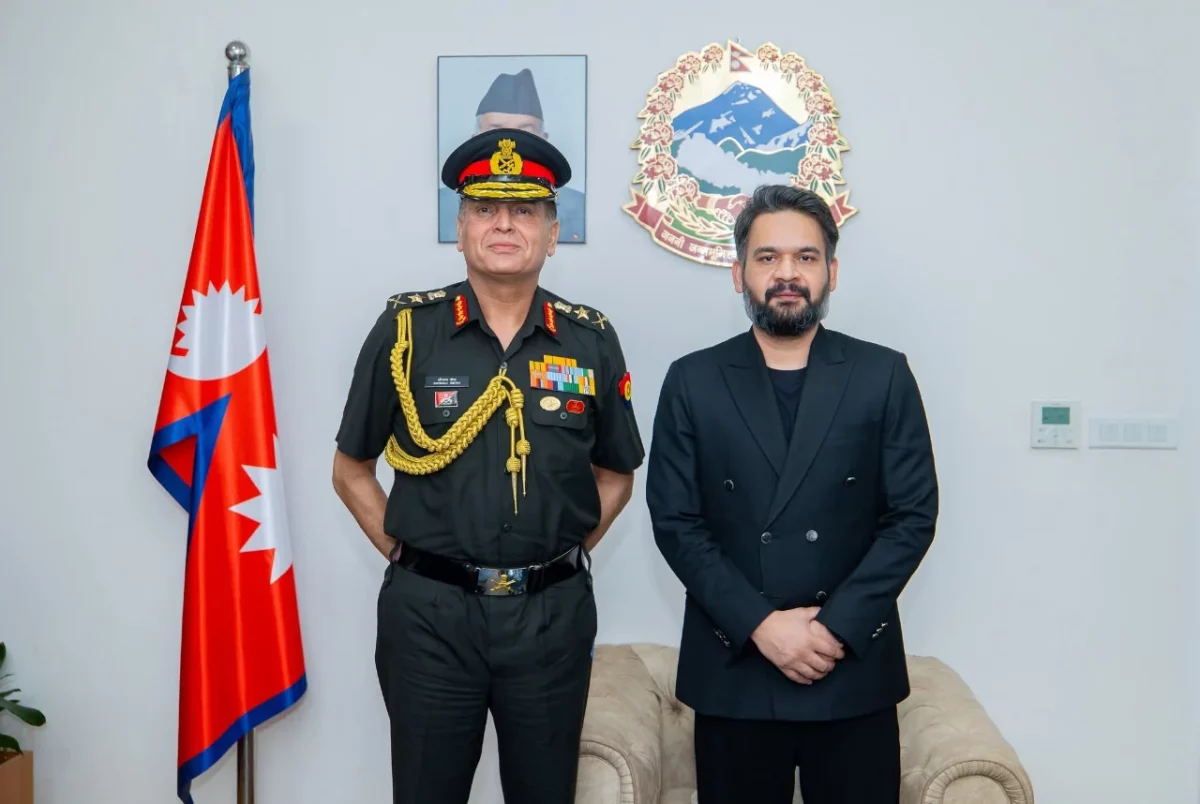
Kathmandu, August 18, 2026: Chief of the Army Staff (COAS) of the Indian Army, General Dhiraj Seth, held a courtesy meeting with Nepal’s Prime Minister and Defence Minister Balendra Shah (popularly known as Balen Shah) on Tuesday at the Office of the Prime Minister and Council of Ministers in Singha Durbar. Indian Ambassador to Nepal Naveen Srivastava was also present.

The meeting formed a key political engagement during General Seth’s four-day official visit to Nepal (August 16–19), undertaken at the invitation of Nepali Army Chief General Ashok Raj Sigdel. Discussions focused on matters of mutual interest and ways to further strengthen bilateral military relations and defence cooperation between the two countries. The Indian Embassy in Kathmandu described the talks as “warm and productive.” Sources at the Nepal Prime Minister’s secretariat similarly noted that the two sides discussed issues of bilateral interest and measures to enhance military ties.
Context of the Visit and Honorary Rank
General Seth arrived in Kathmandu on Sunday leading a five-member delegation. This marks his first official foreign visit since assuming charge as the 31st Chief of the Army Staff on June 30, 2026, succeeding General Upendra Dwivedi.
On Monday, August 17, Nepal President Ramchandra Paudel conferred the honorary rank of General of the Nepali Army on General Seth during a ceremony at Sheetal Niwas (or Shital Niwas). The event was attended by Nepal’s Vice President Ram Sahaya Prasad Yadav, Foreign Minister Shisir Khanal, Ambassador Srivastava, and senior Nepali Army and government officials.
This honour continues a unique, reciprocal military tradition dating back to 1950, under which the army chiefs of India and Nepal are conferred the honorary rank of General in each other’s armies. The Indian Army has described the tradition as reflecting “mutual trust, professional respect and military camaraderie,” going beyond mere ceremony to symbolise the distinctive and time-tested defence relationship between the two forces.
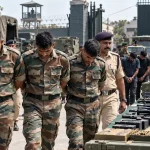
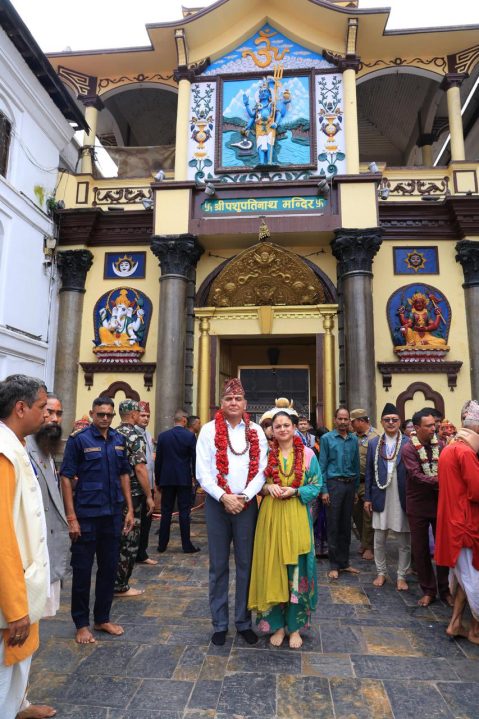
During the visit, General Seth also held bilateral talks with General Sigdel at Nepal Army Headquarters, where they discussed matters of mutual interest and ways to strengthen military-to-military cooperation. He received a guard of honour, planted a sapling at the headquarters, and handed over military and medical equipment to the Nepali Army. On Tuesday, he offered prayers at the Pashupatinath Temple and was scheduled to address student officers at the Nepal Army Command and Staff Course in Shivapuri, sharing perspectives on professional military education and contemporary security challenges. The delegation is expected to return on Wednesday, with additional interactions planned, including with Indian Army veterans.
Broader India-Nepal Military and Political Context
India and Nepal share deep, historically rooted defence ties, including the long-standing recruitment of Nepali Gorkha soldiers into the Indian Army under the framework of the 1947 Tripartite Agreement involving India, Nepal, and Britain. These ties encompass joint training, equipment support, professional exchanges, and people-to-people connections through veterans and families.
The visit occurs against a backdrop of some diplomatic unease. A longstanding border dispute involving the areas of Lipulekh, Limpiyadhura, and Kalapani remains unresolved. India maintains these territories form part of Uttarakhand, while Nepal claims them. In May 2026, Prime Minister Shah stated in Parliament that Kathmandu was engaging not only with India but also with China and the UK on the border issue; New Delhi has firmly rejected any third-party role.
Another sensitive issue is the stalled recruitment of Nepali youths into the Indian Army’s Gorkha regiments. Recruitment was initially disrupted by the COVID-19 pandemic and remained suspended after India introduced the Agnipath scheme in 2022. Under Agnipath, personnel below officer rank serve for four years, with up to 25 percent retained for longer service. Nepal has viewed the scheme as inconsistent with the spirit of the 1947 Tripartite Agreement, particularly regarding service conditions and long-term benefits. Recent weeks have seen protests and rallies by Nepali youths and ex-Gorkha soldiers, particularly in western Nepal (including Pokhara and Lamjung), demanding resumption of recruitment, with some arguing that service under Agnipath remains preferable to limited domestic opportunities or work in the Gulf. Speculation exists that the issue may have featured in discussions, though neither side has publicly confirmed specific outcomes from the Tuesday meeting.
Prime Minister Balendra Shah, a structural engineer, former rapper, and former independent Mayor of Kathmandu (2022–2026), assumed office on March 27, 2026, following a landslide victory by the Rastriya Swatantra Party (RSP) in the March general elections. At 36, he is among the world’s youngest serving heads of government. Shah has been selective about high-level bilateral engagements since taking office and had largely avoided one-on-one meetings with foreign dignitaries. His decision to meet the Indian Army Chief (and earlier this month the Indian Ambassador) is therefore viewed as significant. He has publicly emphasised the importance of Nepal’s “historic relationship” with India.
Significance
The engagement underscores the resilience of India-Nepal military ties even amid political sensitivities. High-level military visits and the reciprocal honorary rank tradition serve as stabilising mechanisms that reinforce professional respect and operational cooperation between the two armies. The handover of equipment, joint discussions on mutual interests, and interactions with officers and veterans further the practical dimensions of the relationship.
For India, the visit supports broader neighbourhood diplomacy and sustained defence engagement with a strategically important neighbour that shares an open border and deep cultural, economic, and security linkages. For Nepal under the new Shah government, it provides an opportunity to recalibrate engagement with New Delhi while navigating domestic expectations on issues such as employment for youth through traditional Gorkha service pathways and the management of border claims.
No joint statement with detailed outcomes was immediately issued. Both sides have characterised the overall visit as contributing to mutual trust and the further strengthening of defence cooperation. General Seth’s itinerary concludes with remaining professional engagements before his return to India.