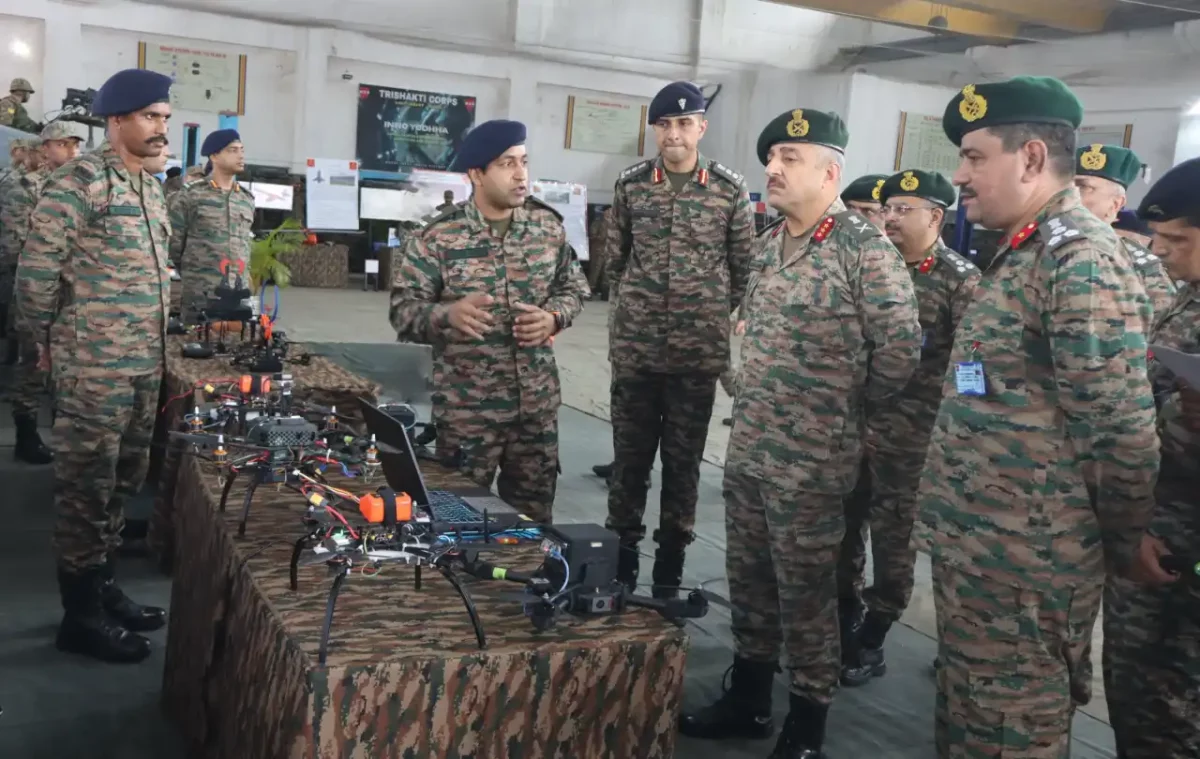
Trishakti Corps organised “Inno-Yoddha 2026–27”, an Idea and Innovation Competition aimed at encouraging personnel to develop practical, indigenous and technology-driven solutions to operational challenges.





Conducted under the theme “Ideas from Experience. Innovation for the Future,” the competition brought together field experience, professional knowledge and technological ingenuity on a common platform. It provided participants with an opportunity to present solutions conceived through a close understanding of operational conditions and the requirements of troops on the ground.
The innovations showcased during the competition reflected the creativity, technical competence and problem-solving ability of Indian Army personnel. Each idea was shaped by operational experience and focused on addressing practical requirements through solutions that could improve effectiveness, safety, efficiency and preparedness.
The initiative demonstrated how lessons gained in demanding field conditions can be converted into useful technological solutions. Personnel serving in operational areas frequently encounter unique challenges relating to surveillance, mobility, communication, logistics, equipment employment, force protection and sustainment. Their direct exposure enables them to identify capability gaps and develop solutions suited to actual conditions on the ground.
“Inno-Yoddha 2026–27” encouraged participants to move beyond identifying problems and instead design workable responses. The competition promoted a solution-oriented mindset in which operational difficulties were approached as opportunities for innovation, adaptation and improvement.
The event also highlighted the important contribution of soldier-led innovation to capability development. Innovations emerging from field formations are often rooted in an accurate understanding of terrain, weather, equipment limitations and operational procedures. Such ideas can therefore offer simple, economical and mission-oriented alternatives to conventional solutions.
By providing a formal platform for these ideas, Trishakti Corps sought to nurture a culture in which creativity and technological awareness become integral to military functioning. The initiative encouraged personnel to combine their professional expertise with emerging technologies and indigenous resources to develop solutions aligned with the Army’s operational needs.
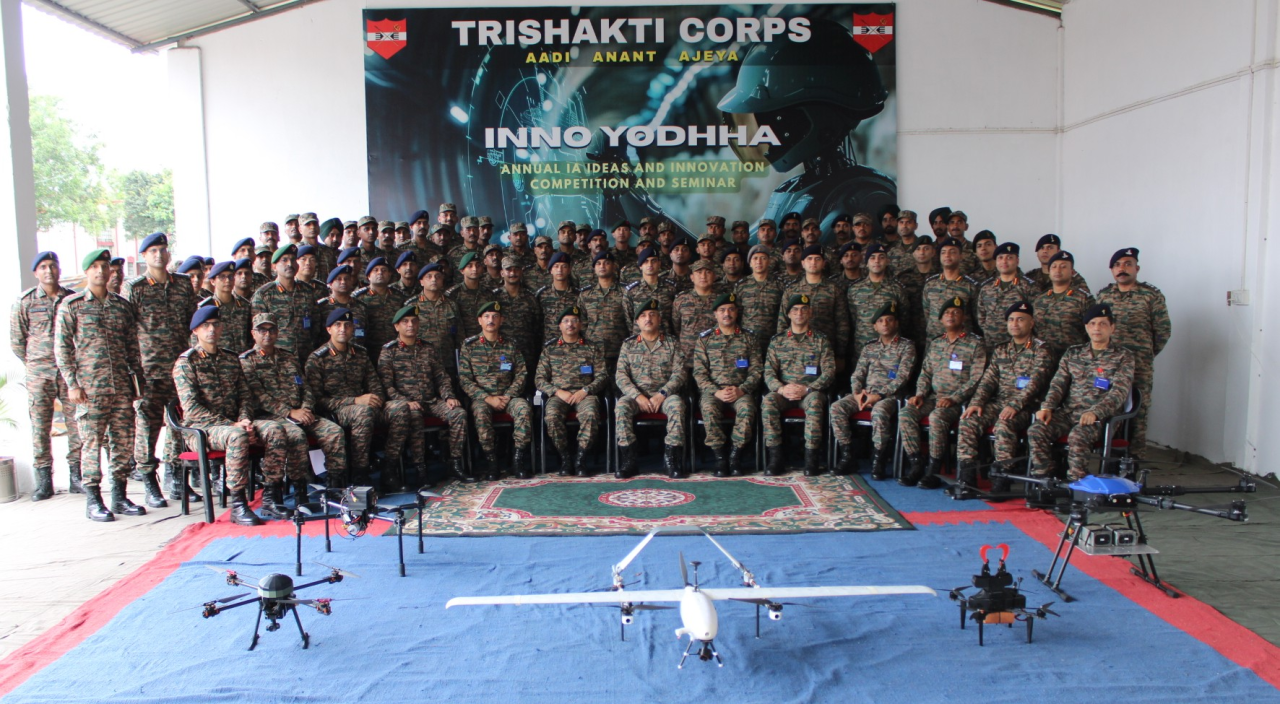
The competition reinforced the Indian Army’s continuing focus on indigenisation and technology-enabled transformation. The development of indigenous solutions can reduce dependence on external systems, shorten the time required to address field requirements and enable equipment to be adapted more effectively to Indian operational conditions.
Technology is playing an increasingly important role in modern military operations. Rapid advances in automation, unmanned systems, communications, surveillance, data processing and advanced materials are transforming how forces prepare for and conduct operations. Initiatives such as “Inno-Yoddha” help personnel understand this changing environment and participate directly in the process of technological adaptation.
The programme also recognised that innovation is not limited to laboratories or specialised institutions. Valuable ideas can emerge from personnel at every level when operational experience is supported by technical knowledge, institutional encouragement and opportunities for experimentation.
The entries presented during the competition embodied this approach. They reflected an effort to devise solutions that were practical, relevant and capable of supporting troops in real-world conditions. The emphasis remained on operational utility rather than technology for its own sake.
Apart from showcasing individual talent, the competition promoted the exchange of ideas among participants. Discussions surrounding the innovations enabled personnel to examine different approaches, assess their operational relevance and explore possibilities for refinement and wider application.
The event further underlined the importance of collaboration between users, technical specialists and military leaders. An effective innovation ecosystem requires field formations to clearly articulate their requirements, innovators to develop suitable responses and the organisation to identify promising ideas for further evaluation and development.
“Inno-Yoddha 2026–27” represented a step towards strengthening such an ecosystem within Trishakti Corps. It celebrated personnel who used initiative and ingenuity to address military challenges while inspiring others to contribute ideas drawn from their own experience.
The competition was also consistent with the larger objective of building a future-ready force capable of adapting rapidly to evolving threats and operational environments. Future battlefields will demand forces that can absorb new technologies, modify tactics and respond quickly to emerging challenges. Encouraging innovation at the formation level helps develop the intellectual agility required for this transformation.
Through the initiative, Trishakti Corps reaffirmed that operational effectiveness depends not only on acquiring advanced equipment but also on empowering personnel to think creatively and improve the systems they use. Field experience provides an invaluable foundation for this process because it connects technological development with genuine operational requirements.
The message emerging from the competition was clear: different experiences and perspectives can contribute to a shared military purpose. By bringing together diverse minds in pursuit of practical solutions, “Inno-Yoddha 2026–27” strengthened the spirit of innovation and collective responsibility within the formation.
With its emphasis on indigenous solutions, technical competence and mission-focused problem-solving, the event reflected the Indian Army’s determination to remain adaptive, self-reliant and technologically prepared.