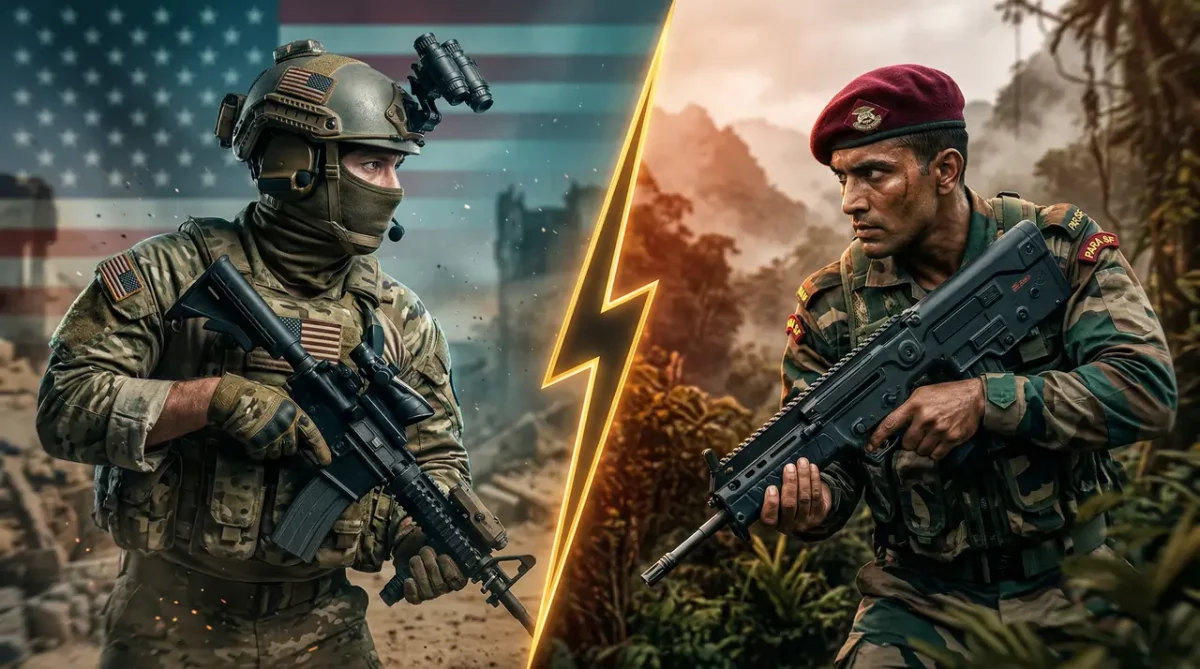
The United States Army Rangers of the 75th Ranger Regiment and India’s Para (Special Forces), commonly known as Para SF, rank among the most elite special operations forces globally. Both units embody exceptional standards of physical endurance, mental resilience, tactical proficiency, and operational effectiveness. The question of which is “toughest” remains inherently subjective, as it depends on metrics such as selection attrition rates, training intensity, combat experience volume, technological integration, and environmental adaptation. This article presents a detailed, evidence-based comparison grounded in historical records, organizational structures, selection processes, operational roles, and documented missions.





Historical Origins and Evolution
The 75th Ranger Regiment traces its lineage to colonial-era ranger companies and formal World War II battalions, including those that led assaults at Pointe du Hoc on D-Day and conducted deep raids in the Pacific. Reactivated in 1974 as the modern 75th Ranger Regiment under U.S. Army Special Operations Command (USASOC), it has evolved into the Army’s premier large-scale special operations light infantry force. Key post-Vietnam activations included the 1st and 2nd Battalions in 1974, followed by the 3rd in 1984, with formal regimental establishment in 1986. The unit’s motto, “Rangers Lead the Way,” underscores its role in spearheading invasions and crises.
In contrast, the Indian Para (Special Forces) emerged from the Parachute Regiment, itself rooted in the British Indian Army’s 50th Indian Parachute Brigade formed in 1941. Post-independence, the regiment distinguished itself in the 1947–48 Jammu and Kashmir operations. The modern Para SF originated in 1966 with the 9th Parachute Commando Battalion, raised from the ad hoc Meghdoot Force under Colonel Megh Singh during the 1965 Indo-Pakistani War. The 10th Battalion followed in 1967, with subsequent conversions of regular parachute battalions (e.g., 1 PARA in 1978, 21 PARA in 1996) expanding the force. Today, these units operate under the Parachute Regiment while emphasizing special operations.
Both units draw from airborne traditions but have adapted to contemporary threats: Rangers to global expeditionary warfare, and Para SF to high-intensity regional conflicts and counter-insurgency in diverse terrains.
Organization and Structure
The 75th Ranger Regiment is authorized approximately 3,623 personnel (including support elements) and comprises a regimental headquarters, a Regimental Special Troops Battalion, a Regimental Military Intelligence Battalion, and three active Ranger battalions (1st, 2nd, and 3rd). Each battalion fields roughly 600–800 Rangers organized into rifle companies optimized for rapid deployment. The regiment maintains a global response capability, deployable within 18 hours.
The Para SF forms part of the larger Parachute Regiment, which includes 15 battalions designated for special forces roles (with some retaining dual airborne/special forces capabilities), one Rashtriya Rifles counter-insurgency battalion, and territorial army elements. Each Para SF battalion numbers about 620 soldiers, yielding a total estimated strength of 5,000–6,000 across the specialized units. Battalions are geographically specialized (e.g., mountain, desert, jungle warfare) and operate in small assault teams of six, often under the Armed Forces Special Operations Division for select missions.
Rangers emphasize scalable battalion-level operations; Para SF prioritizes decentralized, small-team autonomy suited to India’s border environments.
Selection and Training: The Ultimate Tests of Endurance
Selection processes for both units are extraordinarily demanding, yet differ markedly in structure and attrition.
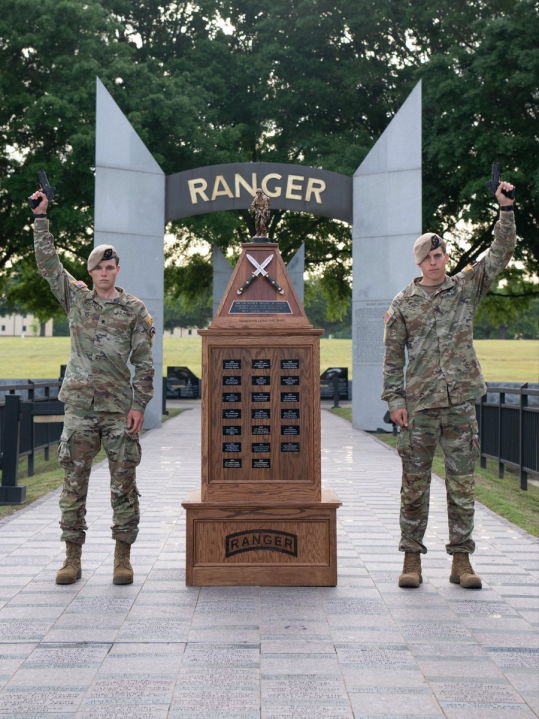
U.S. Army Rangers: Candidates must first complete Basic Combat Training, Advanced Individual Training, and Airborne School. They then enter the Ranger Assessment and Selection Program (RASP). RASP 1 (for E1–E5 enlisted) lasts eight weeks and evaluates physical fitness, land navigation, small-unit tactics, and mental resilience through ruck marches, swims, and stress events. Pre-RASP standards include a five-mile run under 40 minutes and a 12-mile ruck march with a 35-pound load in under three hours. Attrition rates for RASP hover around 35–65 percent, depending on class size and cohort fitness, with many voluntary withdrawals. Successful candidates may later attend Ranger School—a separate 61-day leadership course with historically 40–50 percent graduation rates—featuring extreme sleep and food deprivation across mountain, swamp, and desert phases.
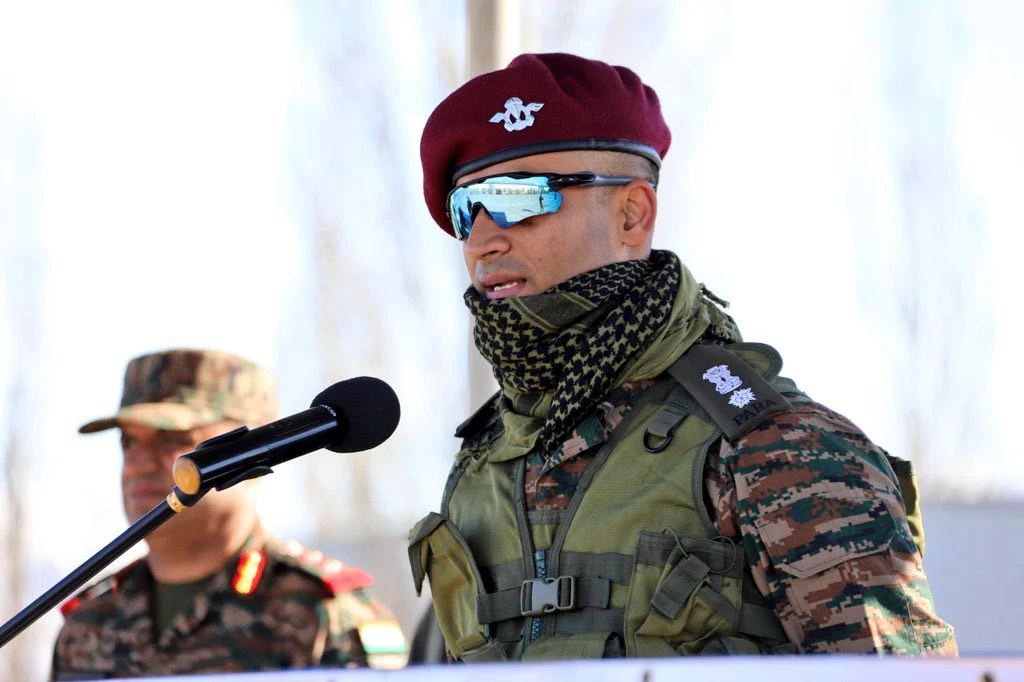
Indian Para SF: All volunteers must first qualify as paratroopers via a three-week Basic Parachute Course (five jumps, including one night jump). They then undergo a three- to six-month probationary period (typically 90 days) with ranks temporarily stripped. Attrition exceeds 85–90 percent in many cohorts, with pass rates as low as 10–15 percent. The process includes:
- Days 1–35: Rigorous physical conditioning, skills training (demolitions, medical, navigation), speed marches of 10–40 km with full battle loads, and survival exercises (no food for four days, minimal water, up to seven days without sleep).
- Day 45: 36-hour stress test involving 10 km marches with 30–40 kg loads, buddy carries, simulated drowning/hypoxia, and continuous operations under observation.
- Day 56: 100 km endurance run with 10 kg load plus 7 kg weapon, completed in 13–15 hours over hilly terrain.
- Final phases: Classified counter-terrorism tasks.
Ongoing training demands daily 20 km runs, weekly 80–130 km forced marches with 60 kg loads, HALO/HAHO jumps, combat diving, and live-fire exercises. Specialization occurs at schools for high-altitude, desert, jungle, and counter-insurgency warfare.
Para SF selection places unparalleled emphasis on raw endurance and psychological fortitude in resource-constrained, extreme environments; Ranger pipelines integrate broader tactical and leadership development with slightly lower but still elite attrition.
Roles, Missions, and Combat Experience
Rangers specialize in direct action raids, airfield seizures, special reconnaissance, hostage rescue, and crisis response. They excel in large-scale, joint forcible-entry operations supported by superior air and intelligence assets. Post-9/11, the regiment has logged over 7,000 consecutive days of combat, participating in Operation Gothic Serpent (Somalia, 1993), early Afghanistan insertions (2001), the Battle of Takur Ghar (2002), and repeated Iraq/Afghanistan deployments.
Para SF focuses on special reconnaissance, unconventional warfare, counter-terrorism, hostage rescue, and surgical strikes—often in small teams behind enemy lines. Notable missions include the 1971 Chachro Raid (10 Para SF captured multiple objectives with zero casualties), Operation Cactus (Maldives, 1988), Operation Khukri (Sierra Leone hostage rescue, 2002), Kargil War operations (1999), the 2015 Myanmar cross-border strike, and the 2016 Line of Control surgical strikes. They maintain a heavy counter-insurgency role in Jammu and Kashmir and the Northeast.
Rangers offer higher operational tempo and integration with tier-one partners; Para SF demonstrate mastery of austere, denied-area missions in some of the world’s most challenging terrain.
Equipment and Technological Edge
Rangers benefit from U.S. Special Operations Command resources: advanced night-vision/thermal systems, modular weapons (M4 carbines, Mk 48 machine guns), precision munitions, secure communications, and extensive aerial/medical support. This technological superiority enables sustained high-intensity operations.
Para SF employ a mix of indigenous, Israeli, and Russian-origin gear—including Tavor rifles, Carl Gustav recoilless rifles, and improving drone/loitering munitions—optimized for portability and reliability in high-altitude or jungle conditions. While effective, they operate with comparatively leaner logistical support, relying heavily on individual soldier proficiency.
Conclusion: A Question of Context
Declaring one unit definitively “toughest” oversimplifies a complex reality. Para SF selection and training impose arguably unmatched physical and mental demands through extreme deprivation and endurance tests, forging operators adapted to India’s unforgiving borders with minimal external support. The 75th Ranger Regiment, conversely, delivers scalable combat power with unmatched global reach, technological integration, and sustained operational experience across multiple theaters.
Both forces represent the pinnacle of their respective militaries—Rangers as expeditionary shock troops, Para SF as masters of asymmetric endurance warfare. Their shared ethos of voluntary service, relentless preparation, and mission success underscores a universal truth: true toughness transcends nationality or equipment. It resides in the human will to overcome impossible odds. In an era of hybrid threats, the world benefits from both.