
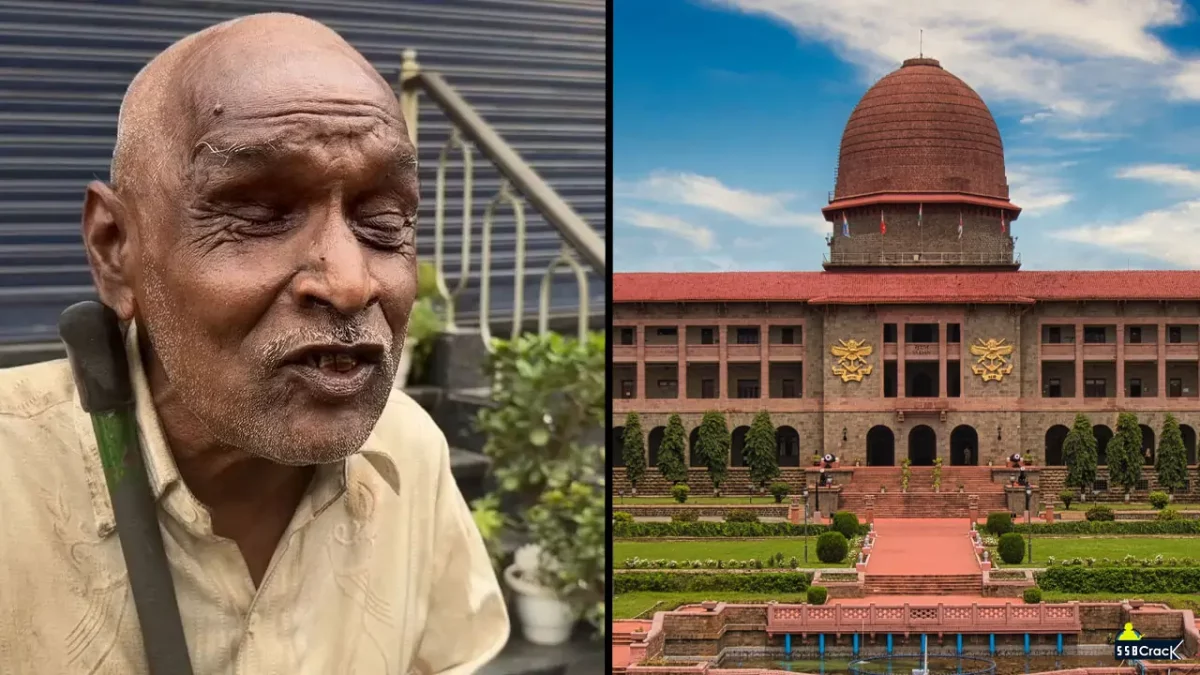
In an era where professional success often defines personal worth, the life of Dr. Santosh Goyal stands as a profound testament to human resilience and the enduring power of knowledge. A distinguished PhD holder in English and a former instructor at the National Defence Academy (NDA), Dr. Goyal once shaped the intellectual foundations of future Indian Army officers. Today, at approximately 79 years of age, he continues to impart wisdom—now from the modest confines of a temple in Agra—despite complete loss of eyesight and significant personal hardships. His story, which recently went viral across social media platforms, has moved millions and prompted timely intervention by the Indian Army.





Academic Excellence and Early Career
Dr. Santosh Goyal earned his PhD in English in 1971, establishing himself as a scholar of considerable merit. Following his doctorate, he joined the Education Corps of the Indian Army and served as an instructor at the prestigious National Defence Academy in Khadakwasla, Pune. For three years, he taught English literature, grammar, and critical analysis to officer cadets destined for leadership roles in the armed forces. Many of his students went on to attain senior ranks, including Major General, crediting his rigorous guidance in developing their communication skills and intellectual depth.
His tenure at NDA represented a period of respected service within the military education system. Dr. Goyal’s ability to convey complex literary works—ranging from Shakespeare’s Hamlet to Milton’s Paradise Lost—equipped future officers not only with linguistic proficiency but also with the analytical thinking essential for command responsibilities.
The Turning Point: Loss of Eyesight and Medical Discharge
Tragedy struck when Dr. Goyal developed a severe and progressive eye condition that ultimately resulted in total blindness. While serving at NDA, this medical affliction rendered him unfit for continued duty. He was medically boarded out of service on health grounds. Because his tenure did not meet the minimum service period required for full pension benefits, he received no substantial retirement pension, plunging him into unexpected financial and personal distress.
This abrupt transition from a position of dignity and influence to one of vulnerability highlights the fragility of even the most accomplished careers when confronted by unforeseen health challenges. Dr. Goyal, who had dedicated years to nurturing the nation’s future defenders, found himself without the institutional support he might reasonably have anticipated.
Life in the Temple: Hardship Met with Purpose
Following his discharge, Dr. Goyal returned to Agra, Uttar Pradesh, his native region. He took up residence at a temple in the Nagla Padi (also referred to as Naglapadi or Nakla Padi) locality. There, he sleeps on the premises and relies on the kindness of local devotees and community members for basic sustenance, such as simple meals including dhokla and sweets occasionally provided by well-wishers.
Despite these austere conditions and complete visual impairment, Dr. Goyal has refused to relinquish his calling as an educator. Students—particularly those pursuing Master’s degrees in English—continue to seek his guidance. Seated at the temple, he delivers lessons on literature and grammar with remarkable clarity and fluency. His teachings remain free of charge, driven purely by a commitment to knowledge rather than material gain. In interviews, he has spoken calmly of his circumstances, emphasising that his purpose remains unchanged: to illuminate young minds even when his own physical sight has been extinguished.
Viral Recognition and Public Response
In early May 2026, a video interview featuring Dr. Goyal circulated widely on social media platforms including Instagram, Facebook, X, LinkedIn, and YouTube. Conducted by Ajay Mishra, Additional Commissioner in the GST department, the recording captured his measured recounting of his PhD achievement, NDA service, eyesight loss, and continued teaching efforts. The stark contrast between his past stature and present reality resonated deeply, sparking widespread empathy, discussions on veteran welfare, and calls for support from NDA alumni, civil society, and government bodies.
The story quickly amassed significant attention, with viewers expressing admiration for his dignity and urging institutional assistance. Many questioned how a former NDA instructor could face such hardship without adequate pension or welfare provisions.
Indian Army Intervention: A Timely Act of Respect
In a swift and commendable response to the public outcry, the Indian Army took direct action. Personnel from the 60 Para unit, operating under the Agra division, visited Dr. Goyal at the temple. They provided immediate assistance and relocated him into their care. This intervention was not framed as charity but as a recognition of his past contributions to officer training and the armed forces’ broader ethos of standing by its own—past and present.
Reports and social media updates from 3–4 May 2026 indicate that Dr. Goyal is now receiving appropriate support and has been placed in improved circumstances. Observers have noted videos and accounts of Army officers personally ensuring his welfare, reaffirming the institutional values of loyalty, respect, and gratitude toward those who have served the nation in any capacity.
A Legacy of Quiet Strength
Dr. Santosh Goyal’s life encapsulates the unpredictability of fortune and the triumph of the human spirit. From shaping the leaders who safeguard the nation to imparting knowledge from a temple floor, he exemplifies that true service transcends titles, uniforms, and physical limitations. His continued dedication to teaching—without expectation of reward—serves as a powerful reminder of education’s transformative role and the moral imperative to support those who have contributed selflessly to society.
As the Indian Army extends its hand in recognition, Dr. Goyal’s story may yet inspire broader conversations on welfare mechanisms for retired educators and personnel within the defence ecosystem. For now, it stands as an inspiring narrative of resilience: a scholar who lost his sight but never his vision, continuing to light the path for others even in the twilight of his years.