
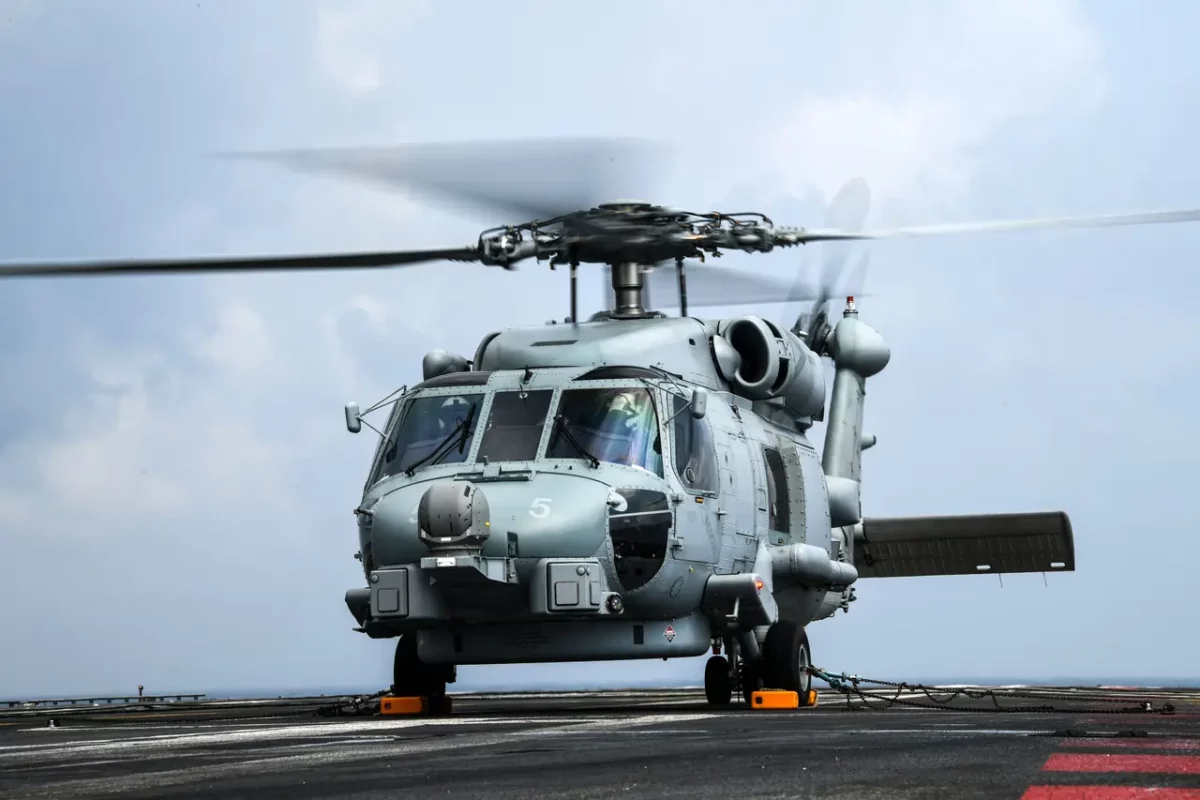
Chief of the Naval Staff Admiral Dinesh K Tripathi has outlined the progress of the Indian Navy’s MH-60R Seahawk helicopter induction programme, emphasising that anti-submarine warfare (ASW) capability remains a major operational priority for the service.
Speaking in an interview with ANI, Admiral Tripathi said the original contract envisaged the acquisition of 24 MH-60R Romeo-class multi-role helicopters from the United States, with deliveries and integration progressing systematically through phased induction, training arrangements and the incorporation of India-Unique Equipment (IUE).
According to the Navy Chief, 15 of the 24 helicopters have already been delivered to India and are being integrated into frontline naval operations. Three additional helicopters are expected to be delivered shortly.
He further stated that three helicopters are currently based in the United States for follow-on training of Indian Navy aircrew, while another three aircraft are undergoing trials of India-Unique Equipment before being handed over to India after successful completion of testing.
Admiral Tripathi noted that the induction programme is being executed in a phased manner to ensure seamless integration of personnel, equipment and operational capabilities.
Describing the MH-60R helicopters as critical force multipliers, the Navy Chief highlighted their importance in strengthening maritime surveillance, anti-submarine warfare, anti-surface warfare, search and rescue operations, and overall fleet support missions.
The MH-60R Seahawk is among the most advanced naval helicopters in the world and significantly enhances the Indian Navy’s capability to detect, track and engage submarines operating in the Indian Ocean Region.
The Navy Chief reiterated that anti-submarine warfare remains one of the service’s foremost operational priorities amid evolving maritime security challenges and increasing underwater activity in the region.
The ongoing induction of the MH-60R fleet is expected to substantially enhance the operational effectiveness of the Indian Navy and strengthen its ability to protect India’s maritime interests across the Indo-Pacific.