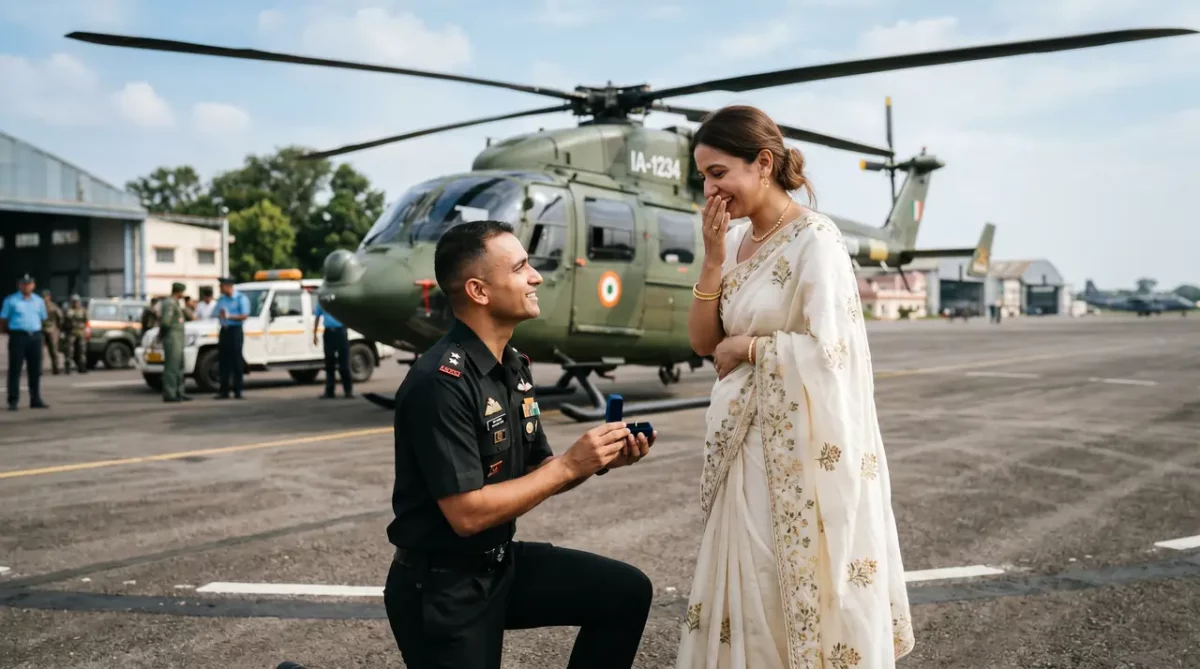
Indian Army officers, like their counterparts in the Navy and Air Force, lead lives that blend personal milestones with professional obligations. The uniform they wear represents not merely clothing but the institution, its traditions, discipline, and the nation’s trust. Consequently, questions about wearing it during personal events such as proposals or marriages require careful examination of regulations, established customs, and the paramount need to uphold military decorum.





This article provides a factual analysis based on prevalent practices, official dress code reiterations, and recent developments.
General Framework Governing Uniform Wear
The Indian Army’s uniform policy is governed by the Army Dress Regulations and broader Defence Services Regulations. These documents prescribe the occasions, manner, and standards for wearing various orders of dress — from combat and working uniforms to ceremonial (No. 1 Dress or equivalent) and mess dress.
Uniforms are authorised primarily for:
- Official duties and parades
- Ceremonial functions sanctioned by the chain of command or government
- Specific authorised personal or unit events
Wearing the uniform for private purposes is not unrestricted. Unauthorised or inappropriate use can invite disciplinary scrutiny under the Army Act, 1950, as it may be perceived as bringing the service into disrepute or misusing institutional symbols. Personnel must adhere strictly to specifications regarding fit, accoutrements, grooming, and permitted accessories.
A 2024 reiteration of dress code rules by the Indian Army emphasised zero tolerance for visible unauthorised religious markers, chains, or trinkets. Married female personnel may wear a mangalsutra if fully concealed. One engagement, wedding, eternity, or signet ring is permitted on the ring finger of the left hand (with restrictions during certain ceremonial parades). No other jewellery is allowed in uniform. These rules apply universally, including at personal functions where uniform is worn.
Marrying in Uniform: Established Tradition and Permissibility
Yes, Indian Army officers are permitted to marry in ceremonial uniform, and it is a respected tradition observed by many serving personnel.
Accounts from serving and retired officers, as well as widespread practice across the Armed Forces, confirm that personnel may wear full ceremonial dress — including appropriate headgear, medals, and, for officers, the sword where traditionally authorised — during their wedding ceremony and/or reception. This is more visibly common in the Indian Navy, particularly among certain communities in Kerala, but it is also practised in the Army and Air Force.
Key aspects include:
- Permission and Protocol: Officers are expected to inform or seek formal approval from their Commanding Officer or the appropriate authority, especially if the event involves unit resources, public visibility, or regimental participation. Such requests are generally granted for this significant personal milestone, provided the occasion upholds the dignity of the service.
- Dress Compliance: The uniform must be worn exactly as prescribed. Wedding rings are explicitly permitted. Religious items must remain concealed where required. The overall appearance must reflect the highest standards of grooming and bearing.
- Nature of the Event: The wedding itself is a private or family function. However, when the officer appears in uniform, the event acquires a semi-official character in the eyes of the service. Many officers choose ceremonial dress for the pheras or church ceremony and/or the reception to symbolise pride in their profession.
- Female Officers: Lady officers enjoy the same latitude. They may wear uniform or opt for traditional attire. Concealed mangalsutra and the permitted wedding ring apply.
This practice is viewed positively within the military community as it reinforces regimental ethos, inspires younger personnel, and publicly affirms the officer’s commitment to both family and service. Numerous examples exist of dignified weddings where one or both partners (in cases of officer couples) have worn uniform.
Proposing in Uniform: Context Determines Appropriateness
Unlike marriage, a proposal is an informal personal act. There is no specific regulation prohibiting an officer from proposing while in uniform in a private, appropriate setting (for example, at home or a neutral personal venue).
However, context is critical. The uniform and military premises carry institutional weight and must not be used in ways that compromise decorum or create perceptions of impropriety.
A recent incident illustrates this distinction clearly. On 2 June 2026, Captain Bharat Bhardwaj, a newly commissioned Army Aviation pilot, proposed to his fiancée on the tarmac beside a helicopter immediately after the Passing Out Parade and convocation at the Combat Army Aviation Training School in Nashik. The moment, captured on video, went viral. While many viewed it as romantic and heartfelt, the Indian Army took cognizance. Defence sources described the timing, location (official military installation during/after a formal ceremony), and setting as inappropriate. The act was seen as a breach of military decorum and protocol. The officer was required to provide an explanation, with reports indicating a show-cause notice was likely.
Key takeaway from the incident:
- The issue was not merely wearing the uniform but leveraging an official military event and sensitive operational area for a personal moment that was subsequently shared widely on social media.
- Veterans expressed understanding of the sentiment while acknowledging the need for protocol.
- This serves as a reminder that proposals in uniform should remain private and discreet. Using parade grounds, tarmacs, unit lines, or official functions as backdrops risks scrutiny, regardless of intent.
Additional Marriage-Related Regulations
Beyond uniform questions, commissioned officers must obtain prior sanction from the competent authority to marry. For marriages to Indian nationals meeting the prescribed criteria, approval is usually a procedural formality. Additional scrutiny applies in cases involving foreign nationals or other specified categories.
The Armed Forces encourage and facilitate “in-service” marriages (between officers or officer and PBOR in permitted circumstances) with policies aimed at posting couples together where operationally feasible. Inter-rank marriages within the officer cadre are permitted.
Note that these rules differ significantly for Agniveers under the Agnipath scheme, who face strict restrictions on marriage during their four-year engagement period if they aspire to permanent absorption. The present discussion pertains to commissioned officers.
Conclusion and Guidance for Aspirants
Indian Army officers are allowed to marry in ceremonial uniform, and doing so in accordance with regulations and with proper approval is an accepted and honourable tradition. Proposals while in uniform are not prohibited in personal settings but demand careful judgment regarding location, timing, and context to avoid any perception of impropriety or misuse of the uniform.
The uniform is a privilege earned through rigorous training and service. Its use during life’s important moments, when conducted with dignity and within prescribed boundaries, enhances rather than diminishes the prestige of the service. Aspirants preparing for the SSB and commissioning must internalise this balance between personal fulfilment and institutional discipline.
For serving officers or those about to commission, the prudent course remains: consult the chain of command, adhere meticulously to dress regulations, and ensure that personal celebrations reflect the values the uniform represents — honour, integrity, and selfless service.
This nuanced approach ensures that both the individual’s joy and the Army’s ethos are preserved.