
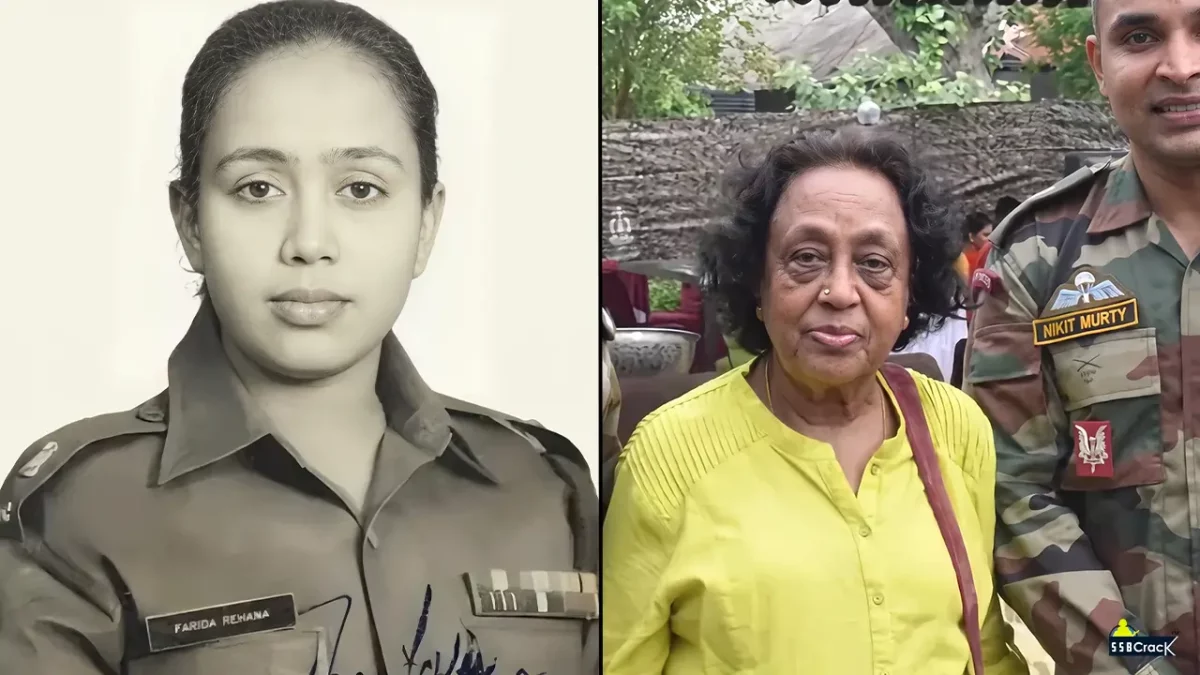
The history of the Indian Army is filled with stories of extraordinary courage, perseverance, and determination. Among these inspiring figures is Lieutenant Colonel (Retd.) Josyula Farida Rehana, a pioneering officer of the Army Medical Corps who became the first woman officer in the Indian Army to qualify as a paratrooper. At a time when women were rarely considered for demanding operational roles, she challenged long-standing conventions and carved her place in one of the Army’s most elite formations. Her remarkable journey from an accomplished medical student to a decorated military surgeon and airborne officer remains one of the most significant milestones in the history of women in India’s armed forces.
Born in Mysore in 1940, Farida Rehana displayed academic excellence from an early age. She pursued her medical education at Mysore Medical College, where she graduated with an MBBS degree, earning honours as well as a prestigious gold medal in Surgery. Her outstanding academic record established her reputation as a highly capable young doctor even before she entered military service.
The aftermath of the 1962 Sino-Indian War prompted the Government of India to strengthen the Armed Forces, including the recruitment of medical professionals. Motivated by a desire to serve the nation, Farida Rehana joined the Indian Army in 1964 as a medical officer in the Army Medical Corps. While many would have considered this achievement sufficient, she had a far more ambitious goal—to become part of the elite Parachute Regiment.
Her aspiration, however, met immediate resistance. At the time, women were not expected to serve in airborne formations, and her applications to join the Parachute Regiment’s medical component were repeatedly rejected solely because she was a woman. Recalling those experiences years later, she explained that despite meeting every professional requirement, she was informed that women would not be permitted to serve in such a role. Different accounts state that her application was rejected twice or even three times before approval was finally granted.
Her persistence eventually prevailed. She was posted to the renowned 60 Parachute Field Hospital, also known as the 60 Parachute Medical Company, one of the Indian Army’s specialised airborne medical units with an illustrious operational history. The unit had previously earned international recognition for its service during the Korean War and remained an integral part of India’s airborne capability.
On 19 September 1966, Farida Rehana successfully completed the demanding parachute training course and earned her coveted paratrooper wings. The achievement made her the first woman officer in the Indian Army to qualify as a paratrooper and the first woman officer to join an operational airborne unit. Although Flight Lieutenant Gita Chanda of the Indian Air Force had earlier become the first woman in the Indian Armed Forces to qualify as a parachutist in 1959, Rehana’s accomplishment marked a historic first for the Indian Army.
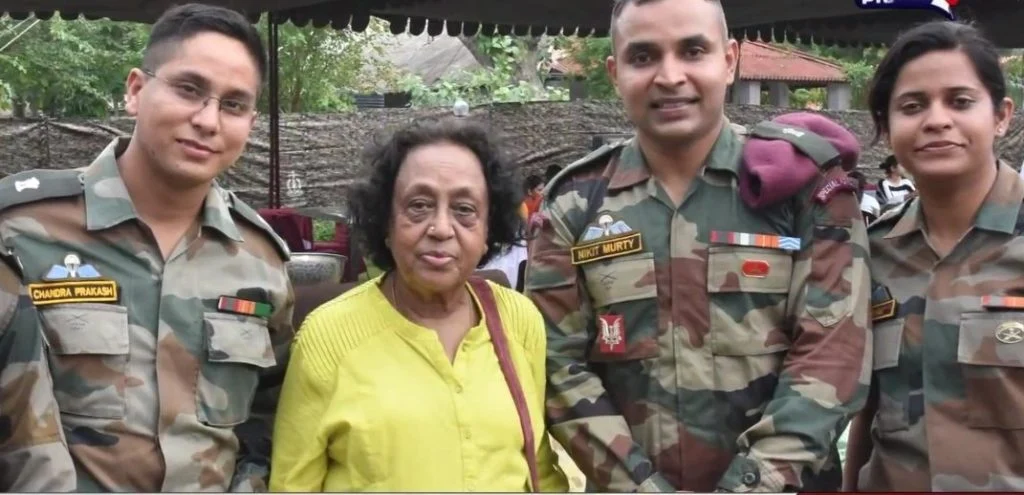
Her career in the airborne forces spanned over a decade. Out of her 21 years of military service, nearly 12 years were spent serving with the para unit. During this period, she completed hundreds of parachute jumps under demanding operational conditions. Various accounts attribute nearly 1,000 jumps to her career, while some of her own recollections mention approximately 500 jumps, including combat free-fall training. She has also been recognised in several historical accounts as the first woman free-fall paratrooper in the Indian Army.
Although women were not permitted to serve in combat arms during that era, Farida Rehana played an indispensable role within the airborne medical establishment. She trained alongside paratroopers, maintained operational readiness, and prepared to deploy wherever the Parachute Brigade was tasked. Her responsibilities demanded exceptional physical endurance, professional competence, and the ability to function effectively under some of the most challenging battlefield conditions.
Her most notable operational service came during the 1971 Indo-Pak War, also known as Operation Cactus Lily. Serving with the 60 Parachute Field Hospital, she provided frontline surgical care on both the Eastern and Western fronts. Working under wartime conditions, she performed surgeries and treated wounded soldiers close to active combat zones, contributing directly to the Army’s medical support during one of India’s most decisive military victories. In recognition of her wartime service, she was awarded both the Poorvi Star and the Paschimi Star.
Throughout her distinguished military career, Farida Rehana continued to achieve several notable distinctions. She became the first woman officer to receive the prestigious General Choudhary’s Trophy during the 34th Medical Officers Senior Course, further highlighting her professional excellence within the Army Medical Corps.
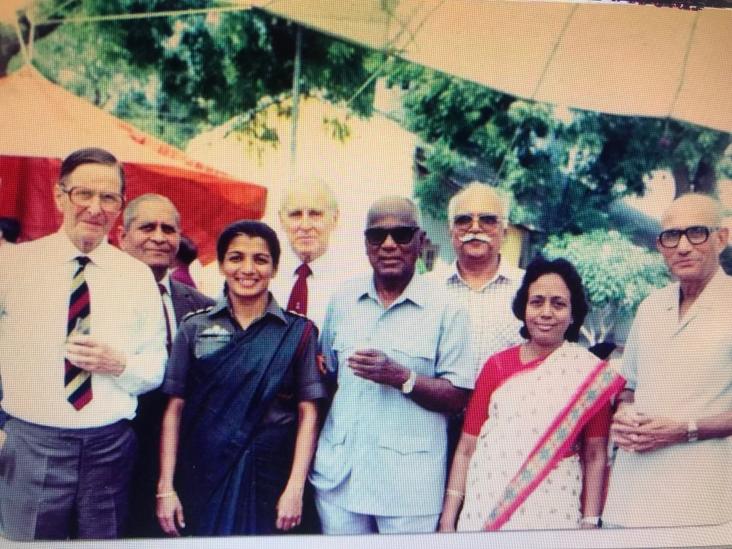
Decades after her retirement, the nation formally recognised her pioneering contributions. In January 2018, the Ministry of Women and Child Development selected her among 112 distinguished women from across India for the Women Achievers Award. The honour was presented by President Ram Nath Kovind on 20 January 2018, acknowledging her historic achievements as the Indian Army’s first woman paratrooper and one of its pioneering military surgeons.
Farida Rehana has often reflected with satisfaction on the remarkable transformation in opportunities available to women in today’s armed forces. In interviews after retirement, she expressed happiness at seeing young women officers serving across a wide range of appointments with improved facilities and institutional support. She viewed these changes as encouraging progress while taking pride in having contributed to the foundation upon which future generations would build.
The legacy of Lt Col (Retd.) Josyula Farida Rehana extends far beyond her personal achievements. She demonstrated that determination, professional excellence, and courage could overcome deeply entrenched institutional barriers. Long before women began entering an expanding range of operational roles in the Indian Armed Forces, she had already proven that competence—not gender—should determine opportunity. Today, as women continue to break new ground across the Army, Navy, and Air Force, her pioneering journey remains a powerful reminder of the resilience and commitment that helped reshape the future of military service in India.