

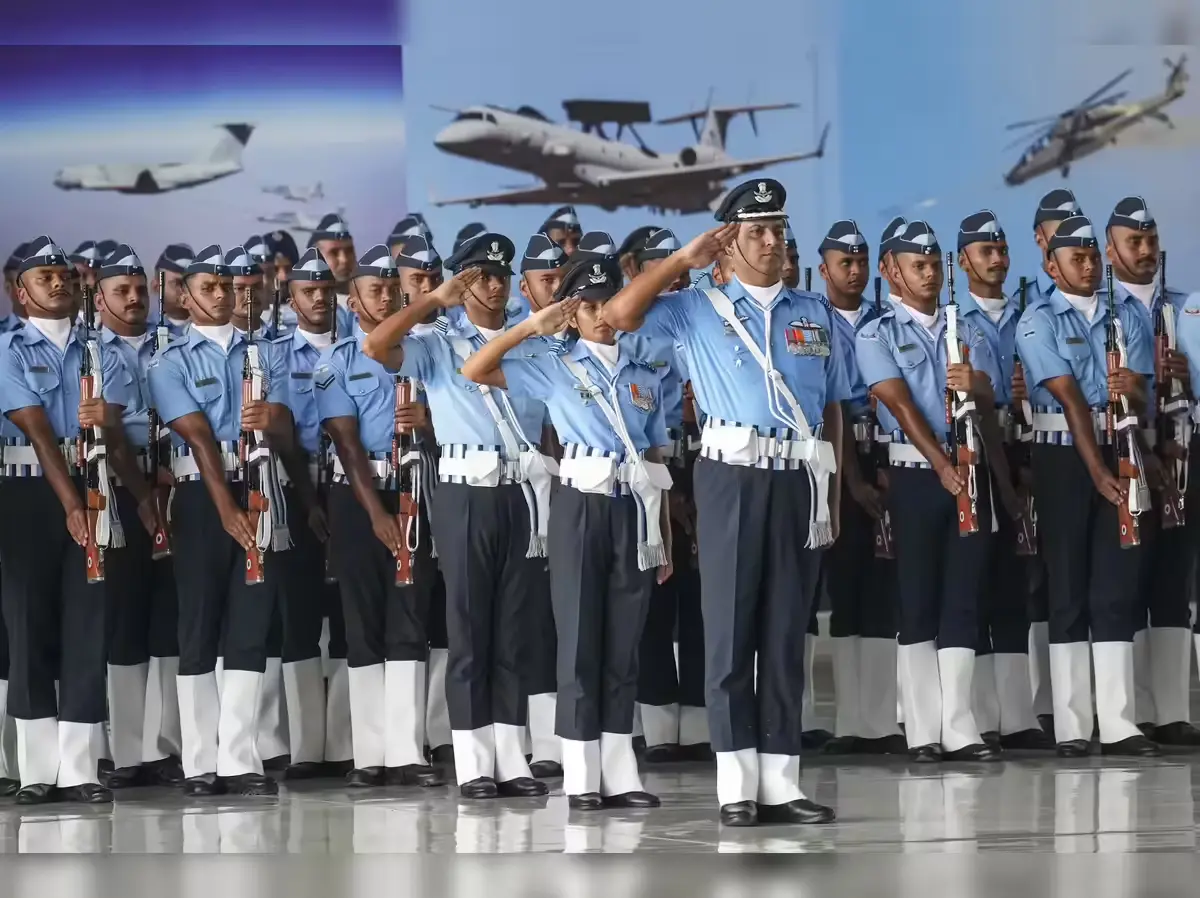
In a significant judgment reinforcing the discipline and operational requirements of the armed forces, the Supreme Court has ruled that personnel of the Indian Air Force (IAF) do not possess an “unqualified right” to leave military service at their discretion to take up civilian employment. The Court held that strict compliance with the Air Force’s regulations governing premature discharge is mandatory and cannot be bypassed, even if an airman is selected for a government job.

A Bench comprising Justice Ujjal Bhuyan and Justice Atul S. Chandurkar delivered the verdict while dismissing an appeal filed by Corporal Nakhat Singh of the Indian Air Force. The judgment reaffirmed that members of the IAF, being part of a disciplined military force, are bound by service regulations designed to ensure operational readiness and organisational stability.
The case arose after Corporal Nakhat Singh, who had completed seven years of service in the Air Force, was selected as an Assistant Professor (Hindi) through the Rajasthan Public Service Commission (RPSC). Following his selection, he sought a No Objection Certificate (NOC) and discharge from service to enable him to join the new appointment.
However, his request was rejected by the Air Officer Commanding in October 2022 on the grounds that he had failed to obtain prior permission before applying for the civil post, as required under a 2017 Indian Air Force order. The Air Force regulations stipulate that personnel intending to apply for civilian employment must first obtain approval from the competent authority before submitting their application.
After the Armed Forces Tribunal and the Delhi High Court upheld the Air Force’s decision, Nakhat Singh approached the Supreme Court challenging the rejection of his request.
Rejecting the appeal, the Supreme Court observed that the requirement of obtaining prior permission before applying for a civil post is not a mere procedural formality but a substantive safeguard linked to the regulation of premature discharge from military service.
Writing the judgment, Justice Atul S. Chandurkar stated that the requirement for prior permission and the subsequent grant of a No Objection Certificate by the competent authority cannot be treated as simple procedural conditions that an airman may choose to ignore.
“The prescription of seeking prior permission before making an attempt to apply for a civil post and the subsequent grant of NOC by the competent authority after such selection cannot be stated to be simple procedural requirements that could be dispensed with at the will of the concerned Airman,” the judgment observed.
The Court further noted that these provisions are intrinsically connected with regulating the premature discharge of Air Force personnel and ensuring that manpower planning and operational commitments are not adversely affected.
Emphasising the unique nature of military service, the Bench observed that Air Force personnel belong to a disciplined armed force where individual decisions regarding resignation or discharge cannot be viewed in the same manner as those in civilian employment.
“It must be borne in mind that Airmen are members of the IAF, a disciplined force,” the Court remarked, underscoring that military service carries obligations extending beyond those applicable to ordinary government employees.
The judgment also highlighted the importance of maintaining operational preparedness within the Indian Air Force. Allowing personnel to leave service without following prescribed procedures could adversely affect unit strength, operational capability and long-term manpower management, particularly in a force entrusted with national security responsibilities.
The ruling also reiterates the legal position adopted by the Supreme Court in an earlier 2019 decision, where the Court similarly upheld Air Force regulations after an airman sought to apply for a banking position without fulfilling mandatory service requirements. By reaffirming this principle, the apex court has provided greater clarity regarding the binding nature of service regulations applicable to members of the armed forces.
The verdict is expected to have wider implications for serving personnel across the Indian Air Force who aspire to join civilian government services while still in uniform. While the judgment does not prohibit Air Force personnel from seeking civilian employment, it makes it clear that they must strictly comply with the service rules governing prior permission, issuance of No Objection Certificates and discharge from service.
The decision reinforces the principle that military service is governed by a distinct legal and administrative framework, where individual career aspirations must be balanced against the operational needs of the armed forces. By upholding the Indian Air Force’s regulations, the Supreme Court has reaffirmed that maintaining discipline, organisational integrity and combat readiness remains paramount in a professional military force entrusted with safeguarding the nation’s security.