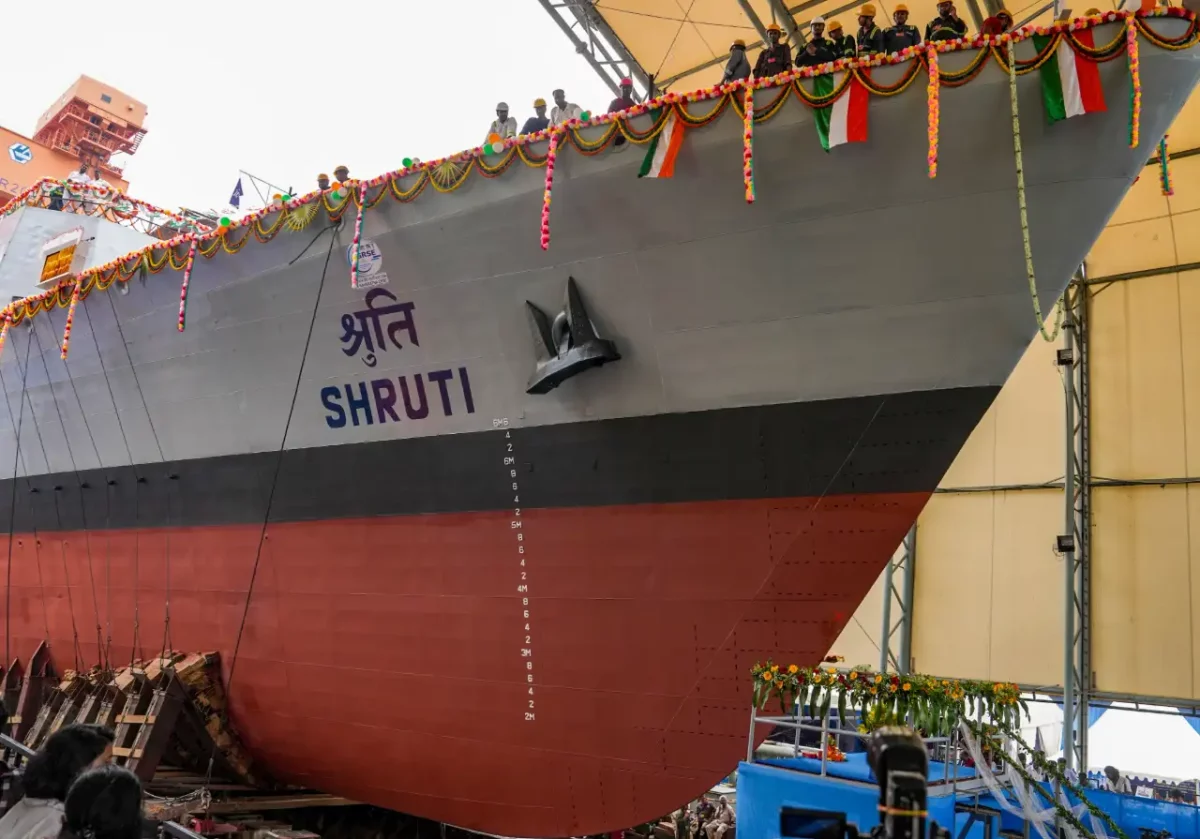
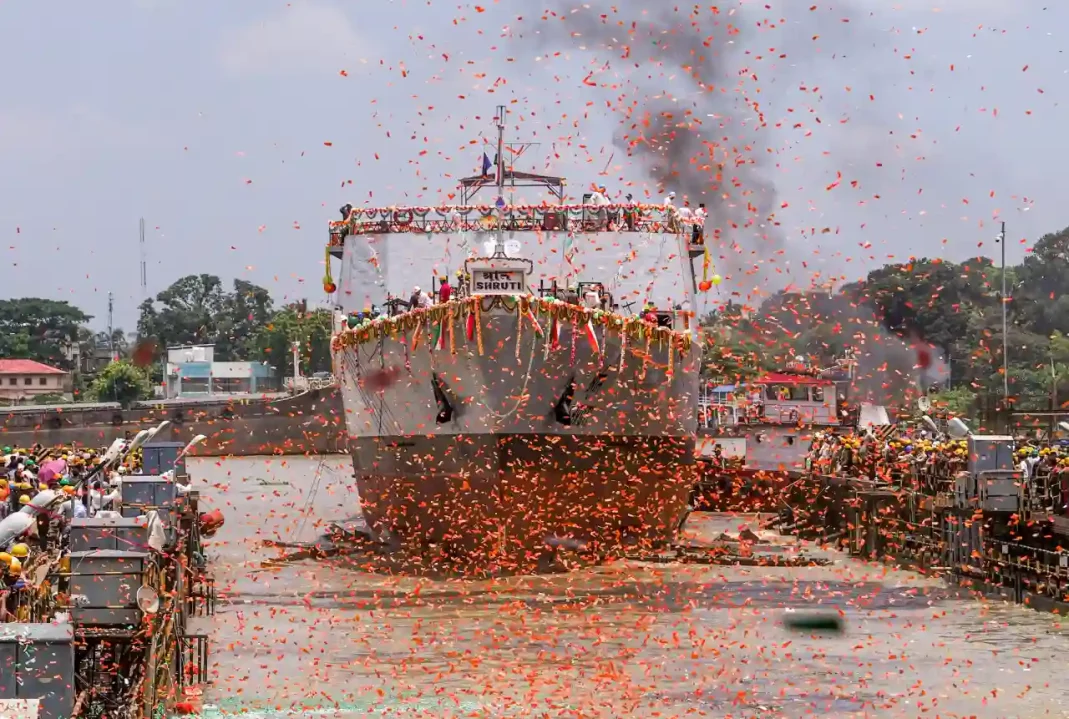
The Indian Navy’s fleet received a major boost with the launch of the next-generation offshore patrol vessel (NGOPV) ‘Shruti’ at Garden Reach Shipbuilders & Engineers (GRSE) in Kolkata on Tuesday.





Indigenously designed and built, Shruti is intended to strengthen the Navy’s existing offshore patrol vessel fleet and undertake a range of multi-domain maritime missions, including maritime surveillance, search and rescue, protection of offshore assets, humanitarian assistance and disaster relief operations and anti-piracy missions.
Manika Sadhu, wife of Vice Admiral Sanjay Sadhu, Controller of Warship Production and Acquisition, formally launched the vessel in the presence of senior Indian Navy officers and GRSE officials.
Speaking at the launch, Vice Admiral Sanjay Sadhu highlighted the wider responsibilities of the Indian Navy beyond the defence of national interests. He said the Navy also has an important role in ensuring freedom of navigation, securing sea lanes and facilitating the uninterrupted movement of energy and essential goods to and from India.
Vice Admiral Sadhu also highlighted the progress made by India in developing a stronger and technologically advanced domestic defence manufacturing and shipbuilding ecosystem. He praised GRSE for its longstanding contribution to Indian naval shipbuilding.
According to the Navy, GRSE has delivered more than 110 warships to the Indian Navy over several decades and has constructed more than 800 ships and platforms for the Indian Navy, Indian Coast Guard, export customers and other countries.
The launch of Shruti comes less than three months after GRSE launched another vessel, ‘Sanghmitra’, on May 20. The construction of next-generation offshore patrol vessels is being undertaken concurrently by GRSE in Kolkata and Goa Shipyard Limited in Goa.
GRSE is constructing four NGOPVs as part of the Indian Navy’s 11-ship NGOPV programme. The programme is aimed at strengthening the Navy’s capability for sustained maritime operations, particularly in missions requiring long endurance and flexible deployment.
The next-generation vessels are considerably larger and more capable than earlier offshore patrol vessels. Shruti and other ships of the class measure approximately 113 metres in length and 14.6 metres in width, with a displacement of around 3,000 tonnes.

The vessels are designed to attain speeds of up to 23 knots and have an endurance of approximately 8,500 nautical miles at a cruising speed of 14 knots. Their enhanced endurance and advanced sensors and equipment are expected to provide greater operational flexibility during prolonged maritime deployments.
Commodore PR Hari, IN (Retd), Chairman and Managing Director of GRSE, said the new-generation vessels were significantly larger than earlier Sukanya-class and Saryu-class offshore patrol vessels. He highlighted their longer endurance, advanced equipment and sensors and enhanced weapon fit.
The launch of Shruti represents another milestone in India’s effort to expand indigenous warship construction and reduce dependence on foreign sources for naval platforms. The project is aligned with the government’s Aatmanirbhar Bharat and Make in India initiatives.
With its combination of extended endurance, modern sensors, improved operational capabilities and versatile mission profile, Shruti is expected to play an important role in maritime security, surveillance and protection of India’s interests at sea.