
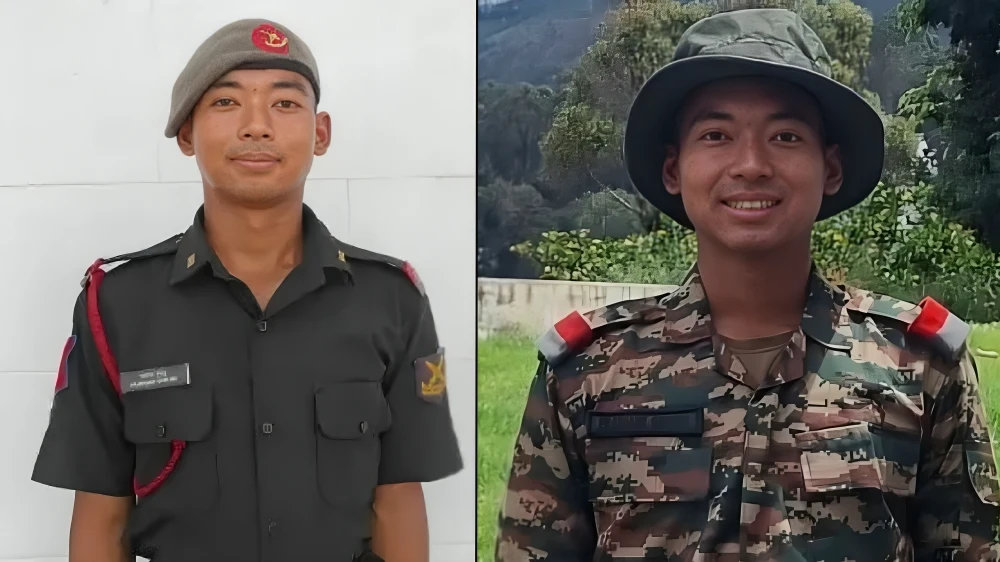
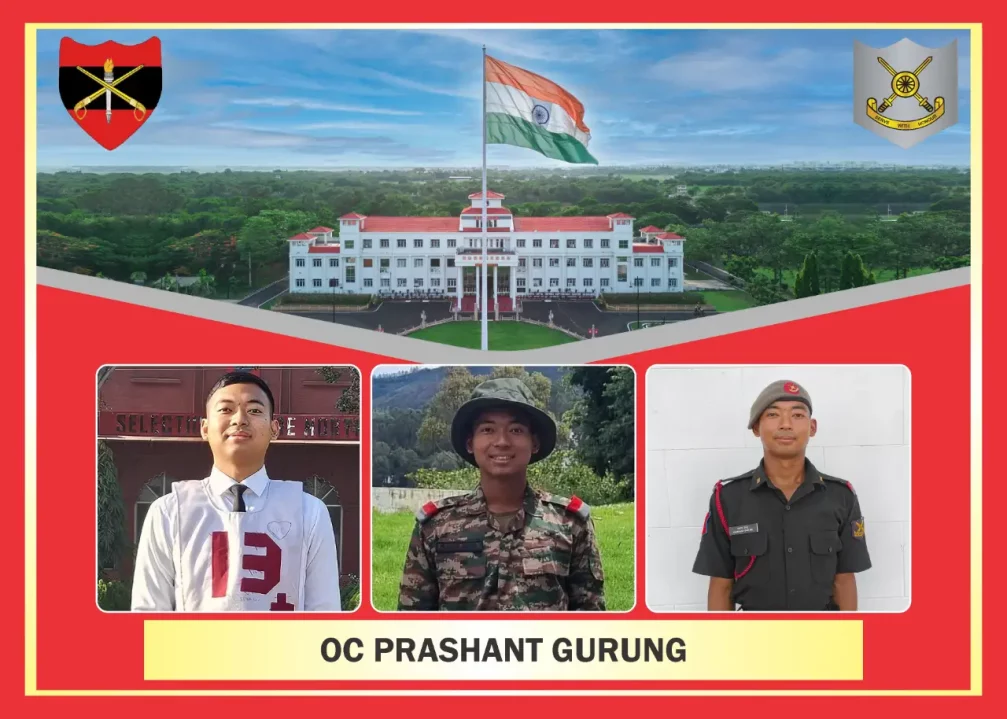
For Officer Cadet Prashant Gurung, the journey towards the olive-green uniform represents far more than the pursuit of a career. It is the continuation of a family legacy built around military service, discipline, courage and sacrifice. Raised in an environment where the Indian Army and its traditions were deeply embedded in family life, Gurung grew up surrounded by stories of service and the values associated with the proud Gorkha soldiering tradition.



His family’s association with the Indian Army is rooted in the long-standing tradition of Gorkha recruitment from Nepal, a military legacy historically associated with honour, loyalty, courage and valour. For Prashant, these values were not simply ideals discussed in books or heard during ceremonial occasions. They were reflected in the lives and experiences of members of his own family, giving him a strong personal connection with the military profession from an early age.
A significant influence in this journey was his maternal grandfather, Honorary Captain Bhagat Bahadur (Retd) of 6/5 Gorkha Rifles. Having served with distinction, his grandfather left behind a legacy shaped by military service, operational experience and the medals he earned during his career. His record of service became one of the early examples that demonstrated to Prashant the meaning of dedication to the nation and the responsibilities associated with wearing the uniform.
The influence of military service continued through the next generation of his family. His father, Havildar Bimal Gurung (Retd), served for 24 years with 4/5 Gorkha Rifles (Frontier Force). His long association with the regiment provided Prashant with another close example of military life and reinforced the importance of discipline, integrity and commitment to duty.
The values demonstrated by his father played an important role in shaping Prashant’s own outlook. His father’s unwavering commitment to service, disciplined approach and integrity became qualities that Prashant sought to carry into his own journey. The experience of growing up in a family where military service was a lived reality helped establish the foundation for his ambition to become an Army officer.
Another important influence came from Lt Col Raja Gurung, an alumnus of the Officers Training Academy, Chennai, and an officer of 4/5 Gorkha Rifles (Frontier Force). As a close family friend and mentor, Lt Col Raja Gurung provided Prashant with an additional example of professional military service. His accomplishments and journey as an Army officer strengthened Prashant’s determination to pursue the same path.
A particularly significant moment in Prashant’s formative years came during his school days at Cambrian Hall, Dehradun, when he had the opportunity to interact with the late General Bipin Rawat. The interaction left a lasting impression on him and helped transform what had been an aspiration into a clearly defined and determined goal of joining the Indian Army.
General Bipin Rawat’s own association with the armed forces and his rise to become the first Chief of Defence Staff made his journey an inspirational example for generations of young Indians aspiring to military service. For Prashant, the interaction during his school years provided an important personal connection with that aspiration and further strengthened his resolve to pursue a career in uniform.
However, a strong military legacy alone could not determine the outcome of Prashant’s journey. Like every aspiring officer, he had to demonstrate his own leadership qualities, determination and suitability for a career in the armed forces. The path demanded preparation, focus and the ability to overcome moments of difficulty and self-doubt.
Prashant eventually earned his recommendation at the Services Selection Board through sustained focus, dedication and determination. The achievement marked an important milestone in his journey, demonstrating his ability to translate the inspiration received from his family and mentors into personal effort and performance.
His SSB recommendation is therefore significant not merely as a selection milestone but also as the culmination of a long process of preparation and self-improvement. The values inherited from his family provided the foundation, while his own determination enabled him to move forward towards the goal of becoming an Army officer.
For the Gorkha community, Prashant’s journey also represents the continuation of a deeply respected military tradition. Generations of Gorkha soldiers have served with distinction in the Indian Army, and the tradition has been sustained through strong regimental identities and an enduring emphasis on courage, loyalty and comradeship.
Prashant now stands at the threshold of carrying that tradition forward in his own capacity. Unlike simply inheriting a family name associated with military service, becoming an officer requires the individual to establish his own identity through leadership, professional competence and commitment to those placed under his command.
The journey of Officer Cadet Prashant Gurung thus brings together three generations of military influence. His maternal grandfather’s service in 6/5 Gorkha Rifles, his father’s 24-year career in 4/5 Gorkha Rifles (Frontier Force), and the mentorship of Lt Col Raja Gurung collectively shaped his understanding of military life. His interaction with General Bipin Rawat added another defining influence during his school years.
Yet, the legacy he carries forward is ultimately accompanied by his own achievement. By securing his recommendation at the SSB through focus, dedication and determination, Prashant has taken an important step towards creating his own chapter in the family’s military story.
As he progresses through officer training, the expectations associated with his family background will be matched by the responsibilities of his own future role. The traditions of courage, resilience, loyalty and service that influenced his upbringing will now have to be translated into leadership and professional excellence.
From the stories of service he heard growing up to his own journey towards the olive-green uniform, Prashant Gurung’s story reflects the enduring strength of the Gorkha military tradition and the power of family example. His journey is not simply about following a path laid by previous generations; it is about earning the right to carry that legacy forward through his own service to the nation.