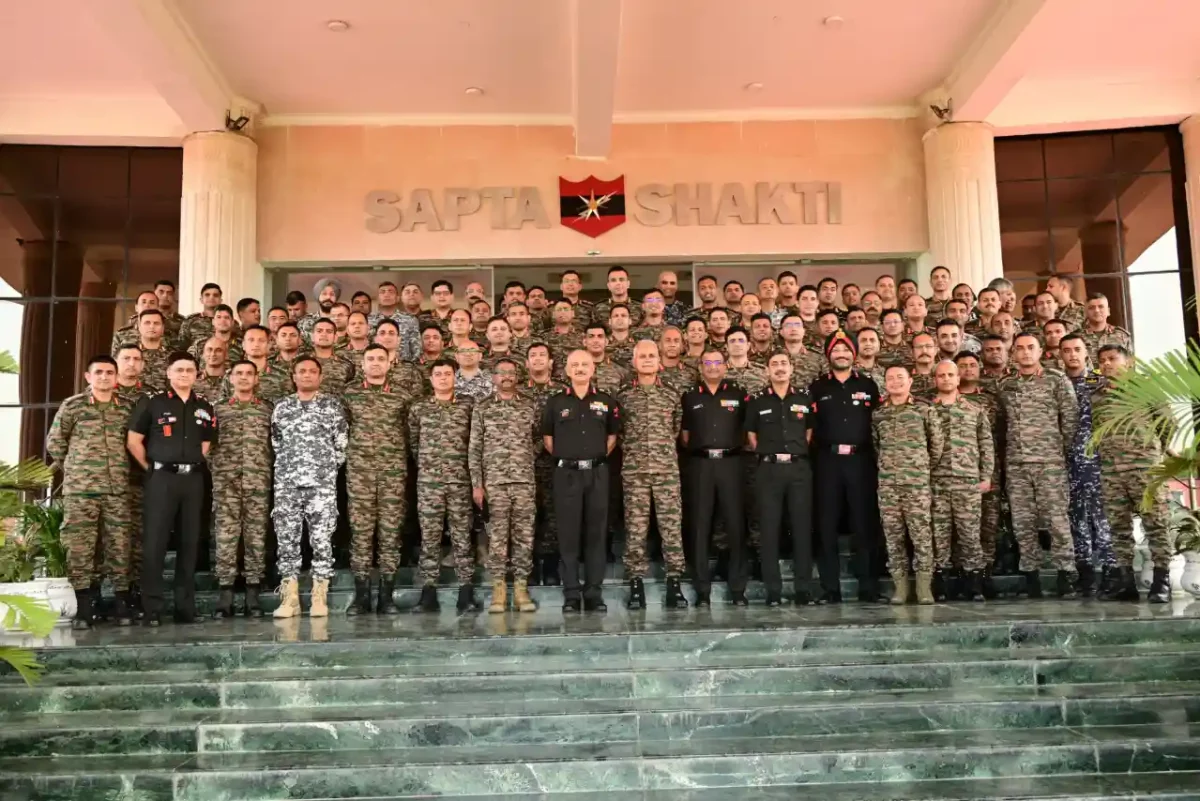
Participants of HCC-55 visited Sapta Shakti Command as part of their operational orientation and familiarisation programme, gaining an insight into the operational environment, contemporary security challenges and the Indian Army’s approach towards maintaining preparedness in an evolving security landscape.





During the visit, the participants interacted with Lieutenant General PS Shekhawat, Chief of Staff, South Western Command. The interaction provided an opportunity for the participants to gain a broader understanding of the operational dynamics confronting the Indian Army and the measures required to maintain effective preparedness in the face of emerging challenges.
Lt Gen PS Shekhawat shared valuable insights into the evolving operational environment and the changing nature of contemporary security challenges. The discussion highlighted the requirement for military organisations to remain adaptable and responsive as the character of warfare and the security environment continue to evolve.
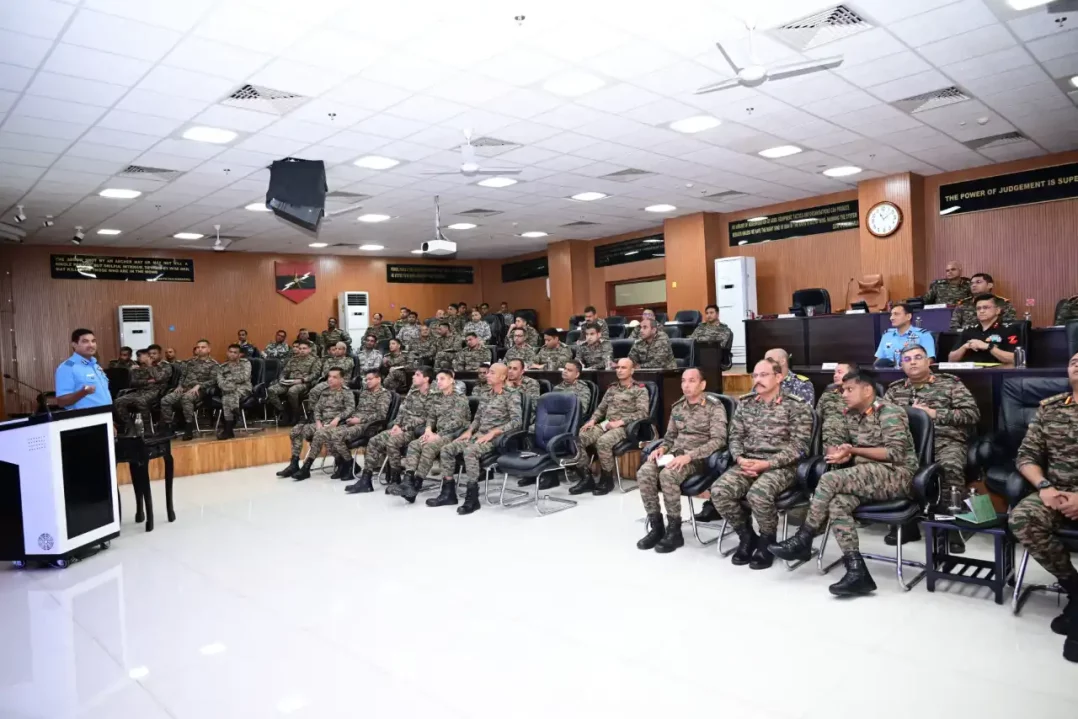
A key focus of the interaction was the importance of jointness and integration. Modern military operations increasingly demand close coordination between different services, formations and specialised capabilities. Developing a common understanding of operational requirements and strengthening coordination are therefore essential to achieving effective outcomes during complex missions.
The emphasis on operational preparedness also underlined the importance of maintaining a high degree of readiness across formations and units. Operational preparedness involves not only the availability of resources and capabilities but also the ability of personnel and commanders to respond rapidly and effectively to changing situations.
The visit to Sapta Shakti Command provided the HCC-55 participants with an opportunity to connect their professional learning with practical perspectives on military operations. Familiarisation visits of this nature enable participants to better appreciate the relationship between strategic considerations, operational planning and the execution of military tasks at the formation level.
The interaction also offered insights into how the Indian Army approaches emerging security challenges through preparedness, adaptation and integration. As the operational environment becomes increasingly complex, military professionals need to understand not only individual capabilities but also how these capabilities are brought together as part of an integrated operational response.
The discussions with Lt Gen PS Shekhawat consequently served as an important component of the participants’ operational orientation. His observations provided them with a deeper perspective on the challenges associated with maintaining readiness while adapting to developments in the contemporary security environment.
The visit also reinforced the importance of professional interaction between senior military leadership and personnel participating in higher-level courses. Such engagements allow participants to draw upon the operational experience of senior commanders while developing a broader understanding of military decision-making and preparedness.
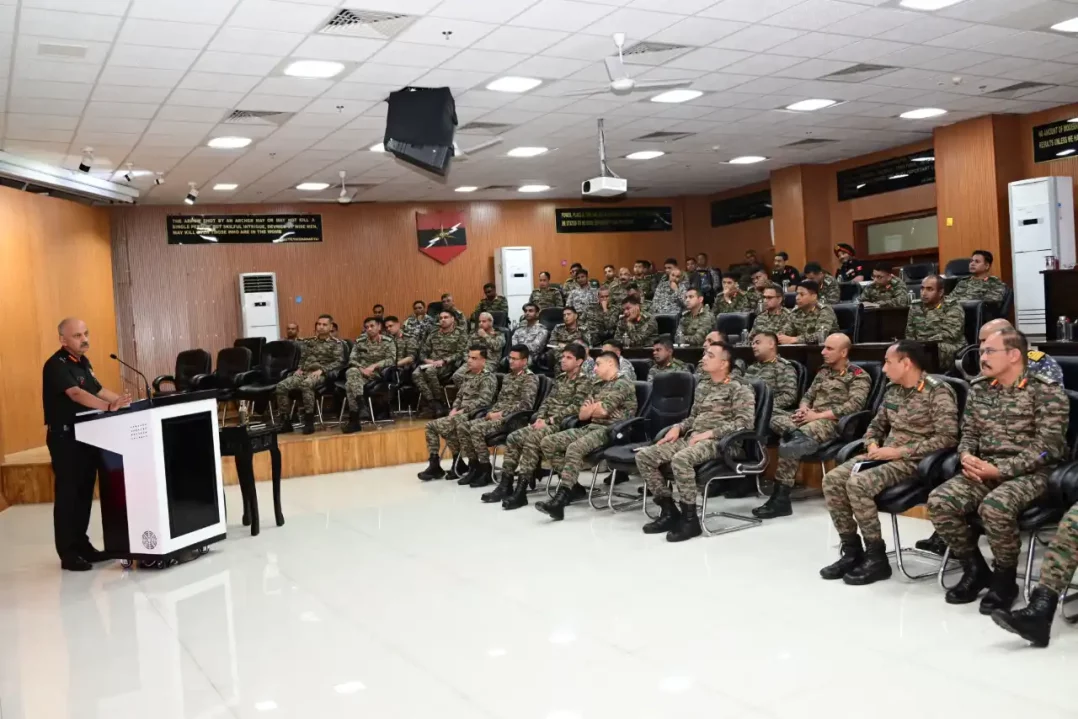
For the HCC-55 participants, the familiarisation programme at Sapta Shakti Command therefore served as an opportunity to enhance their awareness of operational realities and the requirements of modern military preparedness. The interaction connected theoretical and professional learning with the practical demands faced by operational formations.
The visit concluded with an emphasis on remaining prepared for emerging challenges through jointness, integration, adaptability and continuous operational readiness. The insights shared during the interaction are expected to contribute to the participants’ broader understanding of the Indian Army’s approach towards contemporary and future security challenges.