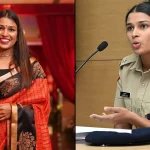

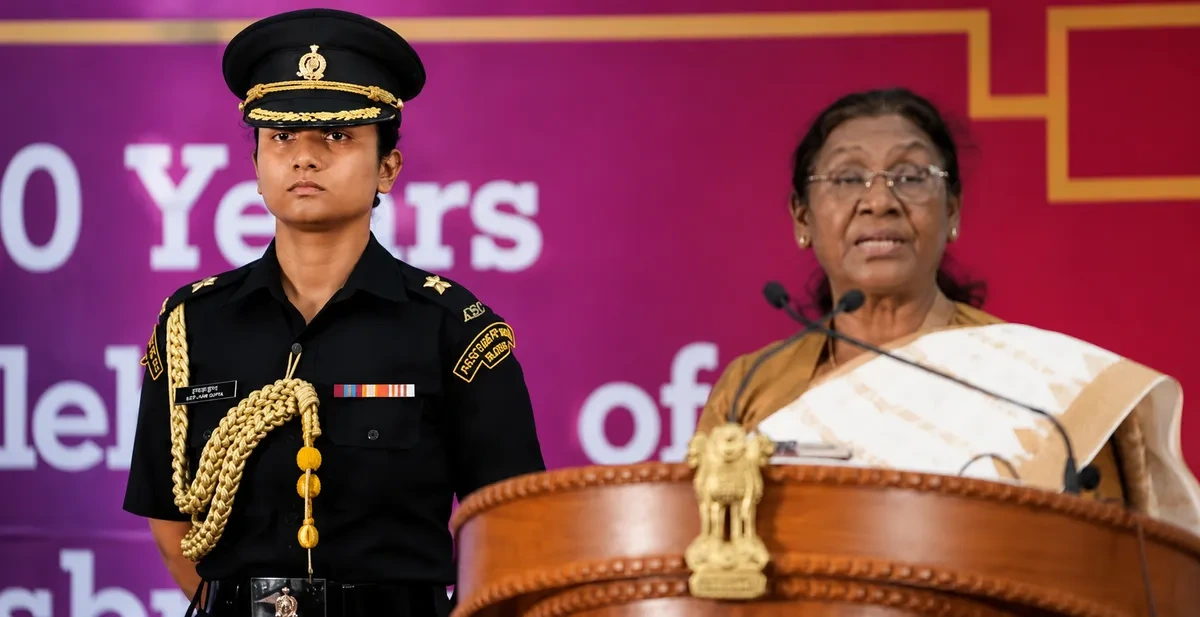
New Delhi: Major Navya Shekhawat of the Army Service Corps has become the first woman officer from the Indian Army to serve as Aide-de-Camp (ADC) to President Droupadi Murmu. Her appointment places her among the small group of serving officers who assist the President at Rashtrapati Bhavan during official engagements, state ceremonies and diplomatic functions.
She is the second woman overall to hold the presidential ADC assignment. Lieutenant Commander Yashasvi Solanki of the Indian Navy became the first woman to serve in the role in May 2025. Major Shekhawat’s selection therefore extends that milestone into the Army, which traditionally supplies three of the President’s five ADCs (one each also coming from the Navy and Air Force).
Background and Career
Major Shekhawat hails from Kerpura village in Sikar district, Rajasthan. She entered the Army through the Combined Defence Services examination conducted by the Union Public Service Commission. Her name appeared on the official CDS (I) 2020 Officers Training Academy women’s merit list for the Short Service Commission Women Non-Technical Course. After training at the Officers Training Academy, Chennai, she was commissioned into the Army Service Corps in 2021.
The Army Service Corps is responsible for logistics, supplies, transportation and the support systems that keep formations operational. She rose to the rank of Major within approximately five years of commissioning and was appointed ADC in 2026, with reports indicating she has been serving in the role at Rashtrapati Bhavan since July.
Duties of a President’s ADC
The ADC appointment is more than ceremonial. Officers in the role accompany the President at official functions, investiture ceremonies and high-level engagements. They assist with protocol, coordination and communication between Rashtrapati Bhavan and other arms of government. The position demands discipline, discretion and a precise understanding of military and state ceremonial requirements.
Photographs and videos of Major Shekhawat standing in attendance beside the President have circulated widely, making her a visible figure for defence aspirants.

Broader Context
Women first entered the Indian Army as commissioned officers through the Short Service Commission route in 1992. Opportunities have expanded since then, including through the Supreme Court’s 2020 ruling in the Babita Puniya case that eligible women Short Service Commission officers should be considered for Permanent Commission on terms comparable to their male counterparts. Permanent Commission has since been extended to several streams, including the Army Service Corps. Major Shekhawat’s appointment adds a further institutional milestone in that progression.
The development follows other high-visibility assignments for women officers, including operational briefings and command roles, and reflects the continuing opening of protocol and staff appointments that were long held exclusively by male officers.