The Indian Air Force issued a formal tribute. It described him as a war hero whose courage remains etched in the annals of military aviation and called his action over Kalaikunda “a masterclass in aggressive air combat and unwavering resolve.” The service stated that his memory would continue to inspire generations of air warriors.





The Kalaikunda engagement
On 7 September 1965, Pakistani F-86 Sabre jets attacked Kalaikunda airfield in West Bengal. Cooke, then a Flight Lieutenant of No. 14 Squadron flying a Hawker Hunter, was leading a two-aircraft combat air patrol with Flying Officer Subodh Chandra Mamgain. He intercepted the raid despite Indian anti-aircraft fire already being directed at the attackers.
The official Vir Chakra citation records that he engaged two enemy aircraft in disregard of personal safety, outmanoeuvred them, and shot down one Sabre, which disintegrated in mid-air. He then positioned himself behind a second aircraft but had exhausted his ammunition. He continued to press the remaining aircraft, which fled in confusion. Both Cooke and Mamgain received the Vir Chakra.
Accounts of the action note that Cooke took on multiple Sabres in a short, low-level fight. He later recalled that the aircraft came close enough for him to read markings on an opposing pilot’s helmet and that his own wingtip brushed vegetation. The engagement helped prevent a second destructive strike on the airfield after an earlier raid that morning.
The Vir Chakra is India’s third-highest wartime gallantry award. Cooke received it for conspicuous gallantry, tactical skill, and leadership on that day.
Service and later life
Alfred Tyrone Cooke was born in 1939 and educated at La Martiniere College, Lucknow. He was commissioned into the Indian Air Force on 19 December 1961 (service number 6339 GD(P)) and served until he resigned on 19 December 1968 with the rank of Flight Lieutenant. He then settled in Australia. He was married and had two sons.
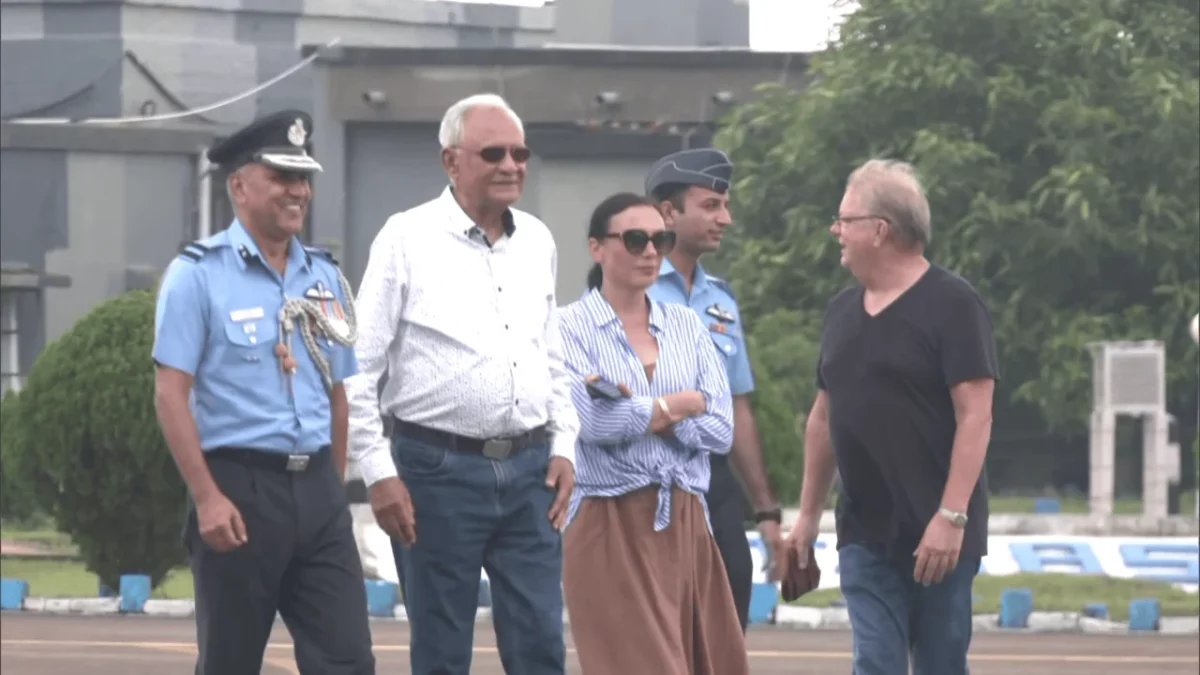
In 2015–16 he returned to present his Vir Chakra medal to No. 14 Squadron, known as the Bulls and now based at Ambala. During that visit he advised younger officers to master doctrine and aircraft performance thoroughly and then to go beyond the manuals. The squadron was preparing to mark its platinum jubilee at the time of his final visit.
Cooke is remembered as one of the few Indian Air Force pilots credited with successfully engaging multiple enemy aircraft in a single air combat and prevailing. His action on 7 September 1965 remains a reference point in accounts of the eastern theatre of the 1965 war.