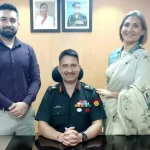

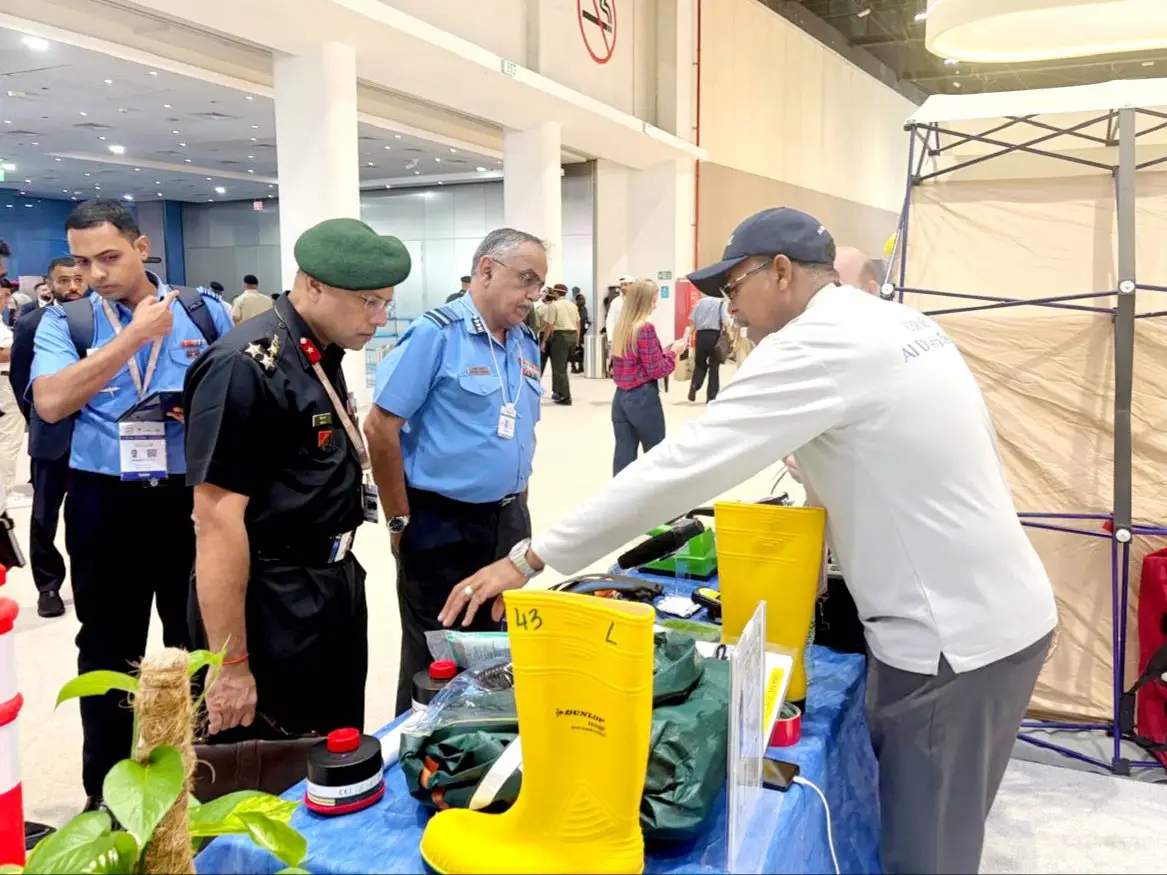
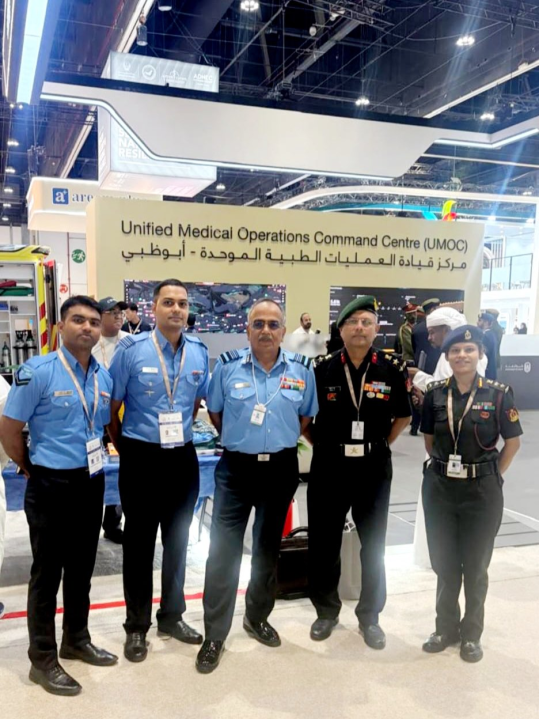
Air Marshal Sandeep Thareja, Director General Armed Forces Medical Services (DGAFMS), led the Indian delegation at the 46th International Committee of Military Medicine (ICMM) Conference held in Abu Dhabi, United Arab Emirates, from November 9 to 13, 2026. The international gathering brought together military medical professionals and representatives from participating countries to discuss emerging challenges in military healthcare, battlefield casualty management, disaster response and medical lessons from contemporary conflicts.
The conference provided an important platform for exchanging knowledge, sharing operational experiences and exploring opportunities for greater international cooperation in military medicine. Discussions focused on improving medical preparedness and strengthening the ability of military healthcare systems to deliver effective treatment in challenging operational environments.
Representing India, Air Marshal Sandeep Thareja participated in engagements addressing critical developments in military medical care, particularly the evolving requirements of treating casualties during prolonged military operations and high-intensity conflicts.
One of the major subjects discussed during the conference was prolonged combat casualty care, an increasingly important area of military medicine. Modern battlefields often present situations where the immediate evacuation of injured personnel to advanced medical facilities may be delayed because of operational conditions, difficult terrain, contested airspace or logistical constraints.
In such circumstances, military medical personnel must be prepared to provide sustained emergency treatment and stabilisation for extended periods. Prolonged casualty care requires specialised training, effective medical planning, appropriate equipment and the ability to maintain essential treatment capabilities until evacuation becomes possible.
Battlefield trauma management was another important focus of the conference. Combat-related injuries can involve severe bleeding, blast trauma, burns, fractures and multiple injuries requiring rapid assessment and coordinated medical intervention. Improving trauma management capabilities remains essential for increasing the chances of survival and supporting the recovery of injured military personnel.
The discussions also examined the importance of adapting military medical practices to the changing nature of warfare. Developments in weapons technology, unmanned systems and operational tactics are creating new challenges for casualty evacuation, medical logistics and the delivery of emergency healthcare in conflict zones.
Lessons emerging from ongoing conflicts formed a significant part of the deliberations. Contemporary military operations have highlighted the importance of medical resilience, efficient casualty evacuation systems, forward medical support and the ability to maintain treatment capabilities under difficult operational circumstances.
The conference also addressed disaster response, recognising the important role played by military medical organisations during natural disasters, humanitarian emergencies and other large-scale crises. Armed Forces medical teams are frequently called upon to provide emergency healthcare, establish temporary medical facilities and support civilian authorities when local healthcare infrastructure faces extraordinary pressure.
For India, disaster response remains an important area of civil-military cooperation, with the Armed Forces regularly contributing personnel, equipment and medical resources during humanitarian assistance and disaster relief operations.
During the conference, the Indian delegation interacted with representatives from other participating countries to explore opportunities for strengthening mutual cooperation in military healthcare. Particular attention was given to battlefield trauma care and civil-military collaboration, two areas that are increasingly important for improving emergency medical preparedness.
Such international engagements allow military medical organisations to exchange professional experiences, examine different approaches to casualty management and identify practices that could contribute to improving healthcare delivery in operational environments.
The participation of the Indian delegation also highlighted the role of the Armed Forces Medical Services (AFMS) in supporting India’s military readiness and healthcare capabilities. The AFMS provides medical services to personnel of the Indian Army, Indian Navy and Indian Air Force, contributing to preventive healthcare, clinical treatment, operational medical support and specialised medical training.
As Director General Armed Forces Medical Services, Air Marshal Sandeep Thareja heads the tri-service medical organisation responsible for supporting the healthcare requirements of the Armed Forces. The position plays an important role in overseeing military medical preparedness, professional standards and the development of medical capabilities required for operational and institutional responsibilities.
The changing character of modern warfare has made international cooperation in military medicine increasingly valuable. Medical professionals must continuously adapt to emerging injury patterns, technological developments and operational challenges while maintaining the ability to provide timely and effective treatment.
International platforms such as the ICMM Conference help strengthen professional relationships among military medical organisations and encourage the exchange of knowledge that can support improvements in trauma care, medical training, disaster response and healthcare coordination.
The discussions on civil-military collaboration also reflected the importance of coordinated medical responses during emergencies that affect both military personnel and civilian populations. Cooperation between military medical services, civilian healthcare institutions and emergency response organisations can help improve the effectiveness of medical assistance during conflicts and disasters.
India’s participation in the 46th ICMM Conference demonstrated its continued engagement with the international military medical community and its interest in strengthening healthcare capabilities through professional exchanges and global partnerships.
The conference, scheduled to conclude on November 13, provided opportunities for the Indian delegation to engage with international counterparts on contemporary medical challenges and potential areas of cooperation.
Air Marshal Sandeep Thareja’s leadership of the Indian delegation reaffirmed India’s commitment to advancing military medical excellence, strengthening battlefield casualty care and promoting international collaboration in military healthcare. The engagements in Abu Dhabi highlighted the importance of sharing expertise, improving medical preparedness and developing stronger partnerships to address the evolving healthcare challenges faced by Armed Forces around the world.