
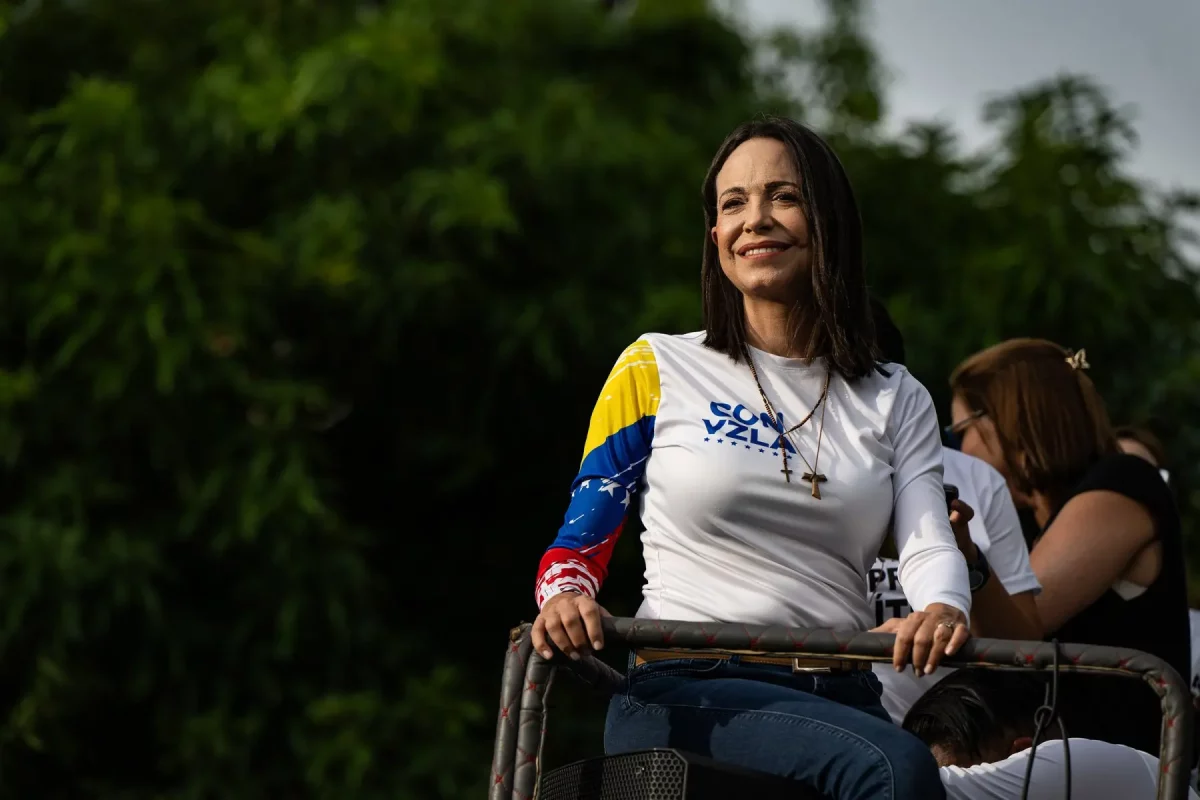
María Corina Machado is a prominent Venezuelan politician, engineer, and advocate for democracy, recognized internationally for her unwavering commitment to promoting democratic rights and challenging authoritarianism in her home country. On October 10, 2025, she was awarded the Nobel Peace Prize for her tireless efforts in advancing democratic principles and facilitating a peaceful transition from dictatorship to democracy in Venezuela. This accolade underscores her role as a leading figure in the Venezuelan opposition, where she has mobilized citizens, documented electoral irregularities, and united diverse political forces against systemic oppression.





Early Life and Education
Born on October 7, 1967, in Caracas, Venezuela, María Corina Machado Parisca hails from a distinguished family with deep historical ties to Venezuelan society. She is the eldest of four daughters of psychologist Corina Parisca and steel businessman Henrique Machado Zuloaga, and her lineage includes notable figures such as descendants of the 3rd Marquis of Toro and relatives of prominent writers, artists, and revolutionaries. Machado pursued higher education in industrial engineering at Andrés Bello Catholic University, followed by a master’s degree in finance from the Instituto de Estudios Superiores de Administración (IESA) in Caracas. In 2009, she further enhanced her global perspective by participating in Yale University’s World Fellows Program.
Her early career included a brief stint in the auto industry in Valencia before relocating to Caracas in 1993. As a mother of three, she demonstrated early philanthropic inclinations by founding the Atenea Foundation in 1992, an organization dedicated to supporting orphaned and delinquent street children through private donations. She later served as chair of the Opportunitas Foundation but stepped away to prevent politicization amid her growing involvement in civic activism.
Entry into Politics and Key Organizations
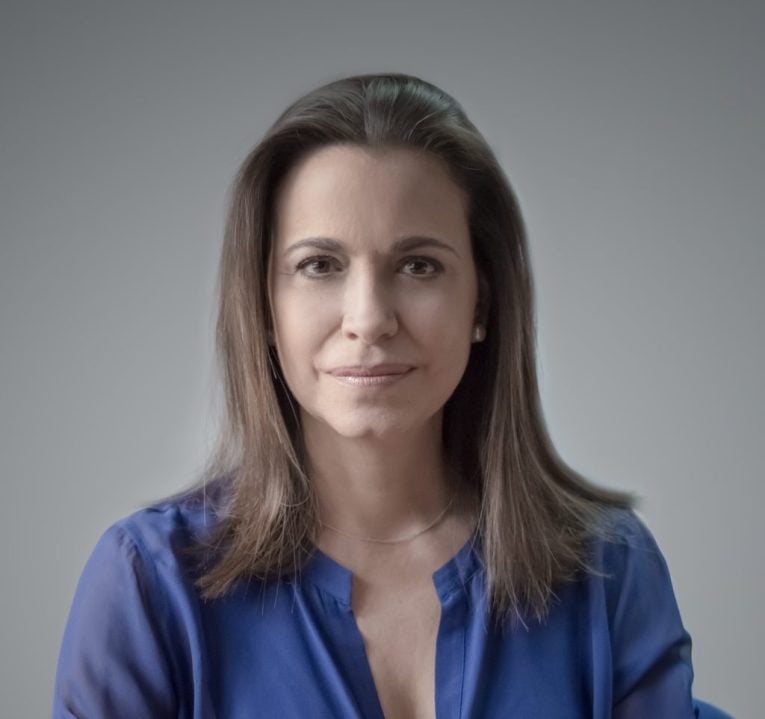
Machado’s transition to politics began in 2002, driven by concerns over Venezuela’s political trajectory under President Hugo Chávez. She co-founded Súmate alongside Alejandro Plaz, a non-governmental organization focused on promoting free and fair elections through voter education, training, and monitoring. Súmate played a pivotal role in the 2004 recall referendum against Chávez, amassing petitions and facing subsequent government charges of treason and conspiracy for receiving international funding from entities like the National Endowment for Democracy. These charges were eventually suspended, highlighting the contentious environment in which Machado operated.
In 2012, she established Vente Venezuela, a political party she continues to lead as National Coordinator, emphasizing principles of popular capitalism, privatization, and democratic reforms. Her advocacy extends to supporting international sanctions during Venezuela’s crisis, banning presidential reelection, legalizing same-sex marriage and medical cannabis, and fostering national debates on issues like abortion.
Political Career and Opposition Leadership
Elected to the National Assembly in 2010 representing Miranda state, Machado garnered a record number of votes as part of the opposition Coalition for Democratic Unity (MUD). Her tenure was marked by direct confrontations with the government, including a notable exchange with Chávez during his 2012 State of the Nation address on issues like crime and economic shortages. However, in 2014, she was expelled from office after appearing as Panama’s alternate envoy at the Organization of American States to discuss ongoing protests, an action deemed illegal by opposition figures.
Machado emerged as a radical voice within the opposition, co-leading the 2014 protests with initiatives like “La Salida” alongside Leopoldo López. She faced multiple attacks, including physical assaults during rallies and a 2013 National Assembly brawl that resulted in a broken nose. In 2017, she helped form the Soy Venezuela alliance to unite pro-democracy forces across political lines. During the 2019 presidential crisis, she positioned herself for potential candidacy amid Juan Guaidó’s interim presidency efforts.
Role in the 2024 Elections
In 2023, Machado announced her candidacy for the 2024 presidential election, winning the opposition primaries despite a 15-year disqualification imposed by the Maduro regime. Barred from running, she endorsed Edmundo González Urrutia, mobilizing widespread support and documenting evidence of electoral fraud following the disputed July 28 results, where the opposition claimed victory. This period saw her go into hiding, publishing analyses asserting the opposition’s win amid regime crackdowns.
The 2025 Nobel Peace Prize
The Norwegian Nobel Committee honored Machado with the 2025 Peace Prize for her “tireless work promoting democratic rights for the people of Venezuela” and her pursuit of a “just and peaceful transition from dictatorship to democracy.” This recognition places her among global advocates for democracy, emphasizing its foundational role in fostering peace within and between nations. Prior awards, such as the 2024 Václav Havel Human Rights Prize and Sakharov Prize (shared with González), foreshadowed this prestigious honor.
Recent Developments
In early 2025, Machado reappeared at a rally in Chacao, only to face an attempted arrest by regime forces, involving vehicle interception and gunfire. Briefly detained and released, she affirmed her ongoing commitment to the democratic struggle. Her inclusion in Time’s 100 Most Influential People for 2025 further cements her global stature.