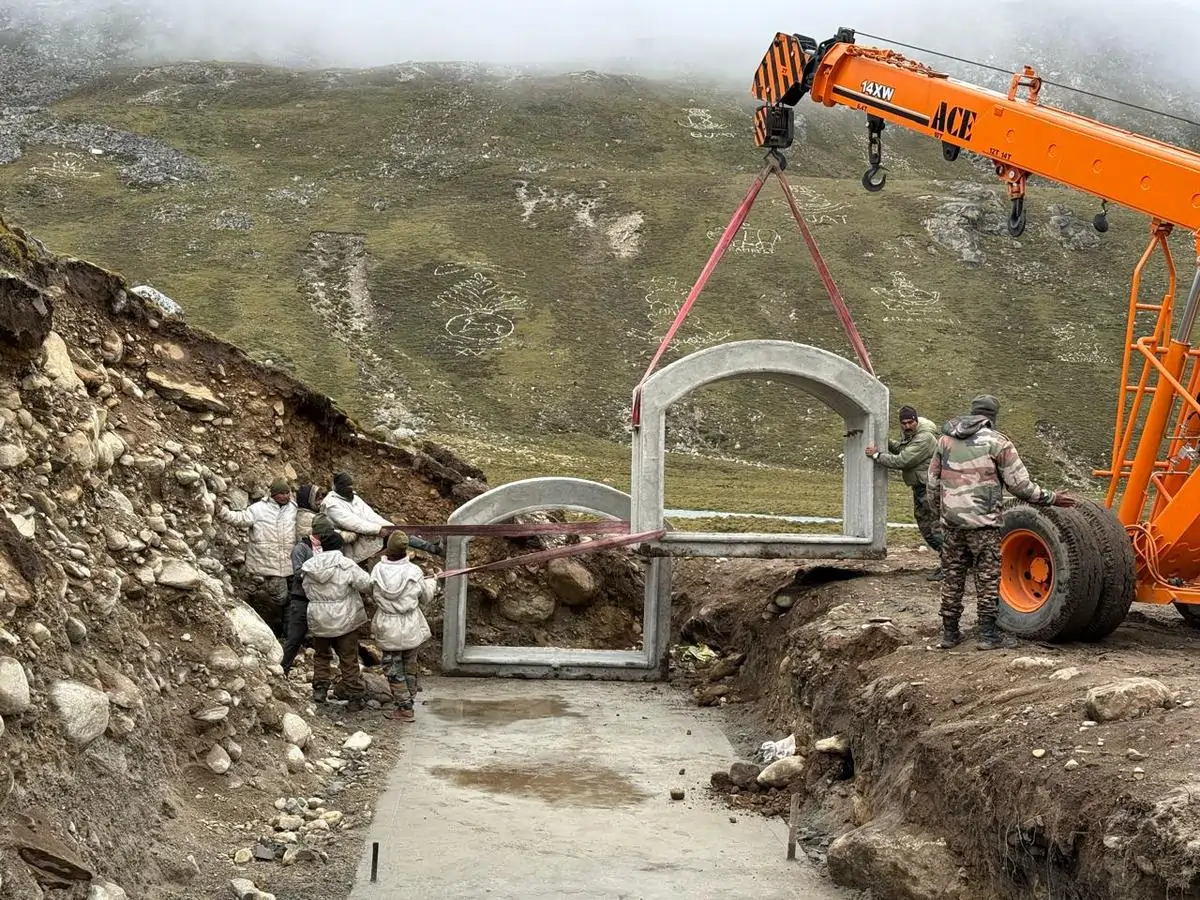
The Indian Army has achieved a major breakthrough in frontline infrastructure development with the operational deployment of on-site 3D concrete printing technology by the Trishakti Corps in Sikkim and adjoining forward areas.





Developed in collaboration with IIT-Hyderabad under Project PRABAL (Portable Robotic Printer for Printing Bunkers and Accessories), the new capability marks a significant leap toward rapid, sustainable, and mission-ready construction along the northern borders.
High-Mobility Indigenous System Designed for Harsh Terrain
Mounted on a high-mobility vehicle, the indigenous robotic 3D concrete printer integrates a robotic arm, circular mixer, piston pump, and on-board generator, enabling smooth operations even in rugged mountainous terrain. Tailored for forward area requirements, the system allows the swift construction of bunkers, sentry posts, shelters, and protective structures, substantially reducing manpower and timelines.
Structures Cleared After Live Ballistic Trials
The Army confirmed that all 3D-printed structures have successfully undergone live ballistic trials, validating their structural integrity, durability, and protective performance under combat-like conditions.
Operational Advantages for the Northern Borders
According to the Army, 3D concrete printing offers several operational benefits:
- Customised, terrain-specific designs
- Enhanced blast and ballistic resistance
- Higher compressive strength and improved quality control
- Efficient utilisation of local materials
- Rapid construction within tactically acceptable timelines
- Compatibility with advanced camouflage requirements
Boost to Operational Readiness
The Army stated that deploying such cutting-edge indigenous technologies significantly enhances engineering agility and strengthens mission readiness in challenging, high-altitude sectors.
“The continued induction of advanced, home-grown capabilities represents a major leap in improving the Indian Army’s operational preparedness and engineering resilience,” it added.