
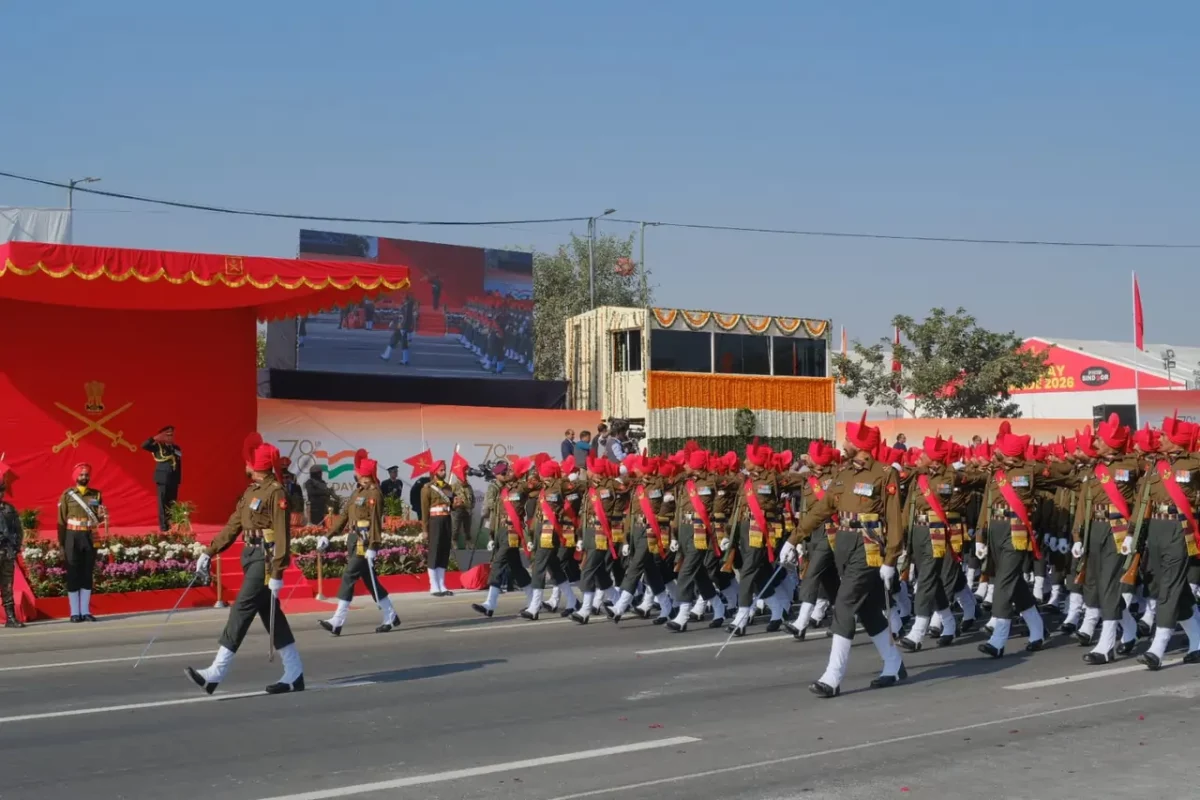
The Indian Army marked its 78th Army Day with a spectacular and historic parade in Jaipur, Rajasthan, on January 15, 2026, celebrating valour, sacrifice, technological transformation, and the enduring bond between the Army and the nation.





The celebrations began with a solemn wreath-laying ceremony at the Prerna Sthal, where Chief of Defence Staff General Anil Chauhan and Chief of the Army Staff (COAS) General Upendra Dwivedi paid homage to soldiers who laid down their lives in the service of the nation. Representatives of the Indian Air Force and Indian Navy also laid wreaths, symbolising the spirit of jointmanship.
A Historic First in Jaipur
This marked the fourth time the Army Day Parade was held outside New Delhi and the first time it was conducted outside an Army cantonment, right in the heart of a city. The parade route along Mahal Road—stretching from Akshay Patra Circle to Bombay Hospital—was lined with more than one lakh cheering spectators. Hosted for the first time by South Western Command, the event reflected the Army’s initiative to take its traditions closer to the people, after earlier editions in Bengaluru, Lucknow, and Pune.
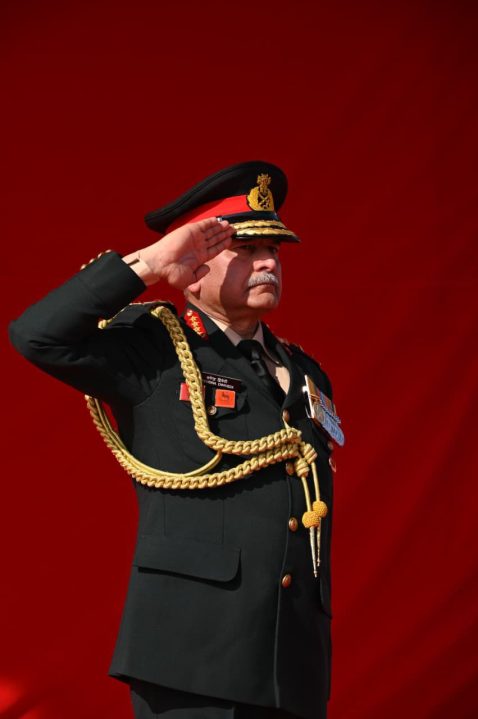
As the Reviewing Officer, General Upendra Dwivedi took the salute during the grand parade. In a deeply moving moment, he also presented Sena Medals (Gallantry, Posthumous) to the Next of Kin of five brave soldiers who made the supreme sacrifice for the nation.
Showcasing a Future-Ready Army
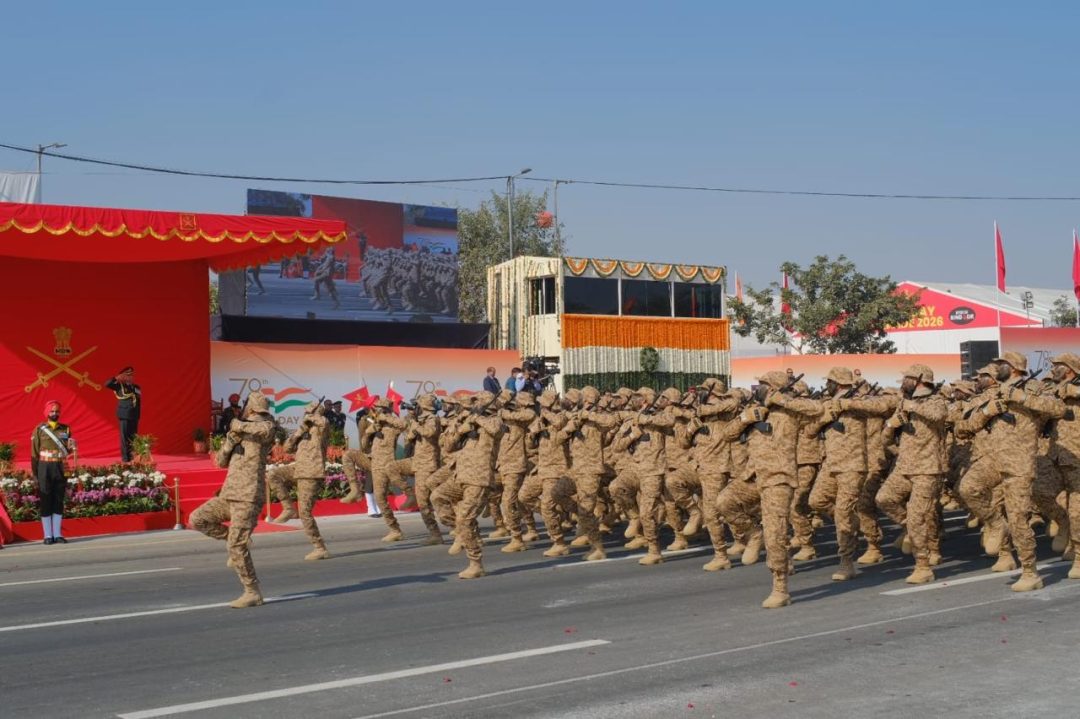
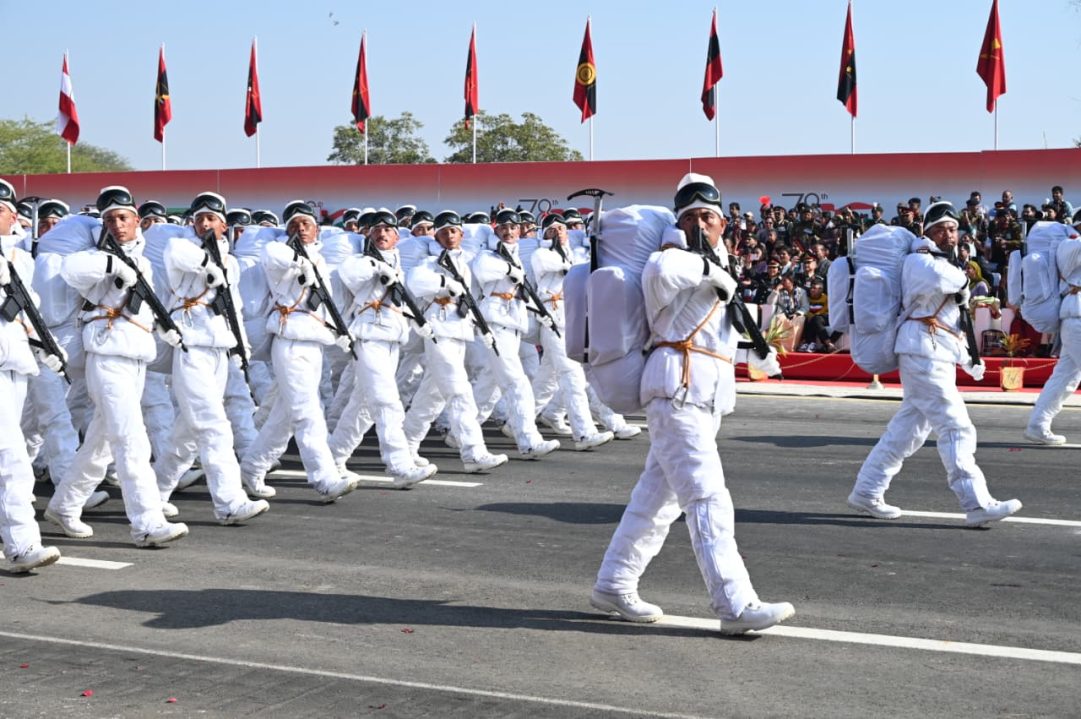
The parade highlighted the Indian Army’s transformation into a technologically advanced, agile, and future-ready force. Over 30 entities participated in the march-past, including seven distinguished contingents from regimental centres such as the Madras Regimental Centre, Rajput Regimental Centre, Regiment of Artillery, Mixed Scouts Contingent, and an NCC Girls Contingent.
In a notable first, Bhairav Battalion contingents from Rajputana Rifles and Sikh Light Infantry participated, symbolising the Army’s shift towards lean, high-impact units designed for rapid and lethal operations along the borders.
The event also featured a fly-past by Army helicopters, including the Light Combat Helicopter (LCH), Advanced Light Helicopter (ALH), Weapon System Integrated (WSI) platforms, and Apache attack helicopters.
Firepower, Mobility and Indigenous Might
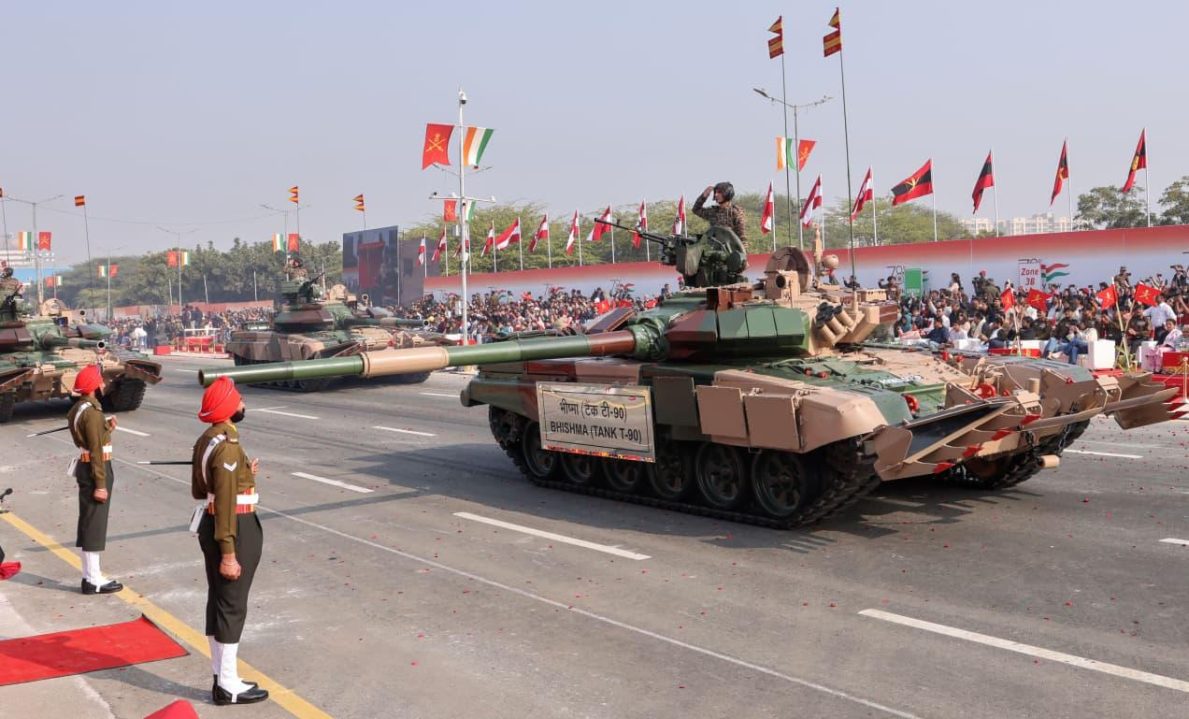
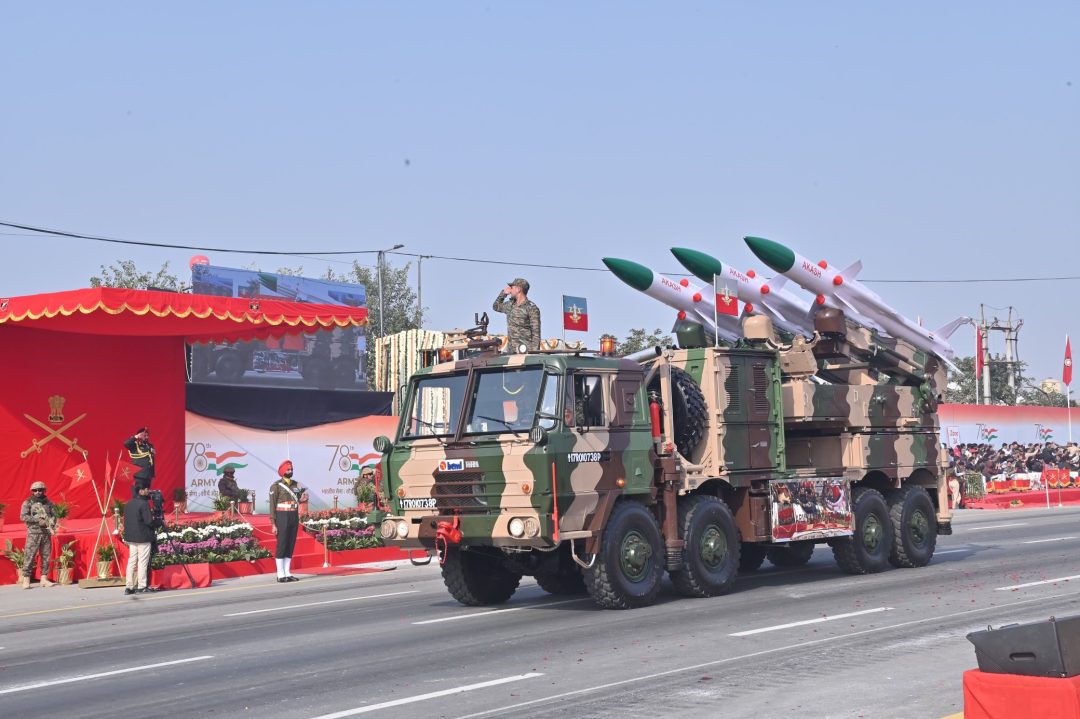
A major highlight was the display of cutting-edge weapon systems and platforms, underscoring the Army’s focus on indigenisation and battlefield dominance. These included T-90 and Arjun tanks, BMP-2 infantry combat vehicles, K-9 Vajra, SMERCH and GRAD rocket systems, Pinaka, Dhanush, ATAGS, Divyastra, and ULRS artillery systems.
Air defence and force protection systems such as the upgraded Schilka, Akash missile system, L-70 guns, and Shaktibaan were showcased alongside modern unmanned and counter-UAS technologies. Drones and RPAs including Switch UAV, Sanjay, Pralay, Baaz armed drones, and Bhairav Battalion-integrated drone systems demonstrated the Army’s preparedness for next-generation warfare.
Several platforms that played a role in Operation Sindoor—such as BrahMos, M777 ULH, Special Mobility Vehicles, and Quick Reaction Force vehicles—were also part of the parade, reinforcing the Army’s combat credibility.
Cultural Grandeur and Joint Spirit
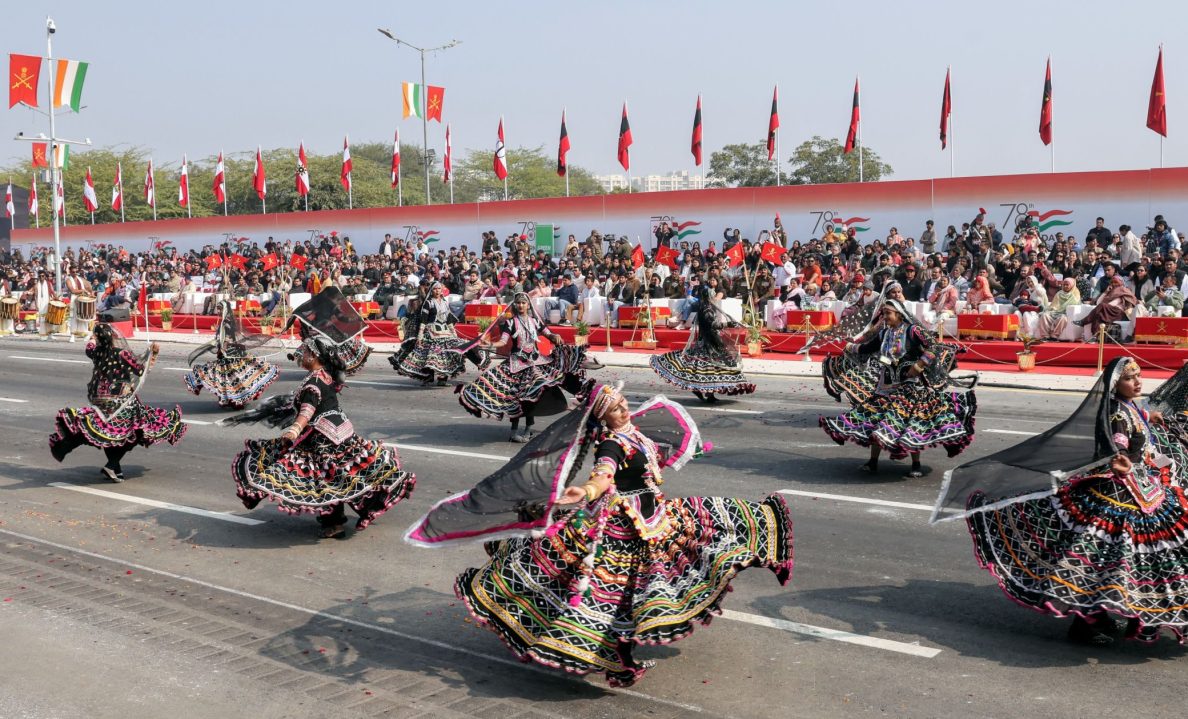
The parade reflected India’s unity in diversity through vibrant cultural performances, including Rajasthan’s Kalbelia and Gair folk dances, and a Chenda cultural display by the Madras Regiment. Seven military bands and the Nepal Army Band added musical splendour, highlighting the close defence ties and shared traditions between India and Nepal.
The Motorcycle Display and Army Canine Show drew loud applause, showcasing precision riding skills and the vital operational role of trained dogs in security and search missions.
Leadership Message and Shaurya Sandhya
Addressing the occasion, the COAS emphasised that indigenisation is no longer an option but a strategic necessity. He highlighted the Army’s ongoing transformation focused on agility, technology, data-centric operations, and innovation—while reiterating that technology is meant to empower the soldier, not replace him.
Later in the day, Shaurya Sandhya was scheduled at Sawai Mansingh Stadium, to be graced by Raksha Mantri Rajnath Singh, Rajasthan Chief Minister Bhajan Lal Sharma, senior military leadership, veterans, and citizens. The evening programme includes an enactment of Operation Sindoor, traditional martial arts, a spectacular 1,000-drone show, and the virtual inauguration of multiple NAMAN Centres for veteran support.
The 78th Army Day celebrations in Jaipur stood as a powerful tribute to the courage of Indian soldiers, the sacrifice of their families, and the Army’s unwavering commitment to safeguard the nation—today and into the future.