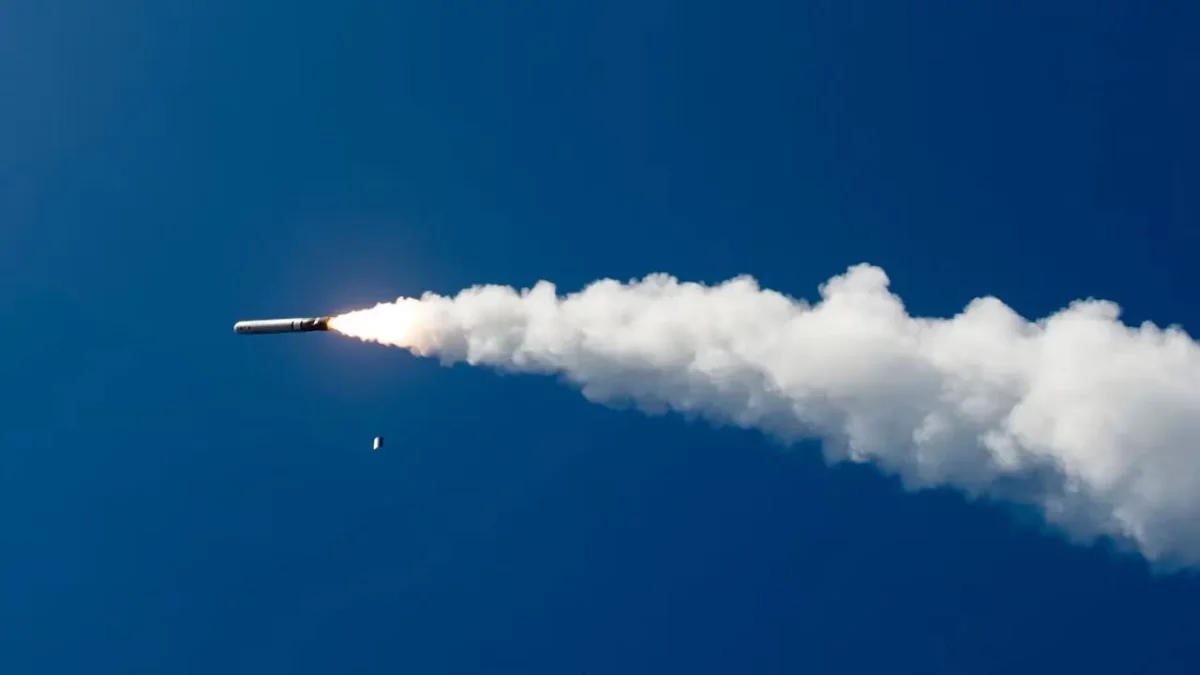
Operation Epic Fury, initiated on February 28, 2026, represented a significant escalation in U.S. military engagement with Iran, involving coordinated strikes alongside Israeli forces under Operation Roaring Lion. This joint campaign targeted key Iranian assets, including nuclear facilities, missile production sites, air defense systems, and regime leadership structures. As a cornerstone of the U.S. contribution, the Tomahawk Land Attack Missile (TLAM) played a pivotal role in delivering precision strikes from standoff distances, minimizing risks to personnel while achieving strategic objectives. This article examines the flight duration of Tomahawk missiles during the operation, drawing on operational details, missile specifications, and geospatial analysis to provide a comprehensive assessment.





Background on the Tomahawk Missile and Its Role in Operation Epic Fury
The Tomahawk cruise missile, developed by Raytheon (now part of RTX Corporation), is a subsonic, long-range precision weapon system designed for land-attack missions. It travels at approximately 885 kilometers per hour (550 miles per hour), utilizing terrain contour matching (TERCOM) and GPS guidance for accurate navigation over extended distances. With a range of up to 2,500 kilometers in advanced variants, the missile enables launches from naval platforms far from hostile airspace, a critical advantage in high-threat environments like Iran.
In Operation Epic Fury, Tomahawk missiles were launched from U.S. Navy assets, including Arleigh Burke-class guided-missile destroyers and submarines positioned in the Persian Gulf and Arabian Sea. These platforms formed part of carrier strike groups, such as those centered on USS Abraham Lincoln (CVN-72) in the North Arabian Sea. The operation commenced with an initial barrage at approximately 1:15 a.m. Eastern Time on February 28, 2026, involving hundreds of strikes in the first 12 hours. Tomahawks were employed in the opening volleys to suppress air defenses and target high-value sites, including nuclear infrastructure near Tehran, Isfahan, and Fordow.
Launch Locations and Flight Paths
The flight time of a Tomahawk missile is primarily determined by the distance from the launch platform to the target, as the missile maintains a consistent cruising speed. During Operation Epic Fury, launches originated from naval vessels in the Persian Gulf and Arabian Sea, regions that provided strategic positioning for standoff strikes. For instance, submarines like the USS Georgia and destroyers in the U.S. Fifth Fleet operated from positions that allowed missiles to traverse Iraqi airspace or directly over Iranian territory, following pre-programmed low-altitude paths to evade radar detection.
Geospatial calculations indicate that distances to key targets varied significantly. From a representative position in the North Arabian Sea (approximately 20°N, 62°E) to Tehran (35.6892°N, 51.3890°E), the great-circle distance is about 2,029 kilometers. At the Tomahawk’s cruising speed of 885 km/h, this equates to a flight time of roughly 2.3 hours, or 138 minutes. However, launches from closer positions in the Persian Gulf (e.g., near 26°N, 56°E) reduce the distance to approximately 1,100-1,500 kilometers, yielding flight times of 1.2 to 1.7 hours (72 to 102 minutes). Open-source intelligence and media reports suggest missiles often routed through less defended corridors, potentially extending actual flight paths by 10-20% to avoid surface-to-air missile sites.
Reported Flight Times and Operational Factors
Official U.S. Department of Defense statements and media analyses do not provide precise, declassified flight times for individual missiles in Operation Epic Fury, as such details remain sensitive for operational security. However, aggregated reports indicate that Tomahawk missiles reached Iranian territory in under two hours for many strikes, aligning with the weapon’s design for rapid response. For targets in southern Iran, such as naval bases near the Strait of Hormuz, flight times could be as short as 45-60 minutes from Gulf-based launches. Deeper inland sites, like those around Tehran, required longer durations, typically 90-140 minutes, depending on the exact launch point and evasive routing.
Several factors influenced these times:
- Launch Platform Positioning: Submarines and destroyers in the Arabian Sea offered greater standoff but increased transit distances, while Persian Gulf assets enabled shorter flights.
- Target Selection: Strikes on coastal or southern facilities (e.g., Bandar Abbas) involved shorter ranges compared to central sites like Isfahan or Tehran.
- Flight Profile: Tomahawks fly at low altitudes (30-100 meters) to reduce detectability, which can slightly prolong travel due to terrain-following adjustments but enhances survivability.
- Variant Employed: Block V variants, with extended ranges up to 2,500 km, were likely used for deeper strikes, maintaining consistent speeds across models.
In the operation’s initial phase, synchronized impacts suggest missiles were timed to arrive near-simultaneously, with flight durations calibrated to achieve massed effects on Iranian defenses.
Strategic Implications and Lessons Learned
The flight times observed in Operation Epic Fury underscore the Tomahawk’s value as a first-strike asset, allowing U.S. forces to degrade Iranian capabilities before crewed aircraft or other munitions entered the battlespace. This standoff approach mitigated risks from Iran’s integrated air defense systems, contributing to the reported suppression of threats in the operation’s early hours. From a defense perspective, these durations highlight the importance of forward naval presence in enabling timely precision strikes, while also revealing vulnerabilities in extended-range operations where longer flight times could allow adversaries limited reaction windows.
In summary, Tomahawk missiles in Operation Epic Fury typically took between 60 and 140 minutes to reach their targets in Iran, with an average under two hours based on launch locations in the Persian Gulf and Arabian Sea. This performance reaffirms the missile’s reliability in modern conflicts, balancing speed, precision, and safety to achieve operational success.