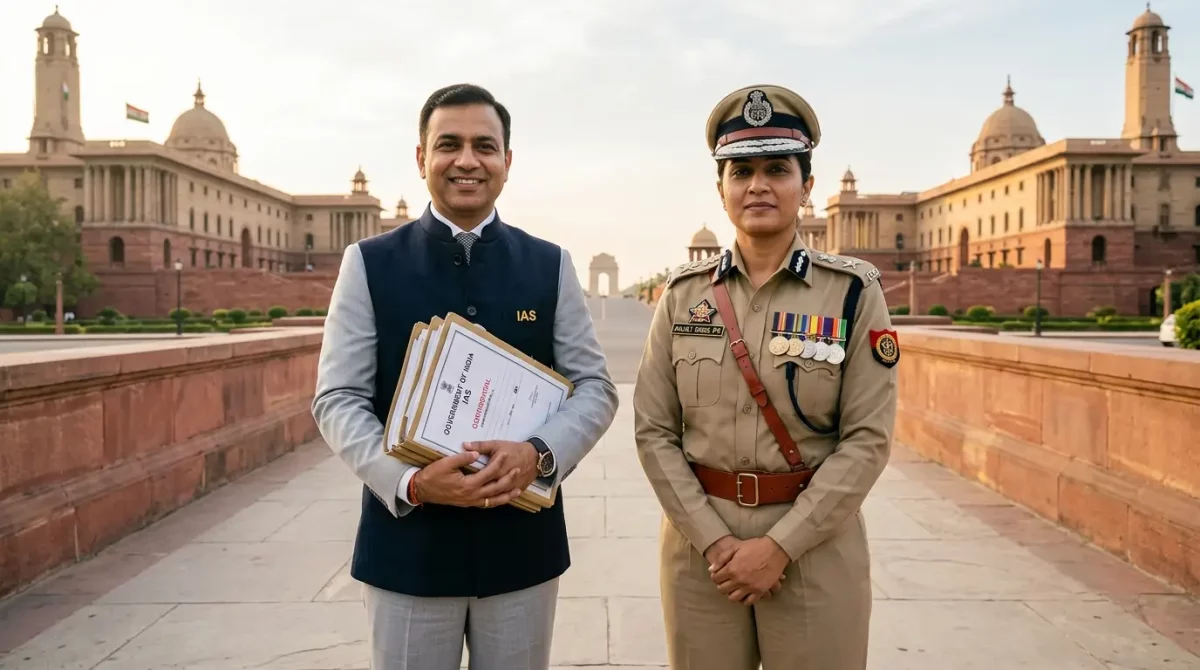
India is currently facing a significant shortage in its top bureaucratic services, with more than 1,300 posts in the Indian Administrative Service (IAS) and 505 posts in the Indian Police Service (IPS) lying vacant. The disclosure has raised concerns about administrative efficiency and internal security management across the country.





The details were shared by Union Minister of State for Personnel, Public Grievances and Pensions, Dr. Jitendra Singh, in a written reply in the Lok Sabha on March 25, 2026. According to the data, against a sanctioned strength of 6,877 IAS officers, only 5,577 are currently in position, resulting in a vacancy rate of nearly 19 percent. Similarly, the IPS has 4,594 officers serving against an authorised strength of 5,099, leaving close to 9.9 percent of posts unfilled.
These figures are consistent with earlier data presented in the Rajya Sabha in February 2026, which indicated a combined vacancy of 2,834 posts across the All India Services, including the Indian Forest Service (IFoS). The IFoS has been identified as facing the highest shortage, with over 1,000 vacant positions, accounting for nearly one-third of its sanctioned strength.
Recruitment to these services is conducted through the Union Public Service Commission via the Civil Services Examination. The government has maintained an annual intake of around 180 candidates into the IAS since 2012, with 4 percent reservation for persons with benchmark disabilities. For 2026, approximately 933 vacancies have been announced across services, including around 180 for IAS and 150 to 200 for IPS, as part of ongoing efforts to reduce the backlog.
However, experts note that the process of filling vacancies remains slow due to multiple factors such as retirements, cadre imbalances among states, and the lengthy examination and training cycle. The growing number of retirements, especially from older batches, has further widened the gap between sanctioned and actual strength.
The shortage of IAS officers, who play a key role in district administration, policymaking, and implementation of government schemes, is expected to place additional pressure on governance, particularly in smaller and northeastern states. Similarly, the shortage in IPS officers could affect leadership in policing, law and order management, and counter-terrorism operations, especially in large states with higher cadre requirements.
Parliamentary committees have also highlighted the issue, recommending measures such as faster cadre reviews, improved incentives for difficult postings, and a possible increase in annual recruitment to address the structural shortfall. While the government has increased sanctioned strength over time to meet rising administrative demands, filling these positions continues to be a challenge.
Officials have stated that the situation is under continuous review and that upcoming batches from the Civil Services Examination will help bridge the gap gradually. As demands on governance continue to grow, addressing these vacancies will remain crucial for strengthening India’s administrative and internal security framework in the years ahead.