
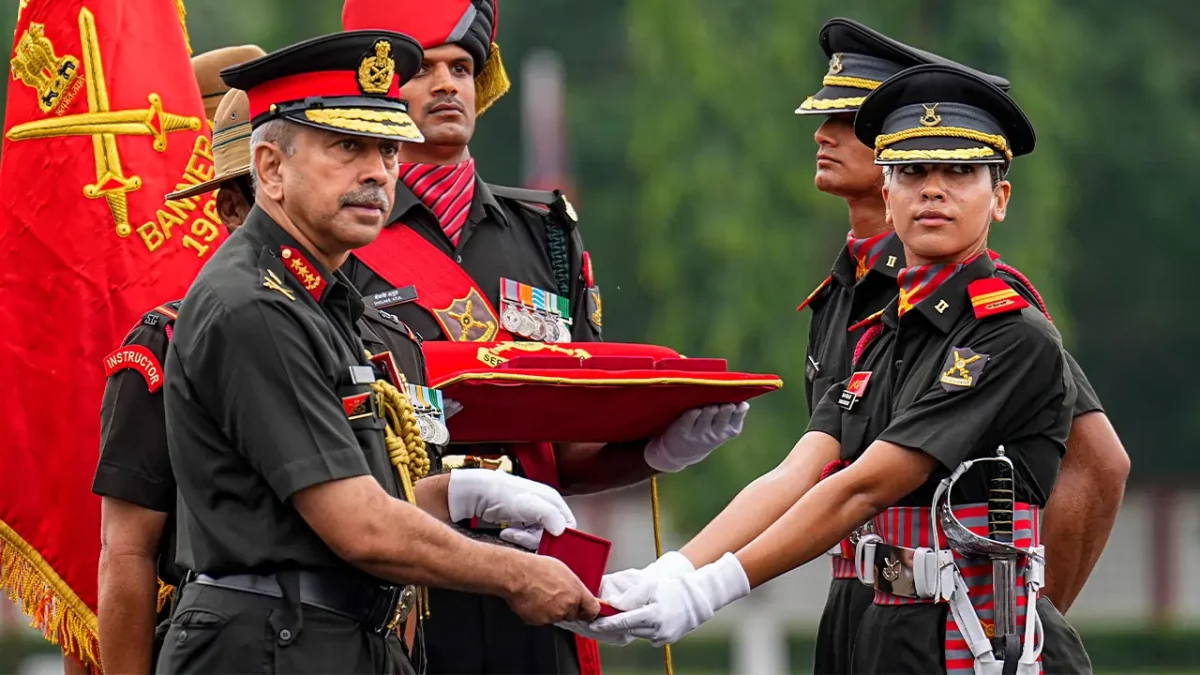
New Delhi, March 25, 2026 — In a significant ruling advancing gender equality within the Indian armed forces, the Supreme Court on March 24, 2026, held that women Short Service Commission (SSC) officers in the Army, Navy, and Air Force who were denied Permanent Commission (PC) due to arbitrary and discriminatory evaluation processes are entitled to full pensionary benefits. The Court exercised its extraordinary powers under Article 142 of the Constitution to deem these officers as having completed the minimum qualifying service of 20 years, thereby securing their financial security without disturbing operational effectiveness.

A bench comprising Chief Justice Surya Kant and Justices Ujjal Bhuyan and N. Kotiswar Singh delivered the judgment in a batch of petitions, including the lead case filed by Wing Commander Sucheta Edan and others. The verdict addressed systemic flaws in the assessment of Annual Confidential Reports (ACRs) for women SSC officers, particularly those prepared during periods when they were ineligible for PC under prevailing policies. The Court observed that such ACRs were often authored with the assumption of limited tenure, resulting in casual or middling gradings that placed women officers at a comparative disadvantage vis-à-vis their male counterparts.
The petitions challenged the denial of PC following policy changes introduced around 2019, as well as related rulings by the Armed Forces Tribunal. The Court identified an “unequal playing field” stemming from new performance criteria—such as extended service requirements and minimum performance thresholds—that were applied without adequate transition time for affected officers. Factors such as maternity leave or pregnancy-related absences further exacerbated disparities, especially in the Air Force. The bench explicitly described the denial of PC as a consequence of “systemic discrimination,” underscoring that inequality of opportunity in evaluation criteria had undermined merit-based assessments.
Key Reliefs Granted Under Article 142
Invoking its plenary jurisdiction to ensure complete justice, the Supreme Court issued one-time directives applicable to SSC women officers (SSCWOs) considered for PC in selection boards held between 2019 and 2021. These measures do not disturb previously granted PCs but provide targeted relief:
- Pensionary Benefits for Released Officers: All affected SSCWOs, including intervenors and those released from service during the pendency of litigation, shall be deemed to have completed 20 years of substantive qualifying service. They are entitled to full pension and all consequential benefits on this basis. Pensions will be fixed accordingly, with arrears payable with effect from January 1, 2025 (or November 1, 2025, as per certain reports). However, no arrears of pay shall be admissible for the deemed period of service.
- Grant of Permanent Commission to In-Service Officers: Serving SSCWOs who fulfilled the minimum cut-off (such as 60 per cent in the Army’s 2020 and 2021 selection boards) or equivalent eligible cohorts in the Navy and Air Force shall be granted PC, subject to medical fitness and disciplinary/vigilance clearance. Existing grants of PC by selection boards or pursuant to prior tribunal judgments remain undisturbed. For the Navy, this includes SSCWOs inducted prior to January 2009 or post-January 2009 in specified branches (excluding Law, Education, and Naval Architecture).
- Exclusions and Limitations: The relief does not extend to SSCWOs in the Army’s Judge Advocate General (JAG) and Army Engineering Corps (AEC) cadres, who have been eligible for PC since 2010. Cases arising from post-2021 selection boards are excluded from this one-time measure and may be pursued through appropriate forums. The Court declined to order reinstatement of released officers, citing the need to preserve the operational effectiveness of the armed forces.
Additional Directions and Long-Term Implications
The Supreme Court directed the armed forces to review and reform ACR evaluation methods and cut-off criteria for future batches to prevent disproportionate adverse impact on women officers. Future selection boards must issue advance General Instructions detailing vacancies, evaluation criteria (including mark apportionment), and other parameters to ensure transparency and fairness.
This verdict builds upon earlier judicial interventions that opened PC avenues for women officers and reinforces constitutional principles of non-discrimination and equality of opportunity. Legal experts have described the ruling as a milestone in addressing gender bias in military service records, while the armed forces are expected to implement the directions expeditiously.
The full text of the judgment is anticipated to be uploaded on the Supreme Court’s official website shortly. Affected officers and stakeholders are advised to refer to authenticated sources for implementation details.