In a significant boost to connectivity in India’s remote border regions, the Indian Army and Bharti Airtel have successfully completed the first phase of a strategic telecommunications initiative that has brought reliable voice and data services to 30 Army stations in Arunachal Pradesh.





The project was undertaken in partnership with the Indian Army’s 4 Corps, headquartered in Tezpur, Assam, with the objective of providing last-mile connectivity in some of the most challenging and inaccessible areas along India’s northeastern frontier.
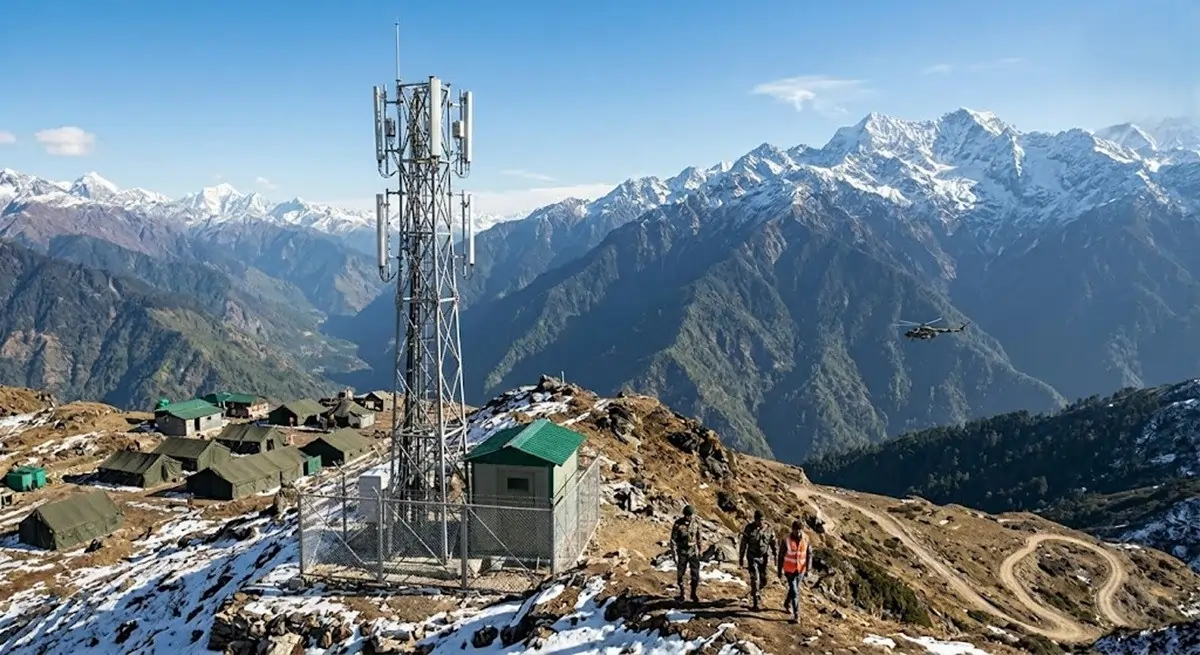
As part of the initiative, Airtel deployed telecommunications infrastructure across 30 Army locations situated in difficult mountainous terrain, significantly enhancing communication capabilities in areas that have historically faced connectivity challenges due to geographical and infrastructure constraints.
The successful execution of the project required extensive coordination between Airtel and the Indian Army. The Army provided critical logistical support throughout the deployment process, including assistance in laying optical fibre networks and establishing power infrastructure.
In several remote locations where road access was unavailable, the Indian Army facilitated the movement of technical personnel, equipment and communication infrastructure through difficult mountain routes, enabling the project to be completed despite challenging terrain and weather conditions.
The enhanced connectivity is expected to improve communication capabilities for troops deployed in forward areas while also strengthening operational efficiency and coordination in strategically important regions.
Following the successful completion of Phase-I, the Indian Army and Airtel have agreed to undertake a second phase of the project. Under Phase-II, telecom infrastructure will be established at 15 additional locations across Arunachal Pradesh, further expanding network coverage in remote border areas.
Commenting on the initiative, Airtel officials described the project as a reflection of the company’s commitment to extending telecommunications services to some of the country’s most difficult terrains. The rollout involved overcoming significant logistical, geographical and climatic challenges through close cooperation between civilian and military agencies.
The initiative highlights the growing role of public-private collaboration in strengthening critical infrastructure in border regions and supporting the communication needs of personnel deployed in strategically sensitive areas.
By enhancing connectivity in remote parts of Arunachal Pradesh, the project contributes not only to operational effectiveness but also to broader efforts aimed at improving digital access and infrastructure development in India’s frontier regions.