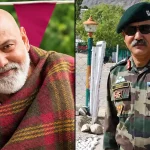

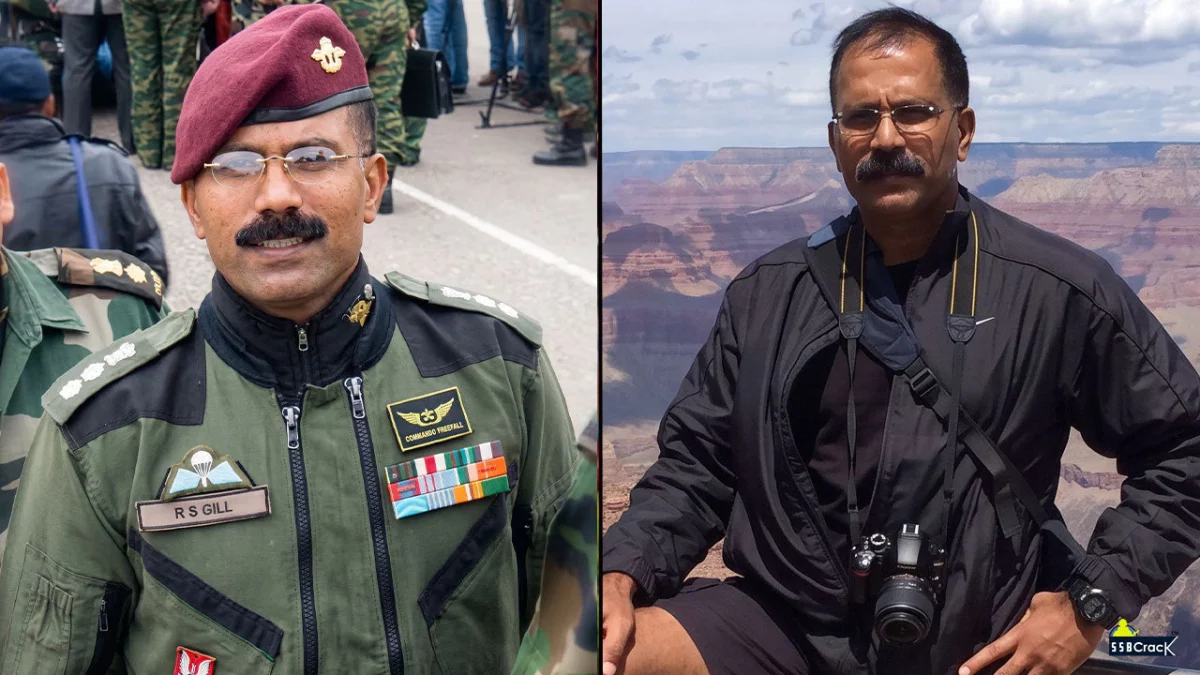
Colonel Ramvinder Singh Gill, Shaurya Chakra, is a retired Indian Army Special Forces officer whose extraordinary courage during a counter-infiltration operation in Jammu and Kashmir earned him one of India’s highest peacetime gallantry awards.
As a young Captain serving with the 9th Battalion of the Special Forces Regiment, now known as 9 Para Special Forces, Gill led his team through treacherous mountainous terrain on the night of June 24, 1995. The mission culminated in an intense close-quarter encounter in which he continued fighting even after exhausting his ammunition and killed the last surviving militant with his bare hands.
The operation became a striking example of leadership under fire, physical courage and concern for fellow soldiers. Gill was subsequently awarded the Shaurya Chakra for the gallantry he displayed during the encounter.
A Career Forged in Special Forces
Ramvinder Singh Gill, bearing the service number IC-48069, served with the Indian Army’s elite Special Forces. His military career placed him in some of the most demanding operational environments faced by Indian soldiers during the late twentieth century.
Special Forces personnel are trained to operate deep inside hostile territory, frequently in small teams and with limited external support. Their missions demand exceptional endurance, tactical awareness, weapons proficiency and the ability to make critical decisions under extreme pressure.
Gill developed these qualities through years of rigorous military training and operational service. He reportedly gained valuable combat experience during the deployment of the Indian Peace Keeping Force in Sri Lanka before undertaking counter-insurgency and counter-infiltration assignments in Jammu and Kashmir.
Operations in Sri Lanka exposed Indian troops to jungle warfare, ambushes, close-quarter engagements and a highly complex insurgency. The experience helped prepare officers such as Gill for the unpredictable nature of later missions in the mountainous regions of northern India.
Mission in the Shamshabari Mountains
On June 24, 1995, Bravo Team of the 9th Battalion Special Forces Regiment was assigned the task of locating and neutralising militants who had infiltrated from Pakistan-occupied Kashmir.
The infiltrators were believed to be using concealed hideouts in the Jakar Nake jungles of Jammu and Kashmir. The area formed part of the rugged Shamshabari mountain range, where steep slopes, dense vegetation and unpredictable weather made military movement extremely difficult.
Captain Gill and his soldiers began their approach under the cover of darkness. Heavy rain reduced visibility, while the high-altitude terrain tested the physical endurance of every member of the team.
Despite the challenging conditions, the soldiers maintained their movement and conducted prolonged surveillance of the area. Their search eventually indicated the presence of militants inside a thickly wooded nala.
Gill volunteered to move forward and lead the effort to destroy the hideout. His decision placed him at the forefront of the operation and exposed him directly to the enemy’s position.
The Encounter Begins
As Captain Gill carefully searched the nala, he noticed a militant acting as a sentry near the hideout. He moved ahead and shot the sentry before the militant could warn the others.
However, the sound of gunfire alerted the remaining militants. They immediately opened intense fire on the Special Forces team, placing the soldiers in a dangerous and rapidly developing situation.
Gill retained control of the engagement and ordered his men to return fire. Instead of remaining in a covered position, he decided to press the assault before the militants could reorganise or escape into the surrounding jungle.
He threw a grenade towards the enemy position and charged forward despite the bullets being fired in his direction. His aggressive action disrupted the militants and allowed the Special Forces team to maintain the initiative.
During the close-quarter battle, Gill spotted a militant occupying a trench and killed him with a controlled burst from his rifle. The fight then narrowed down to the last surviving militant.
Hand-to-Hand Combat With the Last Militant
While confronting the final militant, Captain Gill ran out of ammunition. At that moment, withdrawing or attempting to reload under enemy fire could have placed both him and his soldiers in greater danger.
Gill instead closed the distance and physically grappled with the armed militant. The two became locked in a desperate hand-to-hand struggle inside the hostile hideout.
Relying on his training, strength and determination, Gill overpowered the militant and strangled him with his bare hands. His action ended the encounter and ensured the successful completion of the mission.
The confrontation was not merely an act of physical bravery. By continuing the assault despite having exhausted his ammunition, Gill prevented the militant from firing upon his comrades or escaping from the area.
His conduct demonstrated the qualities expected of a Special Forces leader: taking responsibility in the most dangerous moment, leading from the front and placing the safety of his soldiers above his own.
Awarded the Shaurya Chakra
Captain Ramvinder Singh Gill was awarded the Shaurya Chakra for his actions during the operation. The effective date of the award was recorded as June 24, 1995, while the honour was formally notified in 1996.
The official citation described how Gill and his team moved through the rugged Shamshabari mountains at night amid heavy rain, located the militants following sustained surveillance and launched an assault on their hideout.
It also recorded that Gill personally shot the sentry, ordered his team to respond after coming under heavy fire, threw a grenade and charged the enemy position without regard for his own safety.
The citation further detailed how he killed a militant occupying a trench and then grappled with the last surviving militant before strangling him with his bare hands.
For his performance during the operation, Gill was recognised for displaying gallantry, indomitable courage, outstanding leadership and deep concern for his comrades.
The Shaurya Chakra is awarded for conspicuous gallantry otherwise than in the face of the enemy. It is regarded as India’s third-highest peacetime gallantry decoration, following the Ashoka Chakra and Kirti Chakra.
Rise to Command 9 Para Special Forces
The 1995 encounter was one defining moment in a much longer military career. Gill continued serving in the Indian Army and eventually rose to the rank of Colonel.
He later commanded 9 Para Special Forces, the same elite unit with which he had carried out demanding operations as a young officer. Taking command of a Special Forces battalion is a major responsibility involving the selection, training, discipline and operational preparation of highly skilled soldiers.
As Commanding Officer, Gill would have been responsible for ensuring that his teams remained prepared for missions involving counter-terrorism, special reconnaissance, direct action and operations in difficult terrain.
His own battlefield experience gave him a first-hand understanding of the physical and psychological demands placed upon Special Forces personnel. He had personally faced hostile fire, led assaults and fought at close quarters, giving considerable credibility to his leadership and training philosophy.
Veterans associated with the Special Forces community have remembered him as an exceptionally courageous and physically tough officer who believed in leading from the front.
Leadership Beyond the Army
After retiring from military service, Colonel Gill moved into the corporate security sector. He served in a senior leadership position overseeing global corporate security for Reliance Industries Limited and its associated companies.
Corporate security at such a level involves protecting personnel, facilities, information and strategically important infrastructure. It also requires crisis planning, threat assessment, coordination with multiple agencies and the ability to respond effectively during emergencies.
The skills Gill developed during his Army career translated naturally into this field. Military operations had taught him how to assess risks, make decisions with limited information and lead teams during high-pressure situations.
His transition demonstrated how the discipline and leadership developed in the Armed Forces can remain valuable long after an officer leaves active service.
Completing the Ironman Triathlon
Colonel Gill also continued to maintain exceptional physical fitness following his retirement. In 2017, he completed an Ironman Triathlon, one of the most physically demanding endurance competitions in the world.
An Ironman requires participants to complete long-distance swimming, cycling and running stages within a prescribed time. Preparing for the event demands months of disciplined training, mental resilience and careful physical conditioning.
Completing the challenge reflected the same determination that had characterised Gill’s military career. Even decades after the 1995 encounter, he continued to test the limits of his endurance and maintain the standards associated with a Special Forces soldier.
Remembering Fallen Soldiers
Gill has remained connected with the military community and the traditions of 9 Para Special Forces. He has participated in commemorative programmes honouring Indian soldiers who made the supreme sacrifice.
Among these contributions has been his recitation of the final letters written by Kargil War heroes such as Captain Manoj Kumar Pandey, who was posthumously awarded the Param Vir Chakra.
Such initiatives help preserve the personal stories behind India’s military history. They also introduce younger generations to the values of courage, sacrifice and devotion to duty represented by fallen soldiers.
An Enduring Special Forces Legacy
Colonel Ramvinder Singh Gill’s life represents far more than a single dramatic encounter. His journey includes operational service in Sri Lanka and Jammu and Kashmir, command of an elite Special Forces unit, corporate security leadership and remarkable achievements in endurance sports.
Nevertheless, the events of June 24, 1995, remain central to his legacy. In darkness, heavy rain and difficult mountainous terrain, he led his team towards a hidden militant position and continued the assault after coming under intense fire.
When his ammunition was exhausted, he did not abandon the fight. He confronted the final militant at close quarters and ended the threat through sheer courage and determination.
The operation illustrated the bond between a commander and his soldiers. Gill repeatedly placed himself in danger so that his team could maintain the initiative and accomplish the mission.
His Shaurya Chakra citation preserves the official record of that bravery. It describes an officer who displayed not only personal courage but also outstanding leadership and deep concern for the men serving beside him.
Colonel Ramvinder Singh Gill continues to stand as an inspiring figure within the Indian military community. His story reflects the demanding ethos of 9 Para Special Forces and the values of courage, discipline, comradeship and selfless service that define the Indian Army.